
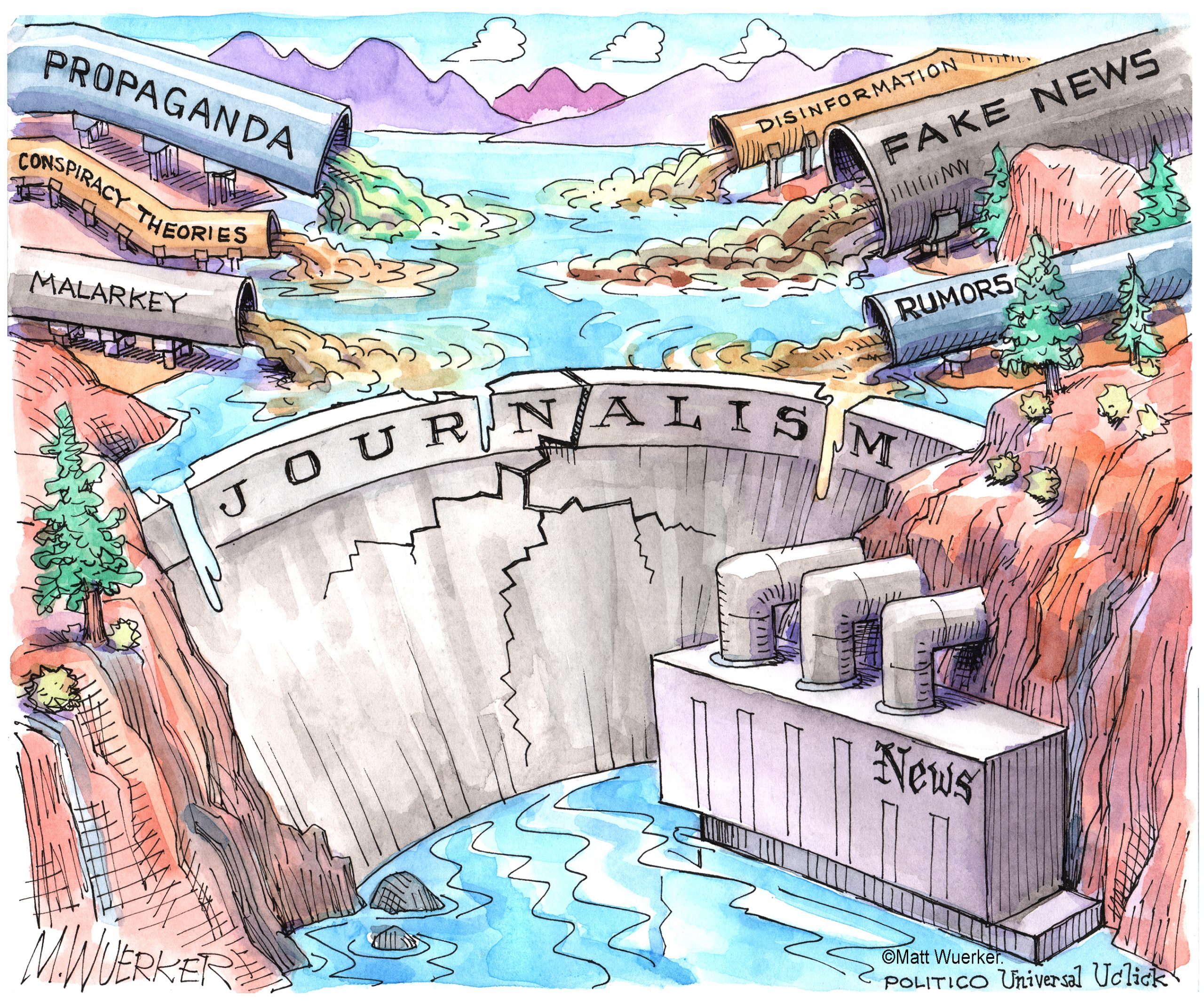
Once upon a time, most Americans got their news from a morning newspaper and an evening television broadcast. Today we gorge ourselves at a 24/7 buffet of digital, print, television, and radio news from a variety of sources with vastly different levels of accuracy.
The landscape of American journalism changes rapidly as news organizations rise and fall, political divisions widen, and, most recently, reporters and their readers adjust to a new president with an unconventional communication style.
It makes us wonder: What’s it like to cover the news today?
To answer that question, we invited five prominent alumni journalists in Washington, D.C., to participate in a panel discussion at the National Press Club in late October. Area alumni who attended the event asked questions. An excerpt from the conversation follows.
Panel
Jonathan Capehart ’89
columnist and editorial board member
Washington Post
Nancy Cook ’00
White House reporter
Politico
John Harris ’85 (moderator)
cofounder and editor-in-chief
Politico
Danielle Kurtzleben ’05
political reporter
National Public Radio
David Welna ’80
national security correspondent
National Public Radio
Deconstructing “the Media”
John Harris: When I got into this business in 1985, you could have assembled a group of 100 people and said, “This is ‘the media’ as it pertains to the president, Congress, and national politics.” You’d have maybe a half dozen people from the Washington Post; the New York editors and Washington bureau chiefs of the then–big three news magazines; the anchors, political reporters, bureau chiefs, and managing editors of the three television networks; and some people from the New York Times, Wall Street Journal, and Los Angeles Times.
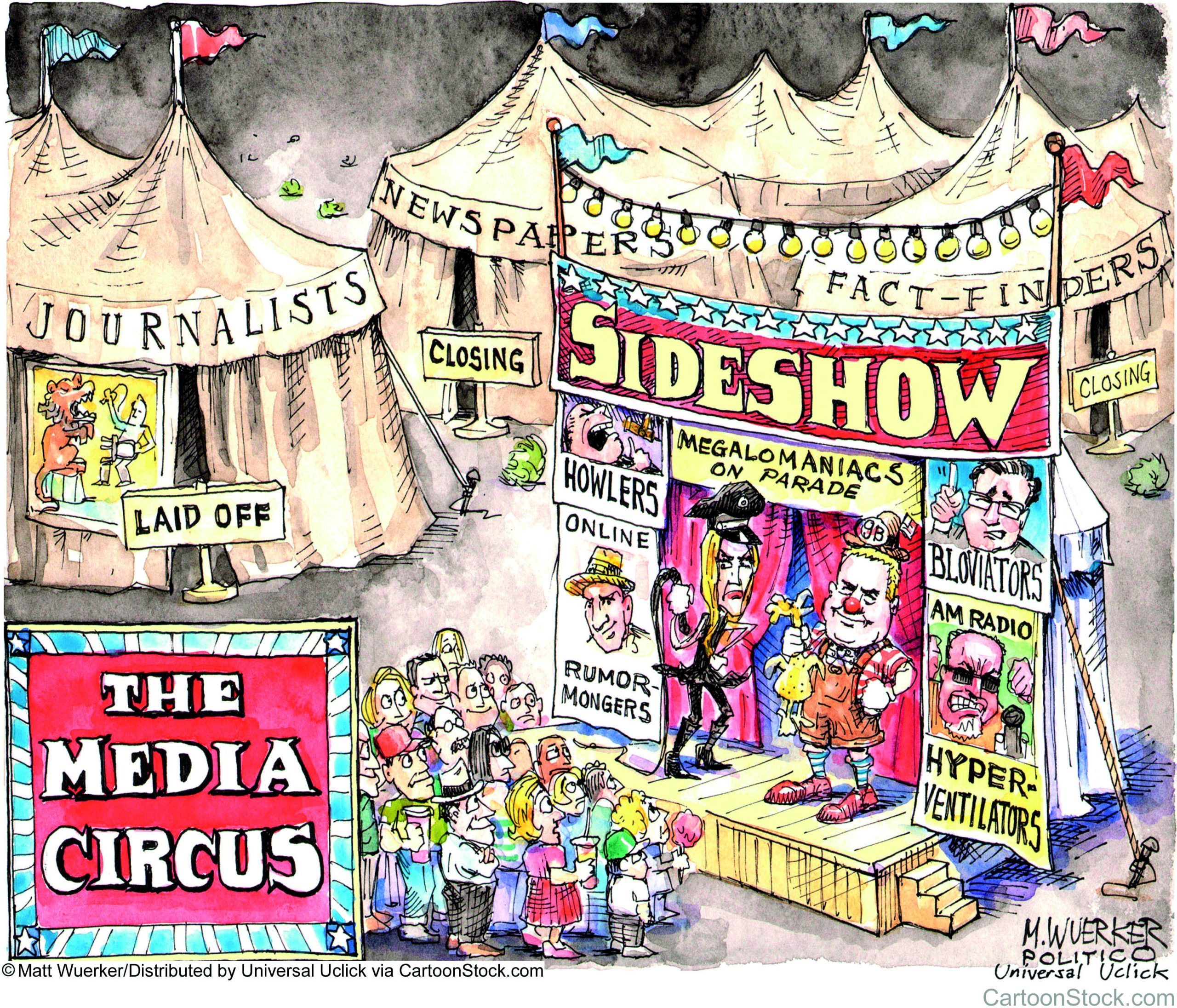
The notion of “the media” began to erode with CNN and talk radio, and, in recent years, it’s blown up. If you’re active on social media, you’re the media as much as I’m the media. Even if you’re not on social media, every news consumer is his or her own editor now. Nobody sets the agenda in the way we did just 30 years ago.
Jonathan Capehart: When a bunch of people decamped from the Washington Post and started Politico, the media elite in Washington, who were used to setting the agenda and driving the news, suddenly had an upstart across the river that was writing quickly and with credibility.
Were it not for Politico, there might not be a Vox or an Axios. Other people might not have had the courage to leave establishment media and continue the craft of journalism someplace else in a way that shakes up the model but still tries to inform the public.
Harris: The challenge of our generation is defining our journalistic values. In my mind, those values are accuracy, fairness, a sense of proportionality, and, above all, a commitment to the public interest, broadly defined. At the same time, we’ve got to be willing to discard—almost ruthlessly—things that are habits or conventions.
Changes and Challenges
Elissa McBride ’87: How have the profession and your job changed over the past few years?
Danielle Kurtzleben: I always wanted to be a journalist, but when I graduated from Carleton in 2005, newspapers were hemorrhaging people. I got my first full-time job in journalism in 2010.
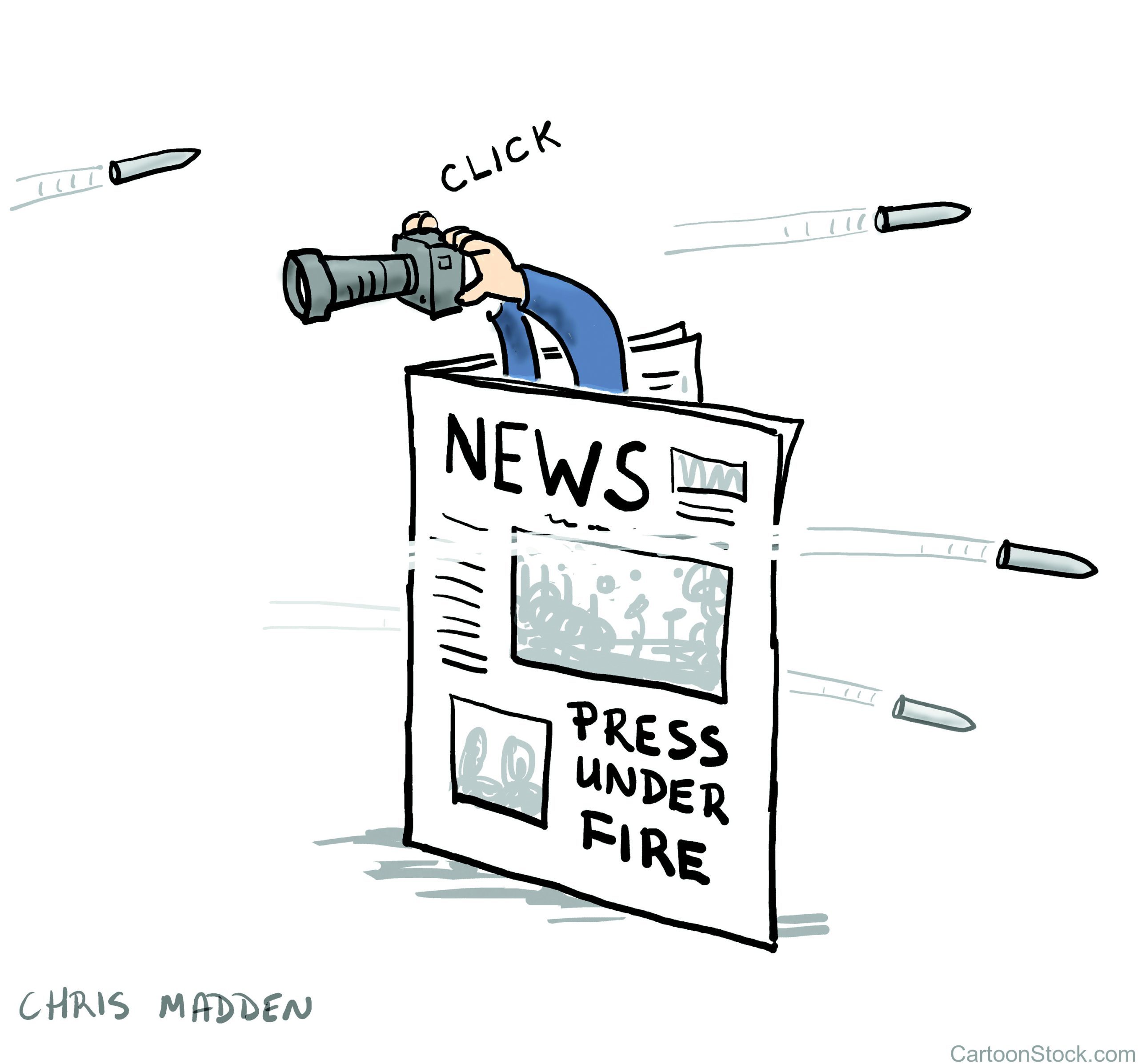
My skin has thickened immeasurably in the past few years. The kinds of things people fling at you about what you write is truly stunning. No side can claim innocence on this. It’s right and left. It’s made me realize how viscerally angry people are on both sides. Even objective facts are in question, and putting them out there is going to make some people very angry.
Nancy Cook: I’ve been a journalist since 2003, and I feel that my job hasn’t really changed at all. My first job as a journalist was at a small newspaper. I’ve never gotten so many angry calls as I did covering a small community. People screamed at me all the time, which was excellent preparation for my job today.
Harris: Politico is getting tremendous support from our audience. We’re used to getting emails that are some version of “You bastards!” and now people are saying, “Thank you. Please keep doing your work.”
On the other hand, I saw a statistic that something like 46 percent of people agree with President Trump that a lot of the news about him is made up.
David Welna: There’s a hunger for good journalism now that’s more ravenous than I’ve ever seen it in the many years I’ve been doing this.
The idea that we are somehow perpetrating a fraud on our readers or making up narratives may be comforting to people who don’t like the kinds of things we’re reporting. And we have a president who almost reflexively labels things fake if he doesn’t like them.
The problem with that is that we become the naysayers. It looks like we’re out to beat up on the president, whereas our real mission is to try to explain issues, put things into context, and have proportionality. But there’s such a blizzard of untrue information flying around that we end up just trying to set the record straight.
Cook: People have a sense that this moment is historic. It is historic. We’ve never before had a president who wasn’t a military leader or a politician. But the Obama presidency was also historic. There were a lot of things to explain then, too. So I don’t feel like it’s that different. There are people who were so stunned by the Trump presidency that they’ve elevated journalists. People on the left are thanking us. But I wrote critical articles about the Obama administration, too, and caught tons of flak for it. I’m just doing my job.
Harris: It’s important not to get self-righteous, which some of my colleagues in the U.S. media do: “We’re the last bastion for the Constitution!” It’s frivolous to say that when there are journalists in the world who are literally risking their lives and economic well-being to report truthfully on power. We do important, serious work here, but we face nothing like those kinds of challenges. The First Amendment is enough for us; it’s far stronger than any challenge that comes up.
Build It Up or Knock It Down?
Dave Malakoff ’84: I work at Science magazine, and we could spend essentially all of our time knocking down the latest untruth or misstatement. How much time do you spend on knockdowns?
Cook: It’s a mix for us at Politico. There’s a sense that the Trump administration isn’t getting anything done. But as someone who covers policy, I can tell you they are getting things done in a pretty quiet way: appointing a lot of judges, regulatory rollbacks at the agencies. Our challenge is to not always be reacting but also to look at the landscape and try to put markers on the board over the long arc of a four-year presidency: Here’s how they’re changing things. These are things they’ve said that are true or untrue. It’s definitely a balancing act.
Capehart: I’m constantly reminding people to read before they tweet. I tweet out the headline and a link to my pieces. Because everything is so rapid, people will react to the headline and come at me on Twitter, saying, “How dare you say this?” Well, actually it’s a quote. “Why didn’t you say this?” Well, if you read the piece you’d see it’s in there. No one, apparently, has time to actually fully read anything, particularly if it’s online.
All of us spend a lot of time reporting, talking to sources, researching, running things down, and then writing our pieces. When I write an assertion and I think the reader might wonder how I know, I put in a hyperlink. Every quote and every statistic has a hyperlink.
My point is: If we spend all this time on reporting and writing, then the least you can do is read what we’ve written. Don’t come at us if you haven’t done all the reading, listened to the entire radio report, or watched the entire television report. Otherwise you’re just fighting with yourself.
A Flood of Information
Stacey Pelika ’96: Ira Glass interviewed [former Minnesota senator] Al Franken recently. He kept asking where the Democratic bills were on health care and infrastructure. Franken said Democrats do have their own bills, but no one will cover them because the bills will never make it to the floor and there’s a fire hose of other things going on. I think there’s a role for the media in helping us pick out important things from the fire hose. People in Congress and the executive branch are doing a lot of things that we don’t know about.

Cook: We have a feature at Politico: “5 things Trump did this week while you weren’t looking.” I cover the White House and sometimes I didn’t know all of those things.
It’s an interesting moment in political reporting because the Republican Party is being reshaped in the image of Trump. Meanwhile, the Democratic Party is having its own identity crisis, so there’s a lot of noise coming from both parties. The hardest thing is prioritizing what we’re going to do, because there’s so much happening at all times.
Welna: When I came to Washington 14 or 15 years ago, I learned that this city can only focus on one big thing at a time. We have a president who figured that out faster than I did. If you change the subject and put something even shinier out there, all of a sudden we’re all jumping all over that. It’s easy to distract people from big stories that we would normally have given a lot more attention to.
Kurtzleben: People wonder if it’s calculated or if President Trump is just id. I think it’s a little bit of both. In The Art of the Deal, he laid out his strategies for communicating. One of them was “truthful hyperbole.” So to some degree he knows what he’s doing. But we can also match some of his tweets to things that were on Fox & Friends that morning. He knows the strategy, but the strategy is gut reaction. I don’t think you can separate the two.
Capehart: There was an argument during the campaign about how seriously we should take then-candidate Trump’s incendiary comments. Writing under my own name on the Post Partisan blog, I was free to call him out. But it wasn’t until Candidate Trump attacked Judge Gonzalo Curiel and questioned his independence based on his Mexican heritage that my editor came into the meeting and said, “I think now is the time to start talking about what he’s doing and how this is a threat to democracy, to the independence of the judiciary, and to our values.” It was music to my ears, because I said, “This guy could win, and if he does, we want to be on the right side of history.”
Harris: Do you feel the words are having an impact?
Capehart: It depends on who’s in our silo. With the democratization of information, instead of people getting their news from the old elite, now they can just go to the news source that fits their worldview.
When I was doing the news at KRLX at Carleton, I had more news on the teletype than anyone on campus or even in the country had. As a news person, I got the information and then I decided what and how much to report. Now all of you have as much access to information as any of us do.
A Balanced News Diet
Ellie Durling ’17: I consume a lot of political media, so I think a lot about how to make a good media diet. Obviously you need a diversity of sources, but I also think there are different registers of sources. How do you motivate yourselves to read things that are good for you?
Capehart: I applaud you for having different sources. I tell people, “If you’re liberal, for every three liberal columnists you’re reading, find one or two conservatives.” By doing that you’re making yourself a better-informed citizen.
The same goes for television, although I’m very bad at it. One day a few years ago, my husband said, “Come on! We’ve got to watch Megyn Kelly!”
I didn’t want to do it, but he talked me into it, and I spent from 9:00:01 until 9:59:57 screaming at the television.
That being said, Fox News is the number-one-watched cable channel in the country, although MSNBC is biting at its behind. Fox is the cable channel that the president of the United States watches. So while I was struggling through an hour—that one time—there’s an entire country watching this. We’ve got to do our best to hear what they’re saying if only to try to be a bridge.
Welna: I just spent a week traveling through Asia, and my access to the panoply of information was more limited. In my hotel rooms I had CNN and Fox News. It was amazing to see how at the same moment these two news channels were focused on entirely different subjects.
I’ve made it a point to watch Fox News because I understand news media consumption as being like looking out a window onto the world. I want to know what a lot of people in this country are seeing when they look out the Fox News window, if only to understand how they’re coming at issues. I know there are people who watch Fox News and listen to National Public Radio—I’m related to some of them. If we neglect to inform ourselves of what a wide range of people are consuming for news, it makes it harder to relate to people.
My primary mission is to engage listeners and guide them to why a story is important, rather than guide them to a conclusion. But to engage people, you have to know what they have been thinking about and seeing.
A Divided Audience
Heidi Welsh ’88: I live in western Maryland, on the edge of Appalachia, where people are dying every day from the opioid crisis. There are fewer local papers, and I think [that’s caused some] people to feel alienated from what they see as an elite superstructure. How do you reach rural people who have real problems, yet feel so cut off?
Kurtzleben: People aren’t coming to my story through the NPR homepage. They get it from Facebook or from an aggregator. It’s in a link a friend sends to them. So I’m meeting people there.
It’s a matter of writing about the problems they care about. For example, when I write a story about manufacturing, I hear from a different set of people than when I write a story about feminism. The subject chooses the reader, in a way. People will end up seeing stories that are relevant to them.
I feel like every journalist in D.C. has some form of “my people back home,” and I do too. I’m from a rural farming area, so I try to get a sense of what people back home are talking about. Do they care about the Russia investigation or not? And if not, what are they talking about?
But even when you do everything you can to get your story to the people who will care about it—down to putting keywords into a headline—the bottom line is that red and blue America have very different Facebook feeds. So I do my best to be fair—I have lists of right-wing and left-wing sources on various topics—and I reach out to people as much as I can across the spectrum and hope that gives me some credibility with whoever ends up reading my article.
Cornell Hill ’74: Do you have a process for directing your piece to a specific type of reader? Or is it more, “I’m going to put this out there for whoever’s going to get it?”
Harris: You might wonder if we plan out our stories by thinking, “Oh, the right wingers will really love a story about this outrage.” Or, “This is going to be shark chum in the water for the Bernie Sanders crowd.” I don’t think anybody on this panel works for news organizations that do it that way, but there are many organizations that are precisely that cynical. They’re making judgments about the most effective weapons or shields in the daily ideological war, and they’re thinking not of how they can serve their audience but of how they can manipulate it.

Capehart: News reports are coming out about how the Russians played on our emotions to drive wedges. The idea that the Russians had fake Black Lives Matter Facebook communities shows that just by hitting right into the heart of America’s original sin and playing on those fears, they were able to successfully pit us against each other. My hope is that now that we know they’ve done this and that they’re going to keep doing it, we will be on guard. Instead of our falling for the fake Facebook thing 100 percent of the time, maybe they’ll be 50 or 25 percent effective.
Welna: There’s something the Kremlin and its minions do that’s known as “what about-ism.” Let’s say Putin is cracking down on journalists. Instead of talking about that, the Kremlin will come back with, “What about this other thing you did?” That kind of dynamic has been going on here, too. For example, in response to news on the latest turn in the Mueller indictments, we get, “What about Hillary Clinton and the uranium deal?” Whether this is calculated or reflexive, I’m not sure. But it’s a problem.
Kurtzleben: It’s easier to make things up, make people angry, and sow chaos than it is to make a nuanced argument. Dropping bombs on Facebook is easier than trying to inform people and get them to agree on objective facts.
Ethics and Objectivity
Helene Stebbins ’90: Is it asking too much for there to be a standard for what is good media? For there to be an impartial quality rating that says this is—or is not—a good news source?
Harris: There are people who are trying to assign validators to how much a news source can be trusted. It would be based not on ideological grounds—trust us because it’s conservative or trust us because it’s liberal—but rather on the reliability of the organization over time in presenting accurate information.
I’ve got no problem with people presenting news through an ideological prism if it’s intellectually honest and on the level—if they’d apply the same standards to both conservative and liberal politicians, for example. That’s the difference between journalism and propaganda.
Ted Steege (husband of Eva Reque Steege ’64): I’ve been frustrated by the question of objectivity for a long time. Back when I was a student journalist working for UPI, every time I wrote a story on police brutality my boss told me nobody would read it. Then when I covered a demonstration in Chicago where some draft records were burned, it was written up as an arson story after they cut out the substance of what I reported.
I know there’s no such thing as absolute objectivity, but there ought to be something in terms of responsibility for fairness. Is anybody working out some kind of public policy guidance or strategy for giving an incentive to news media to have more balance?
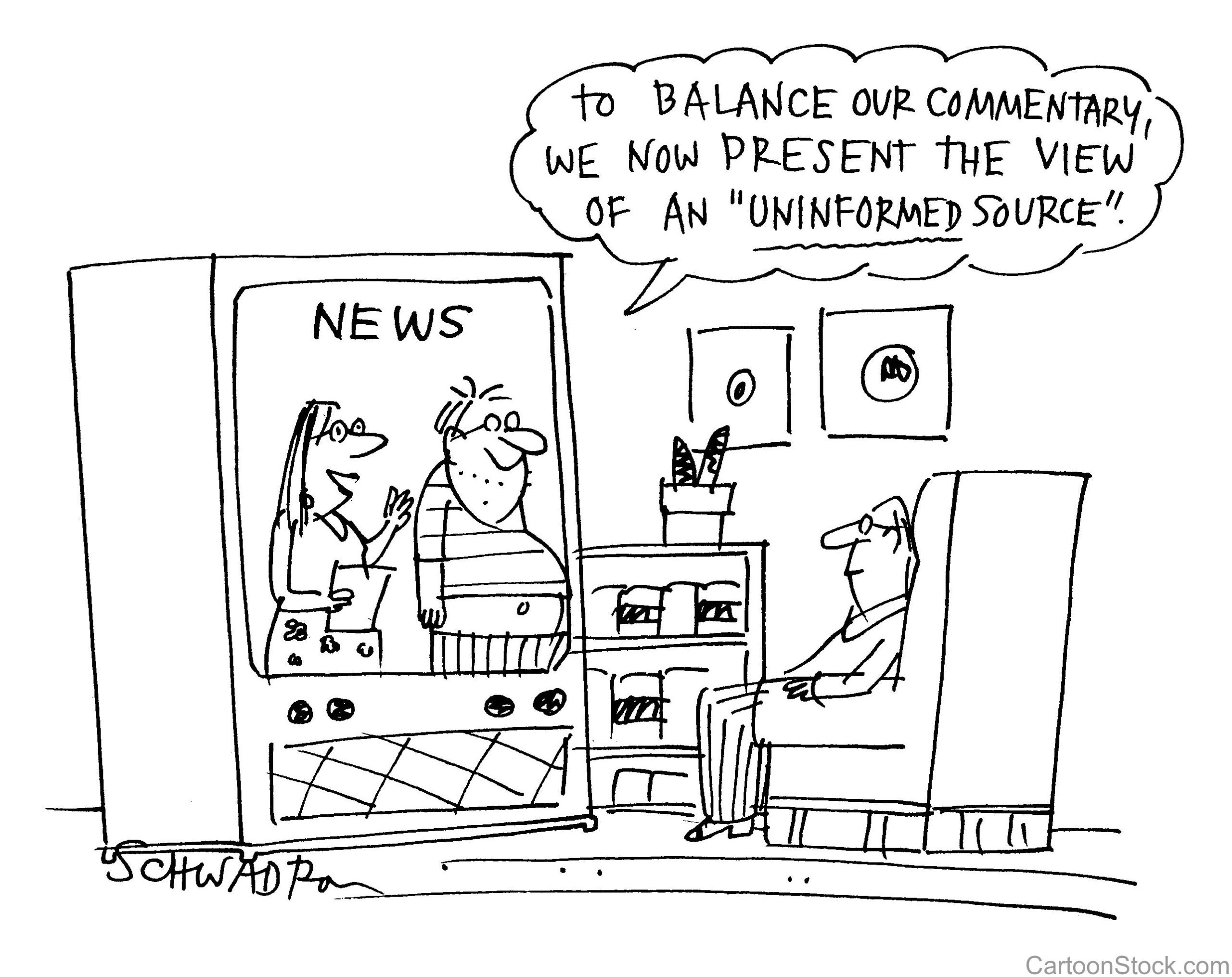
Kurtzleben: I haven’t heard about anything like this, but in terms of personal fairness standards, I know that giving 50 percent of your story to the right and 50 percent to the left doesn’t work. On some topics, one has more facts on its side than the other. The best advice an editor gave me was, if you’re writing an article that’s critical, present the best argument from the side you take issue with. Give everybody a fair shake.
Harris: Ben Bradlee, longtime editor of the Washington Post—probably a hero to a lot of us—said the arguments over objectivity are endless. You’ll never get to objectivity, but a three-year-old child understands fairness: “Wait a minute, she got a bigger piece than I did.” “He got away with it and I didn’t.” That goes back to intellectual honesty. Did you give both sides an equal break and treat them respectfully? It doesn’t mean you’re completely neutral or 50-50 in terms of which sources you quote. But fairness is a standard we can aspire to.
Sources, Blackouts, and Leaks
Jim Carlson Parys ’84: At the agency where I work, we just went through a training about how we shouldn’t be leaking or talking to the media. I wondered, with this administration, whether you still have access at different levels.
Cook: In some ways, this is actually an easy White House to cover. The campaign wasn’t very big, so there are a lot of people who joined the administration not because they believed in Trump but because they had an ideology to promote or just seized on the chance to work in the White House. Because of that, there are a lot of different camps of people. People don’t necessarily feel the same affinity for each other in this White House as they felt under President George W. Bush or President Obama. A lot of people have been willing to talk because there are a lot of factions that want to push different agendas.
But there’s also a sense in this White House that if your profile is too high, if it becomes anywhere near eclipsing that of the president, you are a dead man walking. With the White House officials I talk to, I feel there’s a sense of not wanting to be too much out there, because it just makes you a target.
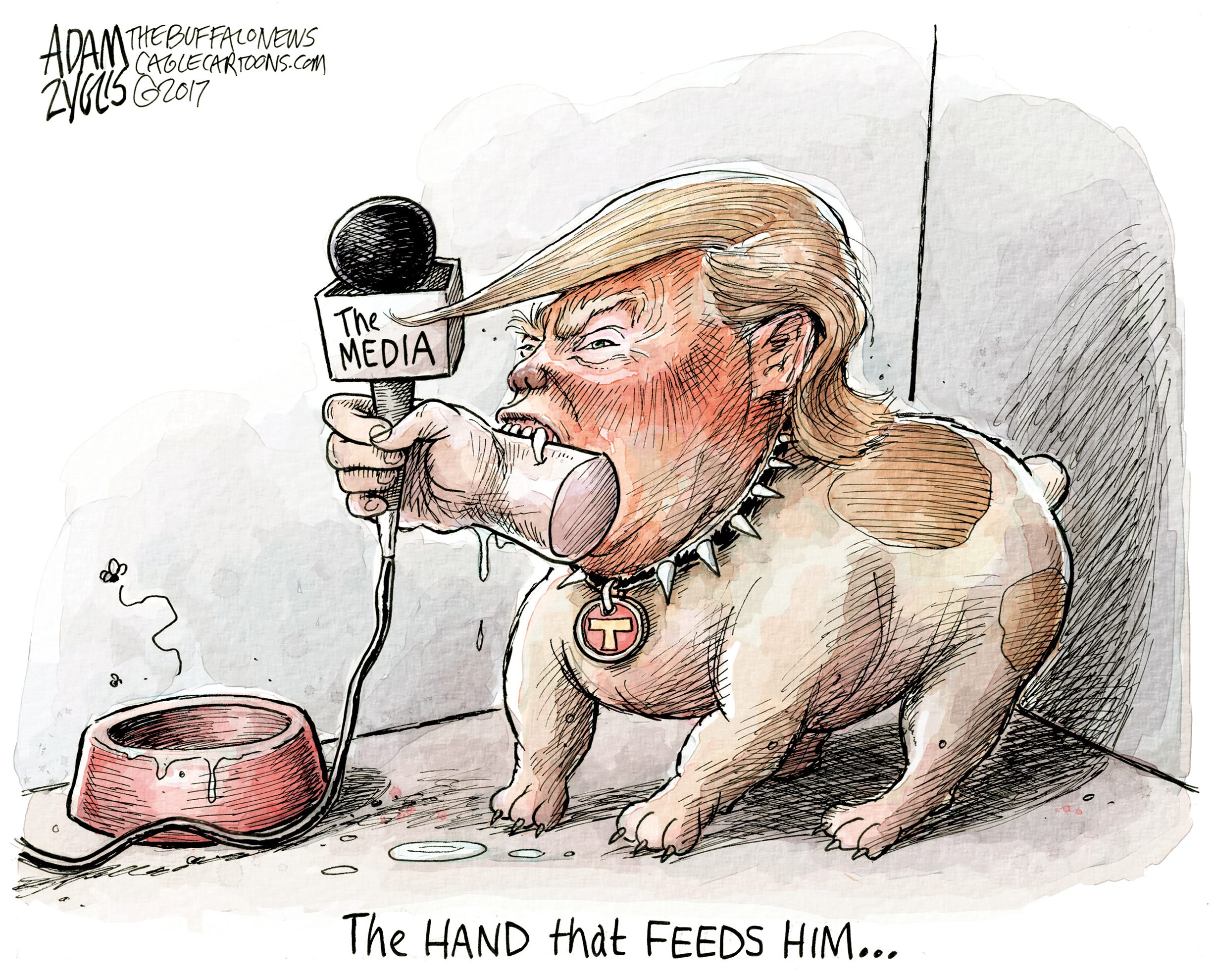
This White House is so freaked out about leaks that they don’t always give reporters the information they need to understand the White House’s perspective—why they’re approaching a policy a certain way. Or they’ll release the information at the last minute in a haphazard way. That ends up hurting them, because it’s hard to know where they’re coming from and they’re not always willing to articulate that.
Welna: I periodically cover our defense secretary, Jim Mattis, and travel with him when he goes abroad. I’ve traveled with other defense secretaries, [Chuck] Hagel and Ash Carter [under President Obama]. The contrast between covering them and covering Mattis is amazing in that we got so much from them and so little from Mattis. He didn’t want to go on the record with anything. We said, “Look, we’re here because we want people to understand why this trip is important. We need you to be on the record.” What he said to us was off the record, but I can tell you generally that this man was very concerned about keeping his lines of communication open with the White House and being able to weigh in on the use of force. And while the fourth estate was important, it wasn’t as important as questions of foreign peace, maybe.
I wasn’t the only one who was frustrated. Pieces came out in Politico and the Washington Post about the frustrations of getting information from this Pentagon. Never, in most reporters’ experience covering national defense, has there been so little information available for public use.
I think they work for somebody who looks at publicity as a zero-sum game—the more attention somebody else is getting, the less attention is being paid to him. But I think things are changing for the better. On my most recent trip with Mattis, he offered to talk to us more, both on and off the record. Maybe journalism and public shaming brought this about.
The Business Side of the News
Amy Bevilacqua ’89: How has the political climate changed the business model of journalism, and how have our siloed patterns of consumption affected the sustainability of the profession?
Harris: We are still experimenting with what’s going to be the long-term economic model for journalism. Some of these experiments are starting to work and promise, at least tentatively, a sustainable model for serious journalism.
Our answer at Politico has been to be more niche. By targeting our audience, we can charge a lot to advertise next to our content because a lot of people are reading it (what we do on our main site), or charge a lot for a subscription (what we do for our specialized policy content).
The Washington Post has a different answer, which is to grow its audience and use all the tricks of the trade for a digital audience. They can identify that audience with much more precision and then find ways to monetize them on a small scale, with less-expensive subscriptions, but a lot of them.
I don’t know that there’s anybody in the business who feels confident that we’ve cracked the code on this—certainly not in a generation-long way. Anyone who wants to stay in journalism is going to have to be continually adapting to find new business models that will sustain quality. The alternative is just mass trash sites with very small staffs publishing click-bait stories, basically doing aggregating instead of original reporting. That’s a way to death for our profession.
Responding to Readers
Sonali Gupta ’12: When people comment—especially in this era of media trolls—what do you do with that feedback?
Capehart: I never read the comments after any of my pieces because it’s a cesspool. And I had to tell my mother to stop reading the comments, because she called me once: “Oh my God, did you see . . . ?”
Mom, don’t read it. Just don’t do it.
I had to shut down my Facebook comments, too. I’m just trying to stay clean! I do pay attention to emails and tweets—although I still get some horrible racist, homophobic comments. But sometimes a reader will say, “I hear where you’re coming from, but have you thought about it this way?” Sometimes that will generate another piece. Or someone will send me a tweet and say, “You’re wrong and here’s why.” A couple of times I’ve written another piece saying, “I said this, but then a reader said this, and you know what? That person’s right.”
Thanks to Twitter and email, I know exactly who’s reading me and I know who I’m trying to reach outside those audiences.
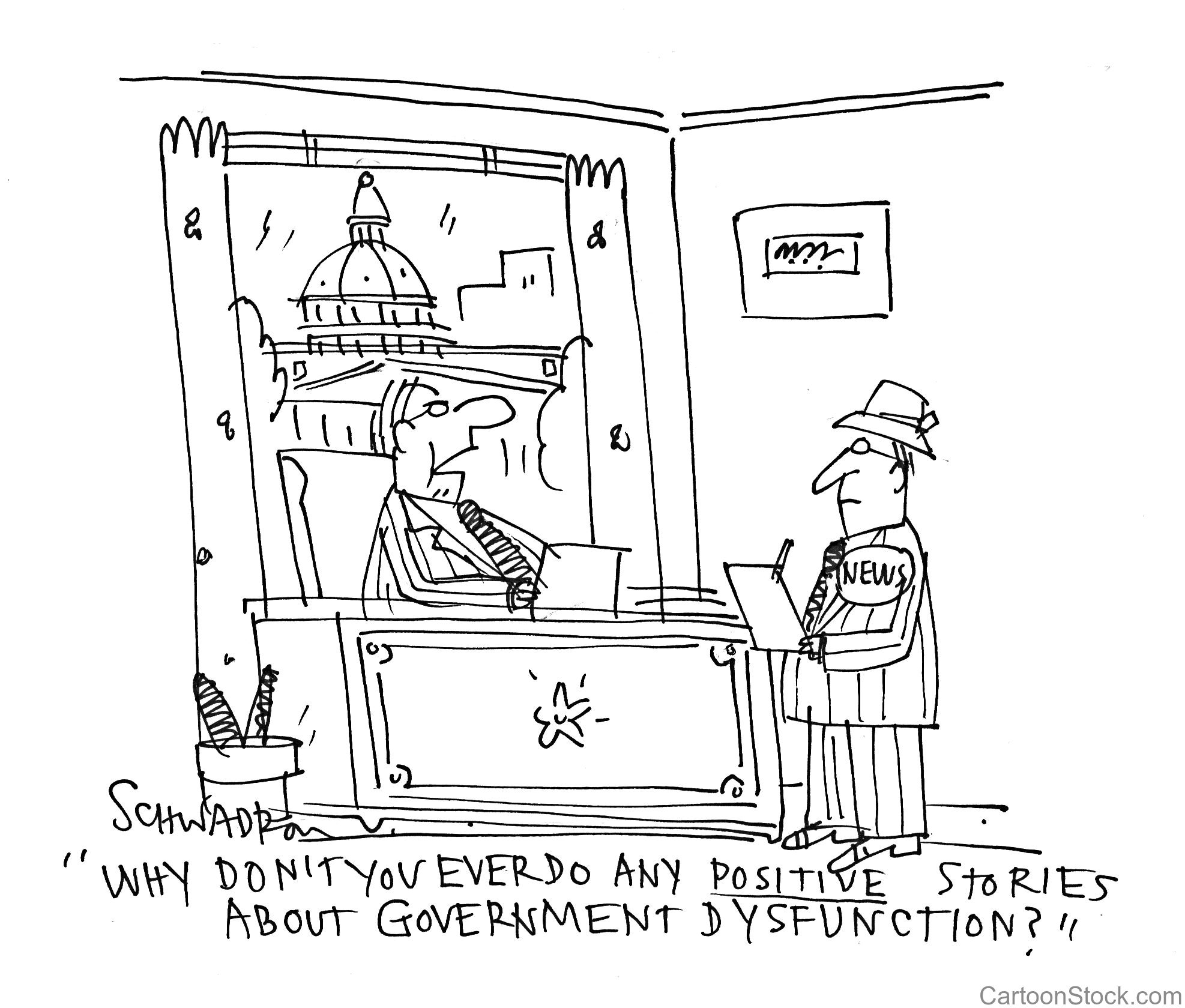
Kurtzleben: When you get a critical mass of passionate feedback on a certain topic—even if some of it can’t be repeated in polite company—it informs your coverage. Fairly often I’ve been surprised because I had no idea people were that impassioned over the topic. Perhaps it’s something people will want to hear more about.
If I get an angry message on email or Twitter, if I write back—even just to explain why my opinion hasn’t changed—nine times out of ten people will write back totally cooled down. They’ve realized there is a flesh-and-blood human on the other end and even if they still disagree with me, they start acting like humans again. It gives me a little more faith in humanity.
Welna: We got rid of online comments at NPR. I did read the comments. I felt that if nothing else, I could get a sense of who might be reading. There were a lot of trolls, but it was informative at times.
Now feedback comes from emails, phone calls, and social media. Sometimes I can get a fact wrong. If somebody catches me on that, I will immediately get in touch with the show and correct the error so that the next feed will have the right information. That’s hugely helpful. In broader philosophical debates, people can weigh in, but I’m not really going to be able to change their minds or my story.
Cook: I love hearing from readers. I happened to be on White House duty the weekend that Charlottesville [“Unite the Right” rally] happened and President Trump commented on it over the course of three days. I wrote a bunch of articles and got a flood of interesting emails that showed how polarized the country is and how people, depending on their political perspective, viewed those comments completely differently. Feedback is a way to engage with people and get a sense of how they view this White House and what’s happening. Journalists are so in it every day that it can be hard to pull back and say, “This is how people outside are seeing it.”
Facing the Future
Harris: Remember those old days of a generation ago that I described at the beginning? We wouldn’t go back there even if we could. The changes in technology and economics and our relationship with the audience are permanent, and they’re probably going to accelerate.
There’s more great journalism being produced now than ever before. It’s true that great journalism has to compete with a lot of really inferior content that I wouldn’t dignify with the term journalism. That’s the challenge, but we are all trying to meet it. It’s a great feeling to hear from an audience that is making discerning judgments about whether we’re meeting that standard and is ready to critique us when we’re not and support us when we are.