
The 2008 mortgage crisis and the economic recession hit Detroit hard. Urban blight spread from block to block like an infection. Houses were abandoned. Businesses closed. Services were cut. Detroit filed for Chapter 9 bankruptcy in 2013, acquiring the dubious honor of being the largest municipal bankruptcy in U.S. history.
But some residents refused to give up. As the city fell into disrepair, people took it upon themselves to mow the grass in parks, tear down drug houses, and transform vacant lots into community gardens.
“Detroit is sometimes mischaracterized as a blank slate,” says Christoph Ibele ’03, referring to the city’s vast tracts of vacant land. “But that’s not fair to the people who stayed through the hardest times. And it misses the significance of a historical and political context that’s incredibly rich and complicated.”
Finally, Detroit is finding its footing. In 2013 almost half of the city’s streetlights were dark. By the end of 2016, new LED streetlights lit up the entire city. Neighborhood police stations have reopened, bus routes have been added, and last spring, for the first time in seven years, the city of Detroit cleaned its streets.
Ibele works for Hamilton Anderson, an architectural firm in downtown Detroit. “It’s common in architecture to specialize in either design or execution,” says Ibele, whose job title is designer, although his responsibilities are broader than design. “This firm allows me to oversee the process from start to finish. That’s important because it’s a continuous process and not one that can be neatly subdivided.”
After earning a master’s degree in architecture from Harvard, Ibele worked in Zurich, Minneapolis, Milwaukee, and St. Louis before moving to Detroit in 2015. For the past two years, he has overseen the design and construction of City Modern, a mixed-use development just north of downtown in the Brush Park neighborhood that features a variety of housing options, including low-income housing for seniors.
7:36 a.m.

Ibele runs along Detroit’s River Walk, which was redeveloped over the past decade to include a five-mile path, an outdoor music venue, and public art and gardens along the waterfront. “There are plans to expand the park and make it more accessible from the city’s neighborhoods,” says Ibele, “and I think that will be key to Detroit’s future growth.”
8:55 a.m.
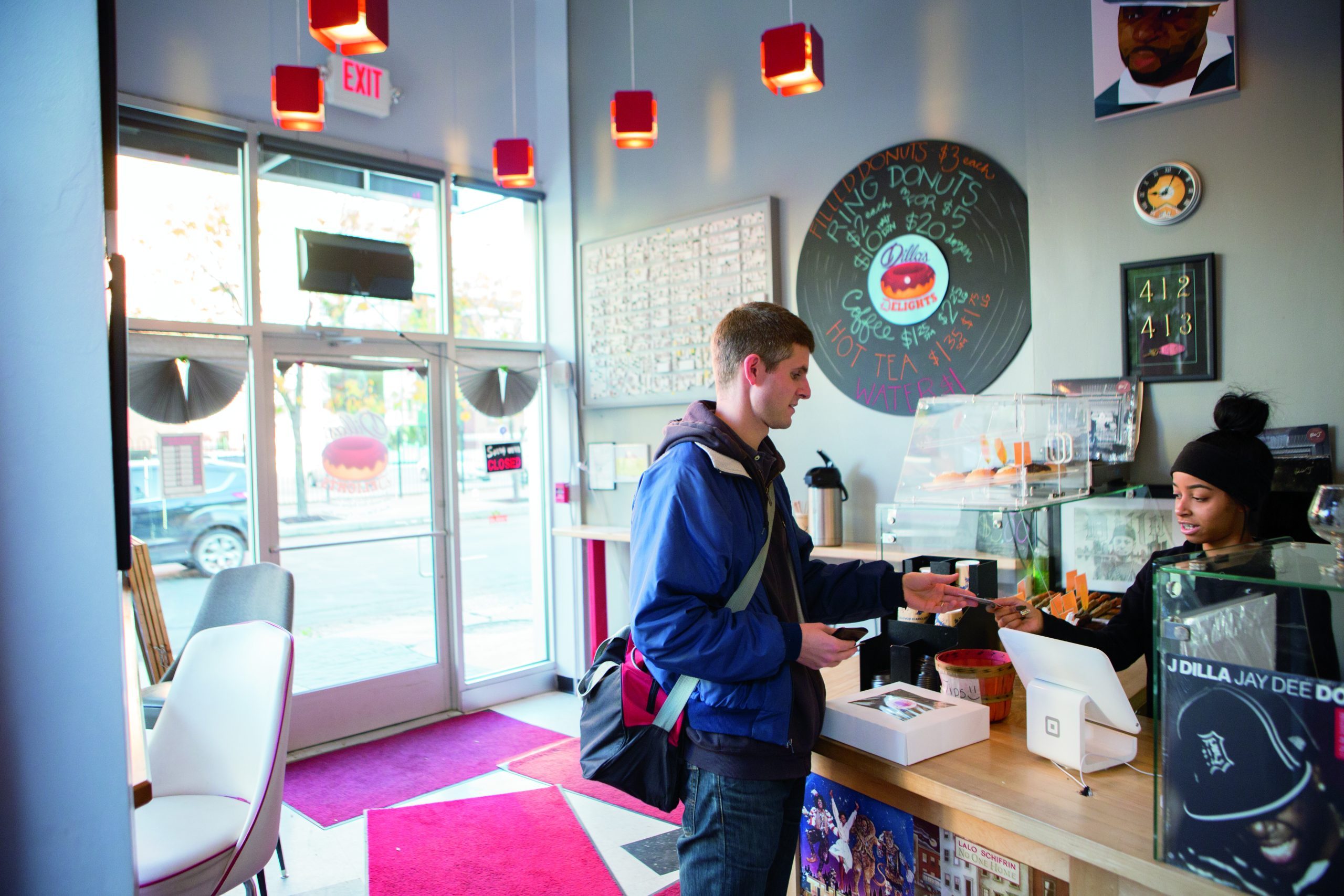
Ibele is a regular at Dilla’s Delights, a doughnut shop in the historically black neighborhood of Paradise Valley. In the 1960s, freeways pushed through, destroying a once-vibrant community. “It speaks to the city’s massive, and often tragic, transformation,” Ibele says.
9:09 a.m.
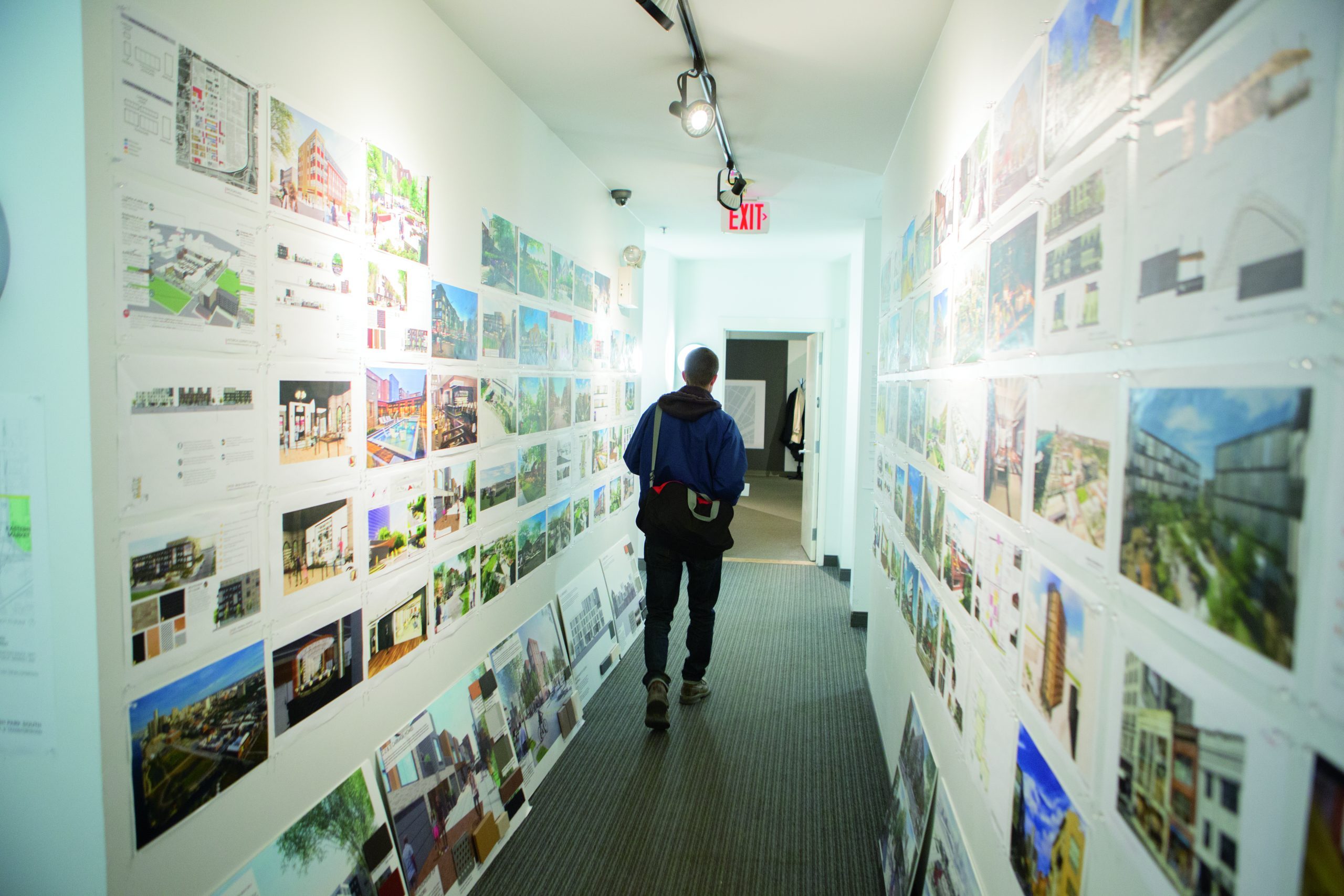
Arriving at work, Ibele walks through a hallway of photos of current and future projects by and for Hamilton Anderson, a minority-owned architectural firm. One of the firm’s founders, Detroit native Rainy Hamilton, runs the company and is committed to the city’s resurgence.
9:27 a.m.

Ibele has been at Hamilton Anderson for two years. In addition to his design duties, he runs an office mentorship program and oversees an internship program that partners with Detroit high schools.
9:45 a.m.
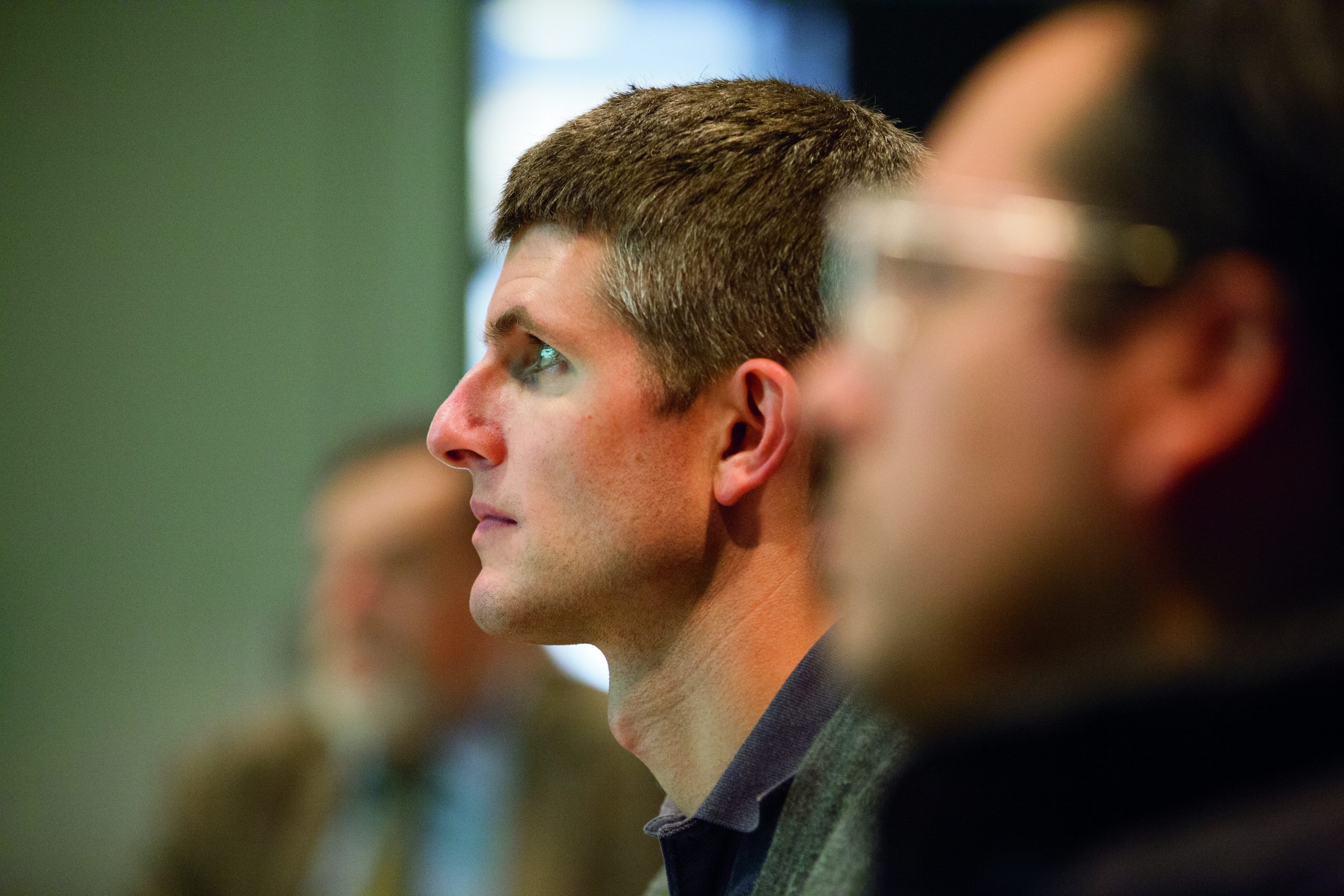
Client meetings take place on the job site weekly, while informal staff meetings—like this one to review interior materials for a reception area in the new development—are frequent.
11:39 a.m.
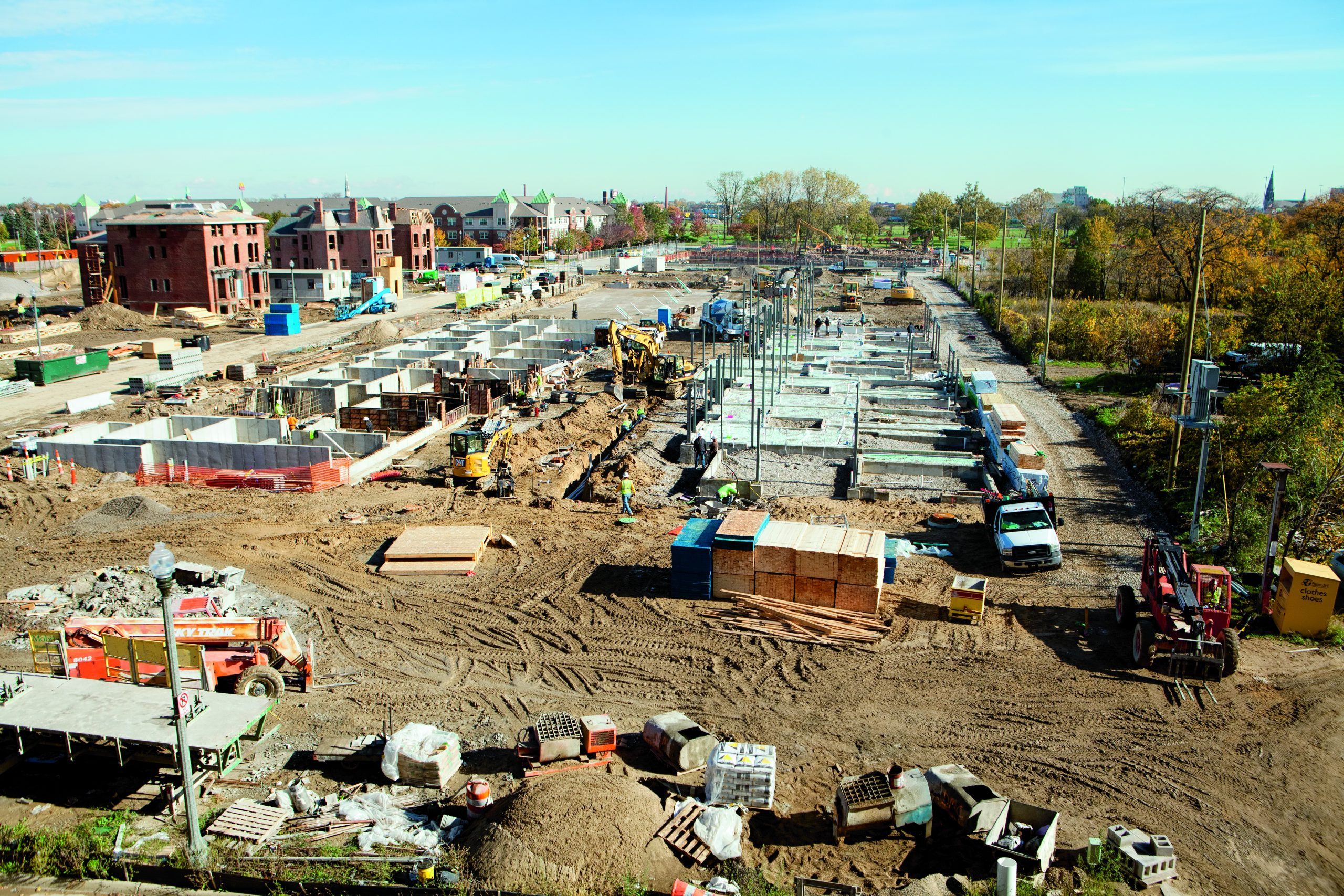
The design team has integrated some historic buildings into the construction plans. While not all of them can be preserved in the truest sense, many are being repurposed and rebuilt. “Preserving older buildings adds to the richness of the neighborhood. We’ll never build houses like that again, and it’s important to save what we can,” says Ibele.
12:06 p.m.
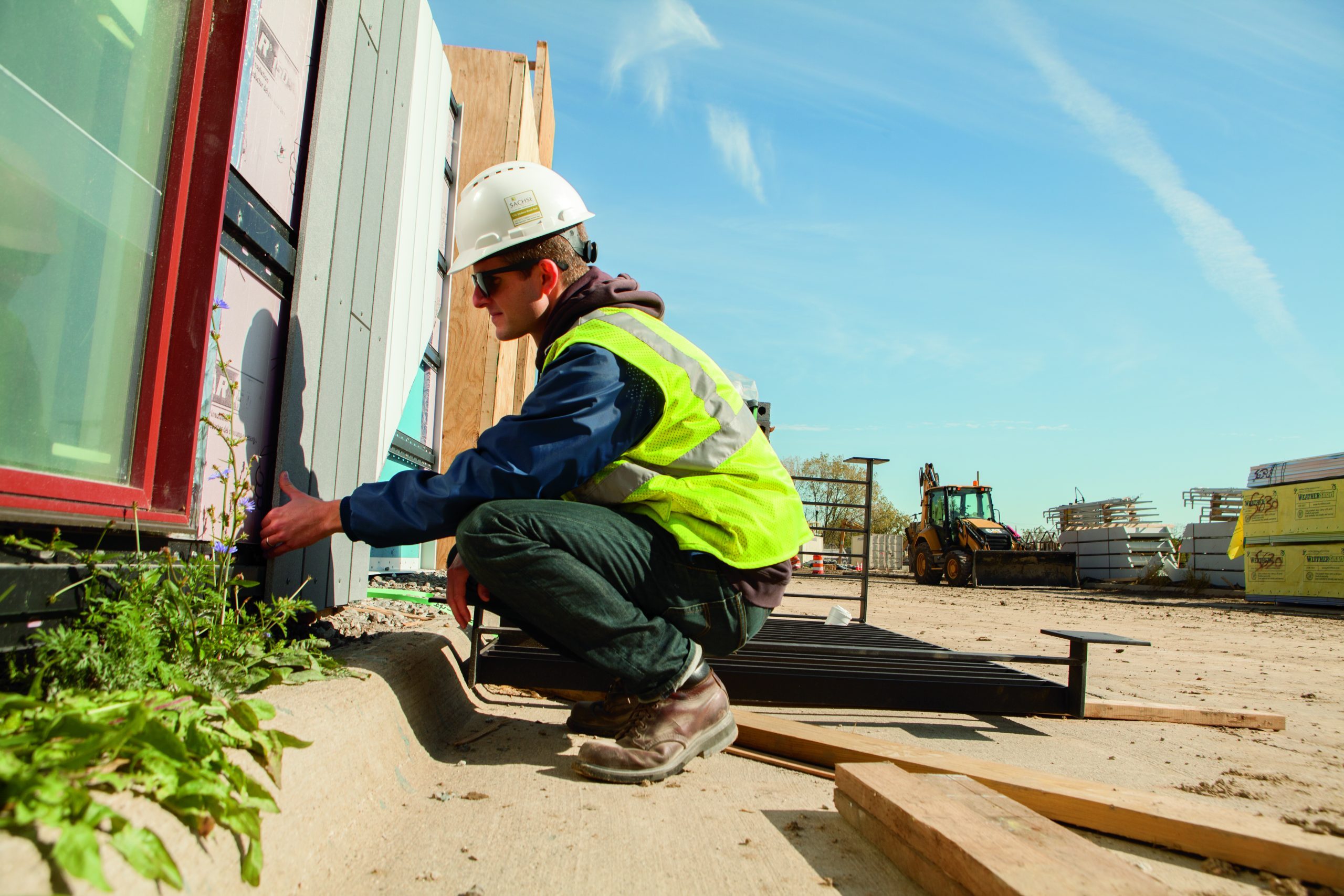
“You can draw it and even model it, but you don’t really know what you’re dealing with until you test the way different materials come together, the effect of sun, shade, and rain, and the potential complications involved with construction,” says Ibele. “The mockup is how we test ideas, and it quickly reveals any differences in expectations among the parties involved.”
1:20 p.m.

Ibele sits on review panels for architecture classes at Lawrence Technical University or the University of Detroit nearly every semester. “Presenting your work to a jury is crucial to learning how to articulate what’s important about your work and respond productively to criticism,” he says.