Winter 2028
This program will cover the key thematic issues of political economy and ecology of Southeast Asia. The program focuses on learning by experiencing and participating in local livelihood activities. Students will connect their experiences to theories and concepts that explain political development and ecological issues relating to the challenges of nationalism, state formation, regional integration, regional development, the rise of the power of non-state actors, and the struggles for citizen-sovereignty. We will examine these frontier issues against the backdrop of Southeast Asia’s societal changes through kingdoms, colonial eras, emergence of nation-states, the influence of globalization, and environmental changes.
It will emphasize understanding and linking the theories and practices of political economy and ecology of Southeast Asia by experiencing life in Thailand, Lao PDR, and Myanmar or Cambodia. Students will gain a fundamental and first-hand understanding of conceptual issues, empirical evidence, and theoretical puzzles that resonate in Southeast Asian politics and development but are also relevant to many other regions of the world.
This program is highly experiential — activities and schedules are subject to change with very little notice, so students must be prepared to be flexible!
Message from Faculty Director
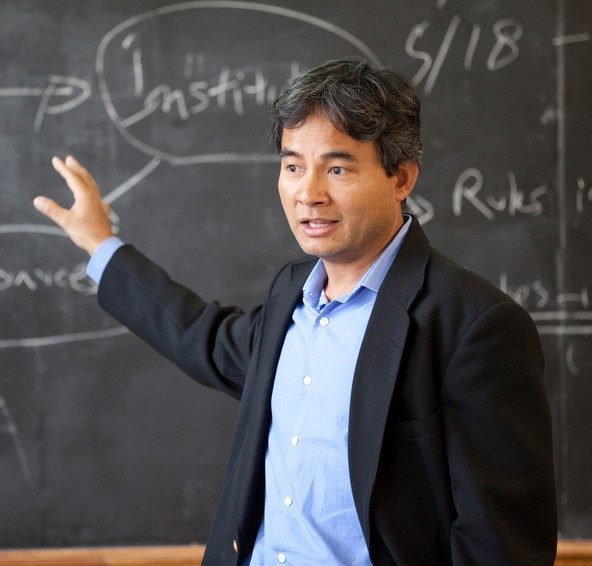
Southeast Asia is a region of amazing cultural and linguistic diversity with over 1,200 languages spoken by approximately 650 million people. The region is an ecologically, geographically, and politically diverse area of the world. If you are interested in learning by doing, experiencing, and living with the people of Southeast Asia, namely in Thailand and Lao or Myanmar, this is the program for you. What we typically do in learning by reading books and doing conventional desk-research for writing assignments take a backseat in this OCS program. Experiencing the region and doing things with locals to reflect deeply and intimately on social and ecological changes will be a key method of learning. You will be asked to participate in local agricultural activities, food production, cultural festivals, and ecological conservation programs in local communities and national parks.
I have ongoing field research sites in Northern Thailand, Central Lao People Democratic Republic, and Myanmar, examining the relationships between social changes and ecological changes. My first book, Governing International Rivers: Polycentric Politics in the Mekong and the Rhine, is based on my field research in the region from 1998 to 2004. I earned my PhD in 2005 from the joint program of the School of Public and Environmental Affairs and the School of Law at Indiana University, Bloomington. My research examines the role of individuals and groups in the dynamic relationship between social changes and global environmental changes with a focus on democracy, development, globalization, and sustainability. With the contribution from students who participated in this OCS program in the past and in my summer field research activities, I am building Public Memory of Myanmar digital archive at Carleton and working on a book manuscript on Myanmar.
I am a native of Burma and speak Burmese as native language, Chinese, and Thai. I look forward to introducing students to this dynamic and rapidly evolving region of the world.
Academics
Learning Goals
This seminar will provide opportunities for students to experience and learn dynamic interactions between social changes and ecological changes in Thailand, Lao PDR and Myanmar. There are three goals for the seminar participants:
- To experience and learn how social changes are happening in both rural and urban settings in Thailand, Lao PDR and Burma/Myanmar
- To experience and understand how different levels of socio-economic development are tied to different levels of political freedoms in daily life of diverse communities in Thailand, Lao PDR and Myanmar; and
- To gain first-hand experience and understanding of how development projects are implemented on the ground and how they impact surrounding social ecological systems.
Prerequisites
There are no course prerequisites for the program. Applicants should be highly motivated to seek out new experiences, display respect, curiosity, and humility toward others, and be prepared to work and study in unusual and challenging circumstances. Taking POSC170, POSC268, and POSC361 any term before the program will be beneficial for students as these courses contain case studies from the region.
Course of Study
18 Credits
Students will have to complete all three components of the program to obtain 18 credits. The first component is field experience, daily journal and field research presentations. The second component is writing short reflective weekly essays, and the final component will be a research report of the entire experience based on the student’s topic of interest in the form of photo essay, Wikipedia article, or a video production. All three components will be facilitated by homestay experiences, field trips, classroom lectures and discussion, hands-on projects, and assigned readings. There will be roughly 2-3 hours of classroom lectures/discussion per week and ad-hoc lectures/discussion as needed based on the mobile classroom settings and conditions provided by the encounters. Additional foreign language experience other than English is not required. Students will learn survival Burmese and Thai before and throughout the program. The components of the seminar are divided into three courses as follows:
-
POSC 378: Political Economy and Ecology of Southeast Asia Program: Social Changes in Southeast Asia
Informed by the assigned readings, students will visit markets, factories, farms, and various cultural and natural sites to see first-hand the changes and challenges occurring in these areas. The course covers: (1) issues of livelihood transition from rural to urban; (2) the interaction between market systems and social relations; and (3) the impact on society of changes in physical infrastructures such as roads and telecommunication. Students will keep a journal and produce three thematic short essays, a 15-20-minute video, or a well-organized blog to document their learning. Prerequisites:Acceptance in the Carleton OCS Political Economy and Ecology in Southeast Asia program.
6 credits; IS, International Studies, SI, Social Inquiry; offered Winter 2028 · Tun Myint -
POSC 379: Political Economy and Ecology of Southeast Asia Program: Diversity of Social Ecological Systems in Southeast Asia
Connecting the first and the second components, this course examines key actors, issues, and interests in the political economy of and ecology of Southeast Asia. Students will connect economy to ecology in Southeast Asia by connecting field experiences and observation to real data, facts, and cases that illustrate the interaction between economy and ecology. This course requires students to identify a topic of interest based on their field experience, research it using techniques taught in the field research and methods course, and write a research report in the form of a term paper. Prerequisites:Acceptance in the Carleton OCS Political Economy and Ecology in Southeast Asia program.
6 credits; IS, International Studies, SI, Social Inquiry; offered Winter 2028 · Tun Myint -
POSC 392: Political Economy and Ecology of Southeast Asia Program: Field Research Experiences and Methods
This course provides a comparative field research experiences for students. Students will carry out a project involving a combination of research techniques including questionnaires, interviews, and participant observation. Students will learn to develop quantitative reasoning and qualitative analyses based on field experiences. Students will write a short paper reflecting on their experience doing field research and present their findings to the class. An alternative assignment is to write a descriptive paper for a global audience to be published on Wikipedia.
Prerequisites:Acceptance in the Carleton OCS Political Economy and Ecology in Southeast Asia program.
6 credits; No Exploration; offered Winter 2028 · Tun Myint
Program Features
Housing
In Bangkok, students will live in private-rental apartments and townhouses shared among 4-6 students per unit and/or hotels. During rural village visits, we will stay with local families, some with very few amenities. For approximately 7 days, we will live on the cruise boat on Irrawaddy or the Mekong. In other locations, we will use hotels or small hostels. Apartments and townhouses in the region will include reasonably equipped kitchens, linens, laundry facilities, and in some cases, access to high-speed internet. Local hotels and housing arrangement in Lao PDR, Cambodia, and Thailand will include basic amenities. Housing in general will vary from no stars to four stars, and thus you are asked to be flexible and bring a Therma rest mattress!
Excursions
In conjunction with the formal coursework, students will intern or volunteer at local organizations, take part in village social life (mushroom hunting, pineapple harvesting, building a water delivery system to name a few), and participate in the implementation of globally-driven development projects.
The program will apply mobile-classroom style teaching and discussion, which includes hiking and visits to farms, schools, markets, and parks. There will be self-organized excursion days (4-5 days) after the mid-term.
Information Meeting, Application, Dates & Fees
Information Meeting
Join us on Wednesday, October 7, 2026, in Hasenstab 002, from 5:00 pm to 6:00 pm for an informational session. You will learn everything you need to know about the program and get your questions answered by faculty and returnees. Hope to see you there! If you have questions, please contact the faculty director.
Application
Applications are found on the OCS Student Portal. Search by program name and click Apply Now to open an application. Applications are due on April 12, 2027.
Program Dates
Program dates will roughly match the Carleton term. Specific dates will be communicated to participants at least one term prior to the program.
Program Fees
Carleton programs cost the same as a term on-campus plus airfare and visa (if applicable). Financial Aid is applied as on campus. Admitted students receive an additional cost estimate at the time of acceptance to the program. Additional scholarships are available by submitting a Budget Worksheet to Student Financial Aid by the application deadline one term prior to the program.