Spring 2028
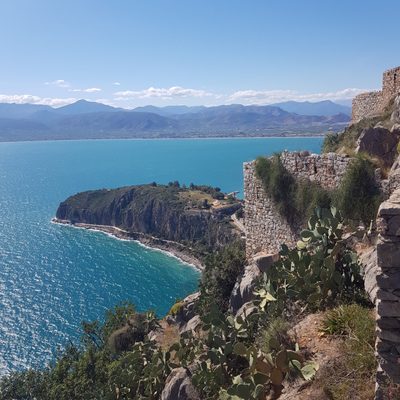
Greece is one of the most fascinating and beautiful places in the world. With a base in Athens and trips to some of the most storied sites in all of Europe—Delphi, Olympia, the Greek isles—this program combines a long-term view of the Greek world with courses and practical training in a variety of academic disciplines. In addition to a core course on the history, landscape, and material culture of Greece, students will choose from several elective courses concerning the contemporary world: legacies of empire, human mobility and migration, and the politics and economy of this cultural crossroads between Europe, Africa, and Asia.
Message from our Faculty Director
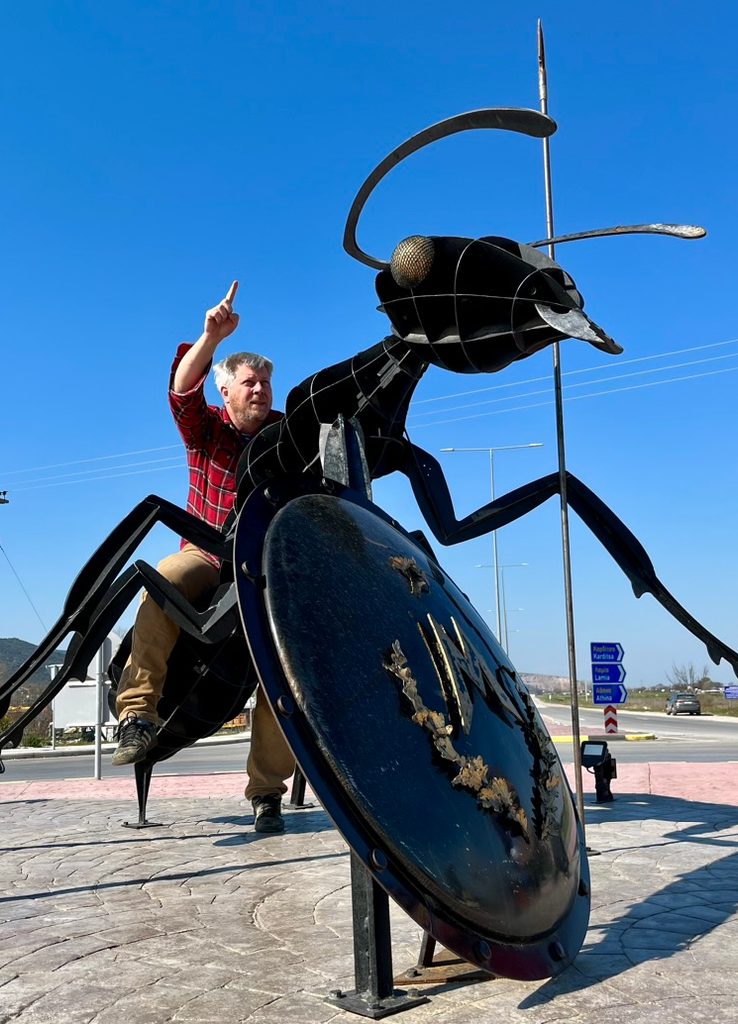
Welcome to the home page for Carleton’s OCS program in Greece! My name is Jake Morton, and I am an ancient historian and archaeologist specializing in the ancient Mediterranean. I’ve been a professor in the Classics Department and Archaeology Program at Carleton since 2018.
I first came to Greece for the 2004 Olympics (I started in Barcelona and biked to Athens) and have been coming back ever since – including living in Greece for three years and bringing Carleton Student Research Partners with me to Greece four times. I love Greece very much. I love working and studying there, but I also love the people, the mountains, the islands, the cities, the rural villages, the language, the culture, and the food – of course the food!
My work in Greece has taken me all over the country. I spent two years in graduate school tracing Roman and Macedonian military routes through Greece, Albania, and Northern Macedonia by bicycle and foot. I’ve worked on archaeological projects in different regions of the country, including my own work identifying key routes through the landscape, the locations of major battles, and a close study of the Athamanians (who are these forgotten people, you ask? Give me the chance to tell you!).
I’ve enjoyed sharing all of these things with Carleton students over the years, both on campus and on field projects. I couldn’t be more excited to introduce a new group of students to Greece on this OCS program. Πάμε! (let’s go!).
Academics
This program is a collaboration between Carleton and College Year in Athens (CYA), an international academic center in Athens, which will provide housing in apartments, custom programing, and elective courses with expert faculty based in Greece. Students will take one core course taught by the faculty director, Jake Morton(CLAS 200 – Greece at a Crossroads: History, Landscape, and Material Culture), and choose two of the four supporting courses offered by CYA faculty (see below). This combination provides opportunities for students in all majors and backgrounds— students in classics, archaeology, and history, as well as students interested in contemporary politics, literature, international relations, economics, digital humanities, and European and Middle East studies.
Learning Goals
This program provides a long-term view of the history, landscape, and material culture of Greece, from prehistory to the present day. It also provides practical training from several disciplinary perspectives, focused particularly on personal observation and the study of primary sources, whether geological features, archaeological objects, texts, or ethnographic interviews.
Within this framework, the program has three overarching goals:
- To examine the role of geography and regional history in situating Greece at a cultural crossroads at the intersection of Asia, Africa, and Europe;
- To understand what is unique about the history of Greece during its rich and storied past;
- To consider how particular methods of inquiry—archaeological, historical, literary, ethnographic—can be applied in a variety of site-specific contexts.
Students will take a core course on the history, landscape, and material culture of ancient Greece (including also forays into medieval and modern periods), then select from electives that allow for more detailed engagement the contemporary culture and recent past of Greece in its wider European and Middle Eastern context (especially with respect to migration and multiculturalism); archaeological methods in the digital age; or Greek and Latin literature in context. Students will all learn “survivor” Greek and there will also be the possibility to organize tutorials in Ancient Greek or Latin for students who wish to continue in those language sequences.
Prerequisites
There are no formal prerequisites, but previous coursework in Classics or the history of the eastern Mediterranean is strongly encouraged. Applicants are particularly encouraged to take CLAS 123: Greek Archaeology and Art before the OCS program. If that is not possible, it is recommended that they have taken at least one of the following courses:
- ARCN 101: The Human Story: Archaeology and the Anthropocene
- CLAS 100: The Trojan Legend: Mythology, Archaeology, and Legacy
- CLAS 145: Ancient Greek Religion
- CLAS 227: Athens, Sparta, and Persia
- CLAS 230: The Rise and Fall of the Hellenistic Kingdoms
- HIST 233: The Byzantine World and Its Neighbors, ca. 750-1453
Course of Study
18 credits
Required Core Course
-
CLAS 200: Greece at a Crossroads: History, Landscape, and Material Culture Program: History, Landscape, and Material Culture
This course provides a long-term view of the history, landscape, and material culture of Greece, from prehistory to the present day. While the monuments of ancient Greece are cultural touchstones, Greece has a remarkably diverse past, occupying a borderland between continents, empires, and cultures, both ancient and modern. Classroom study and on-site learning examine the wide range of sources that inform us about the Greek past (texts, archaeology, the environment), and focus especially on the stories told by places and things. Site visits in Athens and on trips throughout Greece highlight the importance of local and regional contexts in the “big histories” of the eastern Mediterranean. Prerequisites:Acceptance in the Carleton OCS Greece at a Crossroads: History, Landscape, and Material Culture program.
6 credits; HI, Humanistic Inquiry, IS, International Studies; offered Spring 2028 · Jake Morton
Electives
-
ARCN 251: Greece at a Crossroads: History, Landscape, and Material Culture Program: Digital Archaeology and Virtual Reality
Archaeological methodology has been changing at a revolutionary pace throughout the last decade. Today old ways of recording and interpreting archaeological data are being replaced by digital and computational methods, and virtual reality has become a key component of archaeological projects and cultural heritage management alike. The main aim of this course is for the student to develop a comprehensive understanding of the new possibilities offered by the most recent tools and methods in analyzing the past, as well as to acquire a practical skill set, which will be useful in both archaeological fieldwork and cultural heritage management projects. Prerequisites:Acceptance in the Carleton OCS Greece at a Crossroads: History, Landscape, and Material Culture program.
6 credits; LS, Science with Lab, QRE, Quantitative Reasoning; offered Spring 2028 · Local Instructor -
CLAS 111: Greece at a Crossroads: History, Landscape, and Material Culture Program: Myth and Reception
This course aims to familiarize students with important Greek mythological stories and figures as represented in Greek literature and art. During the course students will be introduced to select methods of studying and interpreting myths and will explore how myths helped the Greeks organize their understanding of the world and approach issues and problems that affected the lives of individuals and communities. Students will study the way in which myths have been received, interpreted, re-imagined, and rendered into artwork, theatrical performances, opera, and dance pieces in modern times and will discuss their relevance today. Prerequisites:Acceptance in the Carleton OCS Greece at a Crossroads: History, Landscape, and Material Culture program.
6 credits; IS, International Studies, LA, Literary/Artistic Analysis; offered Spring 2028 · Local Instructor -
GRK 102: Greece at a Crossroads: History, Landscape, and Material Culture Program: Intermediate Greek
Study of essential forms and grammar, with reading of original, unadapted passages.
Prerequisites:Acceptance in the Carleton OCS Greece at a Crossroads: History, Landscape, and Material Culture program.
6 credits; No Exploration; offered Spring 2028 · Local Instructor -
GRK 230: Greece at a Crossroads: History, Landscape, and Material Culture Program: Homer: The Odyssey
Homer is perhaps the foundational poet of the western canon, and his work has been justly admired since its emergence out of the oral tradition of bardic recitation in the eighth century BCE. This course will sample key events and passages from the Odyssey, exploring the fascinating linguistic and metrical features of the epic dialect, as well as the major thematic elements of this timeless story of homecoming.
Prerequisites:Acceptance in the Carleton OCS Greece at a Crossroads: History, Landscape, and Material Culture program.
6 credits; LA, Literary/Artistic Analysis; offered Spring 2028 · Local Instructor -
LATN 285: Greece at a Crossroads: History, Landscape, and Material Culture Program: Weekly Latin
This course is intended for students who have completed Latin 204 (or equivalent) and wish to maintain and deepen their language skills. Students will meet weekly to review prepared passages, as well as reading at sight. Actual reading content will be determined prior to the start of term by the instructor in consultation with the students who have enrolled. There will be brief, periodic assessments of language comprehension throughout the term.
Prerequisites:Acceptance in the Carleton OCS Greece at a Crossroads: History, Landscape, and Material Culture program.
2 credits; S/CR/NC; No Exploration; offered Spring 2028 · Local Instructor -
POSC 237: Greece at a Crossroads: History, Landscape, and Material Culture Program: Borders, Boundaries and Human Mobility
Borders are at once real and imagined. They divide and they are crossed. The course draws case studies and examples from the United States and Europe to critically reflect on the notion of borders and to discuss both the construction and reimaging of borders in the physical and socioeconomic sense. The course connects the concept of border(s) and human mobility, from immigration to daily movement in urban spaces and examines critically the construction and deconstruction of borders, the notions of inclusion and exclusion: who has the right to it, within which borders, and at what cost? Prerequisites:Acceptance in the Carleton OCS Greece at a Crossroads: History, Landscape, and Material Culture program.
6 credits; IS, International Studies, SI, Social Inquiry; offered Spring 2028 · Local Instructor -
SOAN 327: Greece at a Crossroads: History, Landscape, and Material Culture Program: The Culture of Modern Greece: The Ethnography of a Society in Transition
This course focuses on the culture(s) of Modern Greece from the 1960s onward, drawing on authors from across the social sciences to identify key realms that make life in Greece distinct. Theories and methods of anthropology will be discussed with special attention to how ethnographies in Greece have changed over the past decades. Students will try on different lenses as they conduct ethnographic research and examine the world through theories of space, ritual, performance, gender, and symbol. This structure will allow students an understanding of contemporary Greek society and a developing awareness of their own cultural conditionings and ethnocentrisms. Prerequisites:Acceptance in the Carleton OCS Greece at a Crossroads: History, Landscape, and Material Culture program.
6 credits; IS, International Studies, SI, Social Inquiry; offered Spring 2028 · Local Instructor
Program Features
Excursions
The term will include on-site teaching at the museums and archaeological sits of Athens, as well as day trips around Attica and other areas close to Athens. The program will also include several multi-day trips to the Peloponnese (to visit sites like Olympia, Nafplio, Mycenae); Central Greece (Delphi, Thebes, Euboea); and the Greek islands.
Housing
CYA will provide housing, dining, and teaching facilities in Athens, and will organize hotels and transportation for excursions outside of Athens. Apartments are located in the Pangrati neighborhood of Athens and are within easy walking distance of CYA’s Academic Center, grocery stores, cafes and restaurants, bakeries, dry-cleaning shops, banks, and other amenities. A typical apartment has 2 to 3 bedrooms (each containing one or two single beds), and also includes a common area, kitchen (stocked with tableware and basic cooking equipment), bathroom and balcony. Apartments are simply but fully furnished, with clima units (heating/cooling) in each bedroom, and WiFi Internet access. Linen and a weekly housekeeping are provided by CYA.
Information Meeting, Application, Dates & Fees
Information Meeting
Join us on Thursday, October 29, 2026, from 5:15 pm to 6:15 pm in Leighton 236 for an info session on the fall term. You will learn everything you need to know about the program and get your questions answered by faculty and returnees. We hope to see you there! If you have questions, please contact the faculty director.
Application
Applications are found on the OCS Student Portal. Search by program name and click Apply Now to open an application. Applications are due on April 19, 2027.
Program Dates
Program dates will roughly match the Carleton term. Specific dates will be communicated to participants at least one term prior to the program.
Program Fees
Carleton programs cost the same as a term on-campus plus airfare and visa (if applicable). Financial Aid is applied as on campus. Admitted students receive an additional cost estimate at the time of acceptance to the program. Additional scholarships are available by submitting a Budget Worksheet to Student Financial Aid by the application deadline one term prior to the program.
Photos from Participants