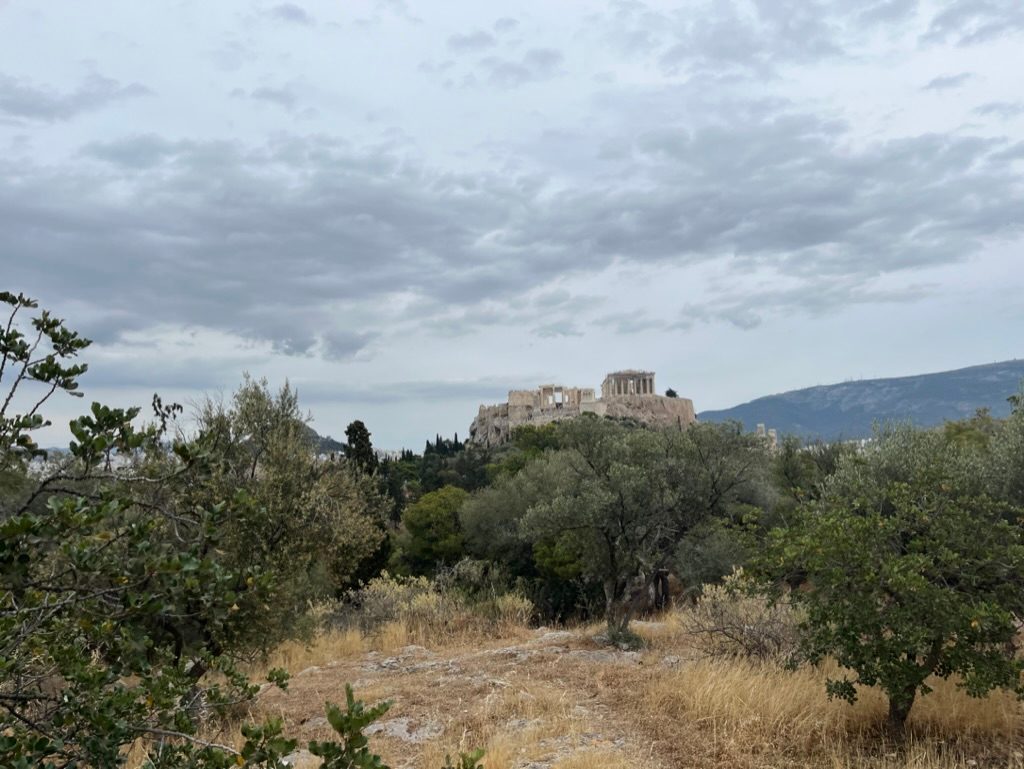
Our Tuesday trip was to the Pnyx, an outdoor lecture hall with a platform and grassy places to stand. This lecture hall is situated on a hill next to the acropolis on a 2400-square-meter plot of land. We think that about 5000 Athenians attended the assemblies, which were held about 50 times a year, so most weeks on average. It was said that there was no barrier to entry for these assemblies; in fact soldiers would sweep a red-painted rope through the central marketplace in the direction of the Pnyx in order to herd Athenians into the auditorium. Anyone who resisted or was caught with streaks of red paint on his tunic would be fined. Much of what we know is from Aristophanes, the comic playwright, so our knowledge of the Pnyx is pretty fragmented. As Dr. Harris puts it, “It’s like trying to reconstruct New York City from Seinfeld.”
What I found most interesting in our lecture about the Athenian government was the level of involvement of everyday citizens. Since jurors were drawn by lot, and each of them only served for a year, most citizens knew most laws by heart.
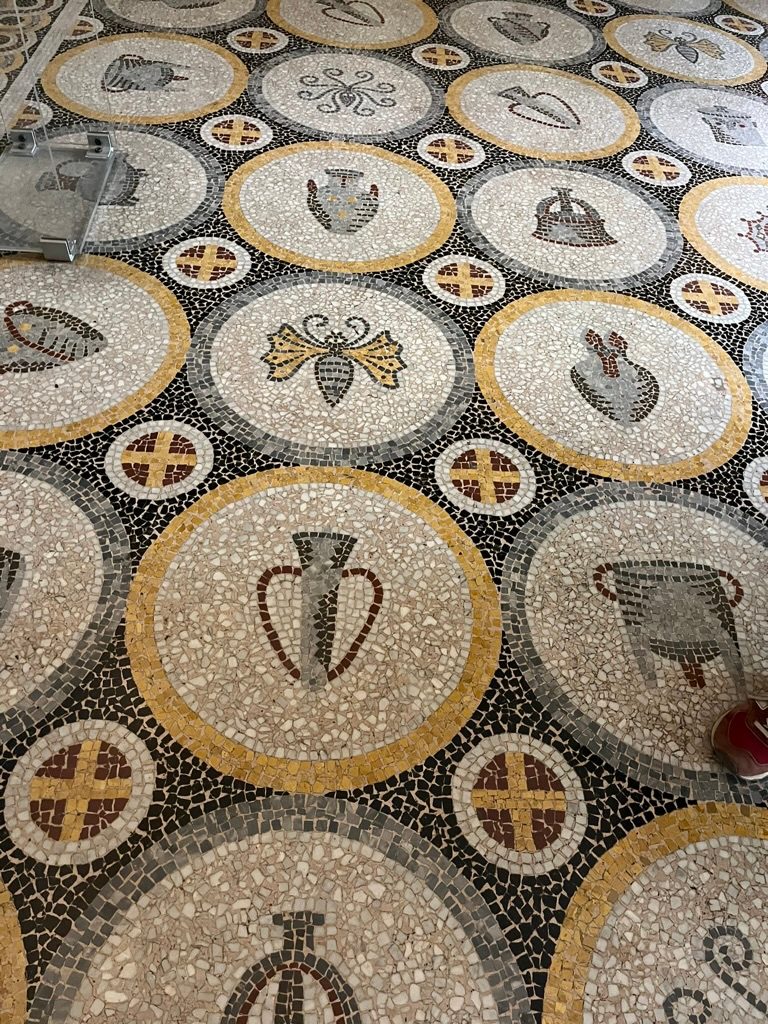
Our Thursday trip was to the Numismatic (“coin”) Museum, which also happened to be the former home of Heinrich Schliemann, who excavated Troy. His enthusiasm was apparent not only in his massive coin collection, but also in his mosaic flooring and even in the naming of his own children, one of whom is named “Agamemnon,” after the Mycenaean king. I was particularly taken aback by the newly restored mosaic flooring, which seemed to give the pottery and early Mycenaean symbols an almost animated look.
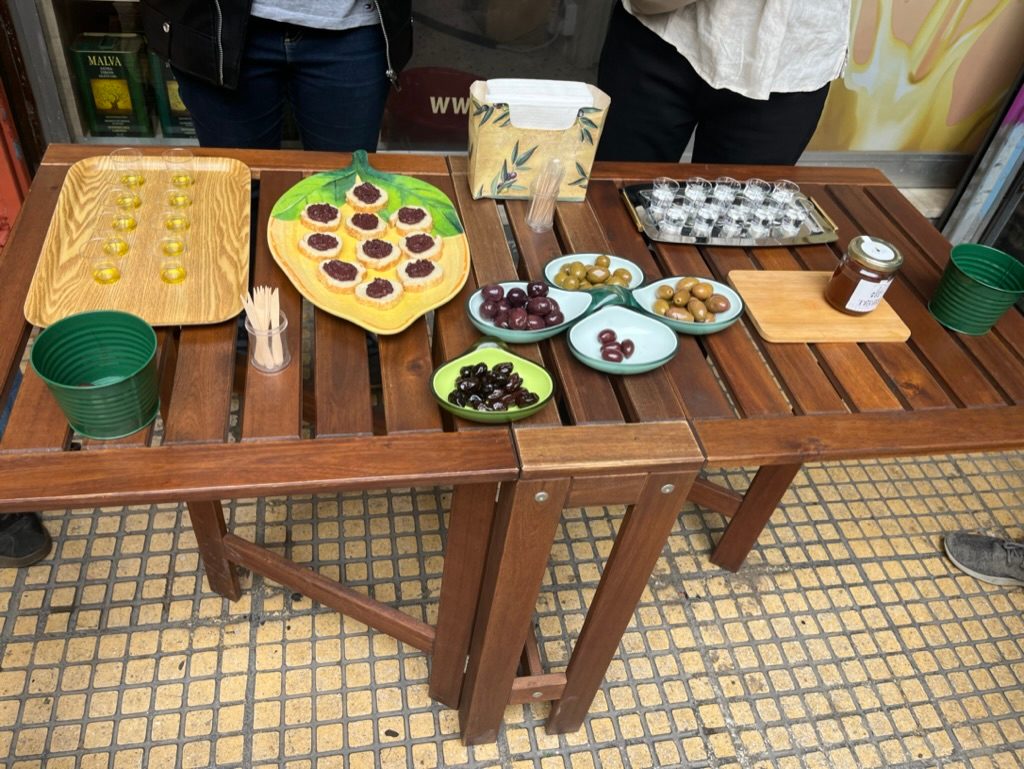
Our SOAN class took a walk through the food markets of Athens. We talked about the themes of tradition and motherhood that were heavily marketed in the food landscape catered toward Athenians. First we tried the Kalamata olives, which refers to their native region in the south; these are the olives that we usually see back at home in the United States. Then we tried three other kinds of olives. The green ones pictured below were picked earlier than the black ones, and the shriveled olives were marinated in salt water. I’m not a huge fan of olives but the olive oil was delicious. To properly taste the olive oil, suck in some air and knock back the entire shot so that you can feel the bitterness at the back of your throat.
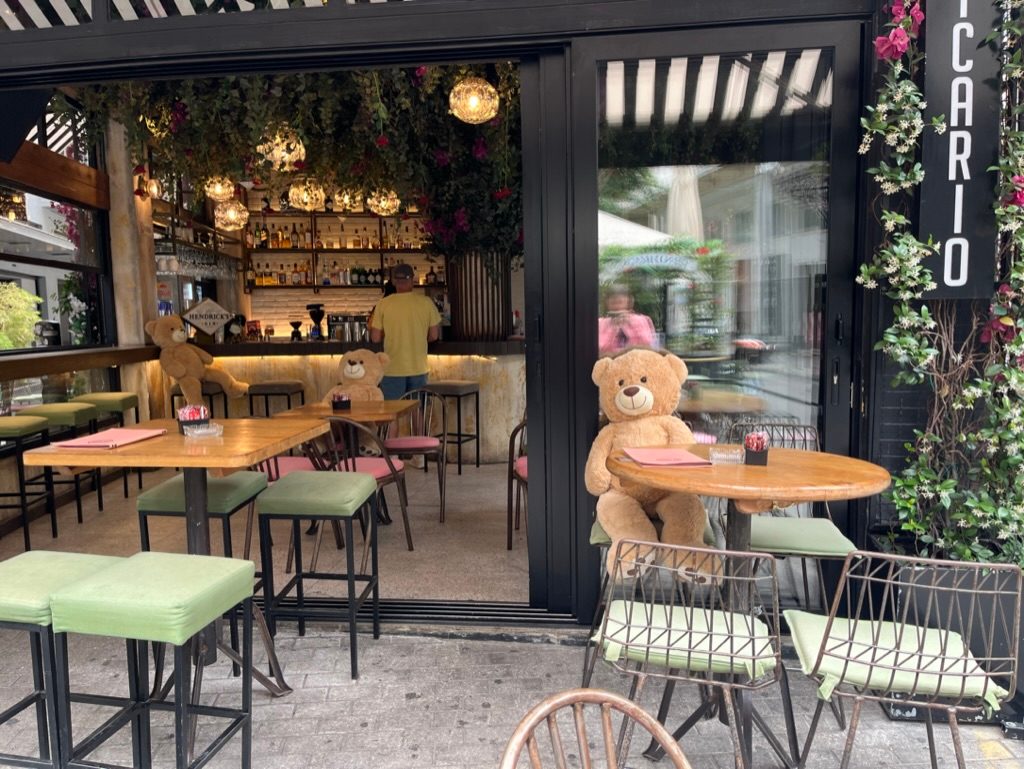
We also took a walk down the textile quarter of Athens, where there used to be small textile factories, which were replaced by small imported textile businesses, and are now slowly turning into upscale cafés and boutique hotels. I was particularly charmed by the giant stuffed bears at a new bar. Someone was clearly having fun when they placed the menu directly in front of the bear so that he might order for the companion upon whom he is waiting for expectantly.