When it comes to understanding economic progress in the context of a developing country, Bangladesh is an excellent case study. It not only faces many of the same hurdles to development faced by poor nations globally but it also has a track record of implementing, often successfully, some of the most innovative solutions to these challenges. Notable challenges include widespread poverty, excessive population, decentralized corruption, brain drain, political instability, women’s rights, inadequate infrastructure and coping with natural disasters (sea level rise and flooding). Great challenges often breed appropriate innovation and creative thinking. Thus, Nobel Laureate Prof. Yunus spearheaded and successfully spread microfinance across much of rural Bangladesh making credit accessible to the poor. Contraception use and population control has brought down the number of children per women (total fertility rate) from over 6 to about 2.2 without any institutional penalties or requirements. Bangladesh has also been the most successful country in South Asia when it comes to achieving the Millennium Development Goals. Recent years have seen some notable development of social business and the spread of renewable energy in rural areas.
During our trip to Bangladesh we do three main things (a) see how development agencies operate at different levels (from the headquarters to the village branches), (b) meet with experts and practitioners responsible for choosing and implementing the policies of several major development organizations (Grameen Foundation, BRAC, USAID, etc. and (c) directly interact with the poor and the clients that these policies affect. Due to time constraints, we limit our visits to villages near Dhaka and Bogra. Overall, students learn first-hand about microfinance, rural electrification, social businesses, poverty alleviation, women empowerment, the textile industry, the views of policymakers and challenges to sustainable economic development.
Students are required to have taken ECON 110: Principles of Macroeconomics and ECON 111: Principles of Microeconomics.
12 Credits
Fall Term 2017, ECON 240: Microeconomics of Development (6 credits)
This course explores household behavior in developing countries. We will cover areas including fertility decisions, health and mortality, investment in education, the intra-household allocation of resources, household structure, and the marriage market. We will also look at the characteristics of land, labor, and credit markets, particularly technology adoption; land tenure and tenancy arrangements; the role of agrarian institutions in the development process; and the impacts of alternative politics and strategies in developing countries. This course complements Economics 241. Prerequisite: Economics 110 and 111.
Instructor: Faress Bhuiyan
Winter Term 2018, ECON 201: Analysis of Microeconomic Development Models (6 credits)
This course is the second part of a two-term winter break course sequence beginning with Economics 240. This course will focus on critically analyzing the appropriateness of modern microeconomic development models in the context of Bangladesh. Students exposed to various on-site visits and lectures in Bangladesh during the winter break will be required to research, write and present their views on the reliability of different model assumptions and implications they studied in Economics 240. Prerequisite: Economics 110 and 111 and 240.
Instructor: Faress Bhuiyan
Language of Instruction
English
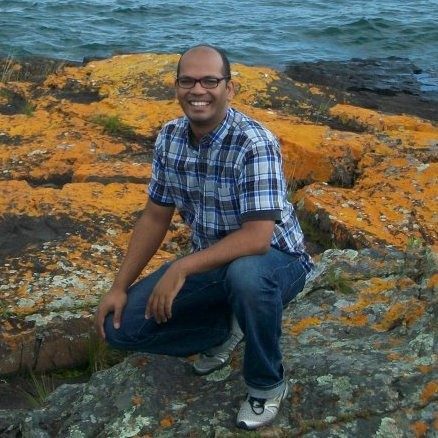
Faress Bhuiyan, Assistant Professor of Economics
Faress Bhuiyan (Ph.D. Northwestern University) studies labor supply trends, subjective wellbeing, rural-urban migration in developing countries, economic growth and income inequality as it relates to peer based comparison utility. He is also interested in the welfare consequence of bargaining between special interest groups and the government towards choosing patent regimes in a global setting.
Bhuiyan enjoys teaching microeconomics of developing countries, labor economics, and comparative economic systems. A huge fan of the Bangladesh cricket team, the Argentine soccer team, Barcelona FC and mainstream music, he loves playing soccer, cricket, ping pong, and listening to music.
Students will stay in hotels.
Site visits to development organizations – BRAC, Grameen Foundation, and USAID – will offer students an opportunity to meet with high-level officials, including Nobel Laureate Professor Mohammed Yunus (subject to his availability).
Program will take place during the first part of December. Specific dates will be communicated to program participants.
All Carleton-sponsored winter break programs cover the costs of instruction, lodging, some meals, group excursions, public transportation, medical and evacuation insurance, travel assistance, and most cultural events.
Students are responsible for passports and visas (when required), books and supplies, transportation to and from the program sites, and personal expenses during the program. Students will receive a program-specific Additional Cost Estimate at the time of acceptance.
Financial assistance is available. See the Off-Campus Studies website for further information on billing, financial aid, and scholarships.