In Argentina and Italy, two Carls put peacebuilding into practice
With support from Projects for Peace grants, two Carleton students turned their ideas into community initiatives addressing challenges in Italy and Argentina.

In a small Italian town, Ukrainian civilians painted angels on doors as part of a collaborative effort to explore healing after war. Thousands of miles away, teenagers in Argentina participated in workshops designed to help them recognize political misinformation and become more engaged citizens.
These were the summer projects of Ostap Hrebeniuk ’27 and Valentín Montenegro ’28, who each received a Projects for Peace award to develop community-based initiatives addressing different challenges to peace.
The Projects for Peace program encourages students at institutions participating in the Davis United World College Scholars Program to develop “innovative, community-centered, and scalable responses to the world’s most pressing issues,” according to Carleton’s Division of Inclusion, Equity, and Community. Each student received $10,000 to develop a project intended to “address the root causes of conflict and promote peace anywhere in the world.”
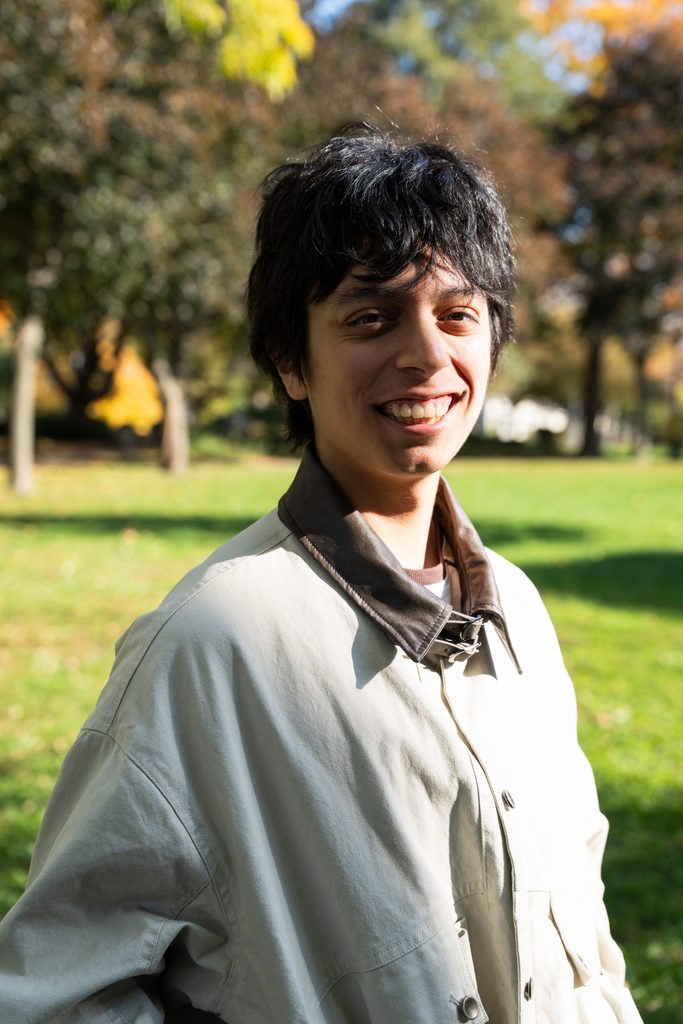
For Montenegro, that work took place in Santiago del Estero, Argentina, where he partnered with Asociación Voces de la Ciudadanía, a local nonprofit organization, on a project called SIPAS. The name stands for “Saber Identificar Para Actuar Seguros,” or “Know How to Identify to Act Safely.”
Montenegro said political misinformation has become increasingly prominent in Latin America, including in his home region. In response, he designed his project to promote civic literacy among teenagers in Argentina.
“There is this problem across Latin America, but more where I come from. Political fake news has gained a lot of relevance in the past few years … and there is this image that politicians are liars and that politics is something bad,” Montenegro said. “So teenagers may lose the interest in engaging in civics and politics.”
Through SIPAS, Montenegro and his partners organized interactive workshops and presentations for high school students. The goal, he said, was to promote “the love for politics, non-partisan politics” while helping students identify and respond to misinformation.
Montenegro plans to continue the project this fall. In its final phase, students will create social media content to raise awareness about misinformation and continue promoting civic literacy among teenagers in Santiago del Estero.
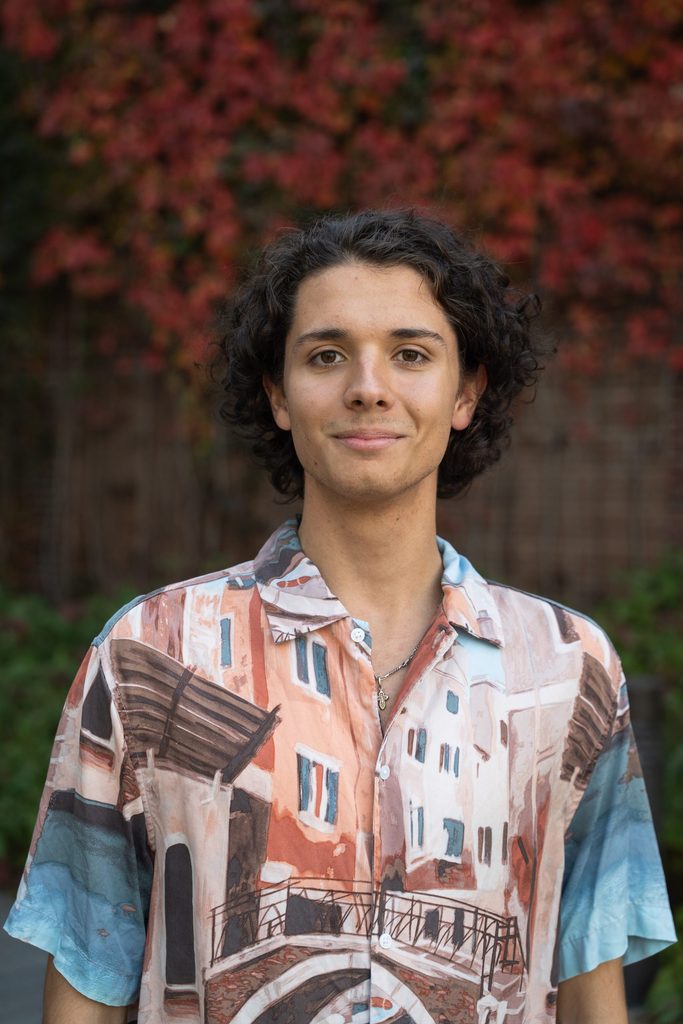
Hrebeniuk’s Project for Peace, Angel on the Door, took a different approach to peacebuilding. The project is a community-based art initiative that uses collaborative art to explore healing and recovery after war.
Hrebeniuk co-ran the program with Tetiana Mialkovska, founder of Pyaternya, a Ukrainian nongovernmental organization that operates art therapy rehabilitation programs for Ukrainian civilians and children. During the summer, Ukrainian civilians visited the organization’s residency in Sant’Angelo Limosano, Italy, where they participated in art therapy activities and painted angels and other symbols of peace, healing, and hope on doors throughout the town.
For Hrebeniuk, the project was about more than creating art. He said people affected by war can lose a sense of control over their lives, and the project was designed to help restore some of that agency.
“In circumstances that are unpredictable, when you have absolutely no control over the horrors that are being inflicted upon you, it’s really easy to lose hope and to lose a feeling of agency,” Hrebeniuk said. “The main thing this project was doing was giving people back this feeling of agency and control over their own life by giving them control over their own healing process.”
By the end of the summer, 47 angels had been painted on doors throughout Sant’Angelo Limosano. According to Hrebeniuk’s final project report, the paintings became an “artistic and cultural monument on healing and peace.”
Although their projects addressed different issues, both students said working directly with community members was central to their experiences.
“Being able to interact with all of the participants, talking about the things they do, the things that they care about … was such a meaningful insight into people’s lives,” Hrebeniuk said.
Montenegro similarly emphasized the importance of working alongside local community members.
“It was something fresh for the community, and it was a good feeling to feel that you are the one that is promoting that, and that someone trusted you to do that,” he said.
Leading the projects required significant time and effort, but both students said the work was ultimately rewarding.
“As soon as I woke up, I needed to start doing something up until the night … every single day of the entire summer, but it was so rewarding,” Hrebeniuk said.
For Montenegro, part of the reward came from seeing an idea become a project up and running.
“I think the best feeling is the fact that you get to organize something. You spend so much time figuring things out, looking for places, looking for a team, and when you have everything created and you are around the end, you pause for a second and think, wait, am I the person who organized all of this?” he said.
Both students intend to continue their work. On August 31, 2026, Hrebeniuk, Mialkovska, and the mayor of Sant’Angelo Limozano founded Sant Angel, an international nongovernmental organization dedicated to developing the Angel on the Door project and fostering collaboration between Ukraine and Italy.
For Hrebeniuk, the experience demonstrated what an individual can accomplish by turning an idea into action.
“I was so inspired by the fact that I genuinely felt that I, as an individual, can actually go out into this world and take steps to actually fix an issue,” he said.
Both Hrebeniuk and Montenegro encourage other students interested in Projects for Peace to start with issues they genuinely care about and consider how they can work directly with communities to address them.