Carleton is one of nation’s first colleges to earn new Carnegie classification for sustainability
The new Carnegie Elective Classification for Sustainability recognizes the integration of sustainability across the curriculum, research, operations, career preparation, and community engagement.

Carleton has earned the Carnegie Elective Classification for Sustainability, becoming one of the first 14 institutions nationally to receive this new recognition. The new classification, developed by the Carnegie Foundation for the Advancement of Teaching and the American Council on Education (ACE), recognizes institutions that successfully integrate sustainability across areas including curriculum, research, operations, career preparation, and community engagement. Each of the 14 institutions will be part of the inaugural cohort of classified institutions, which will be announced in June 2027 alongside the institutions participating in the first full classification cycle.
In 2025, Carleton was one of 20 institutions that participated in the pilot program, collaborating with a diverse set of colleges and universities in a national community of practice to test and help shape the classification’s framework and application process. As part of the program, the College completed a collaborative and rigorous self-study and provided feedback on the Carnegie framework, prompts, evidence requirements, and review process. Through this process, many offices and partners worked together to document the breadth of sustainability work happening at Carleton, including the Sustainability Office, CCCE, the Grants Office, Facilities, Career Center, Cowling Arboretum, Bon Appétit, and the City of Northfield.
“Uncovering strategies and examples used across the College helps to not only tell our story, but to make connections shaping our work,” said Sarah Fortner, director of sustainability at Carleton. “In addition, the future research done across the institutions that receive the elective will inform how we support and make progress in higher education sustainability.”
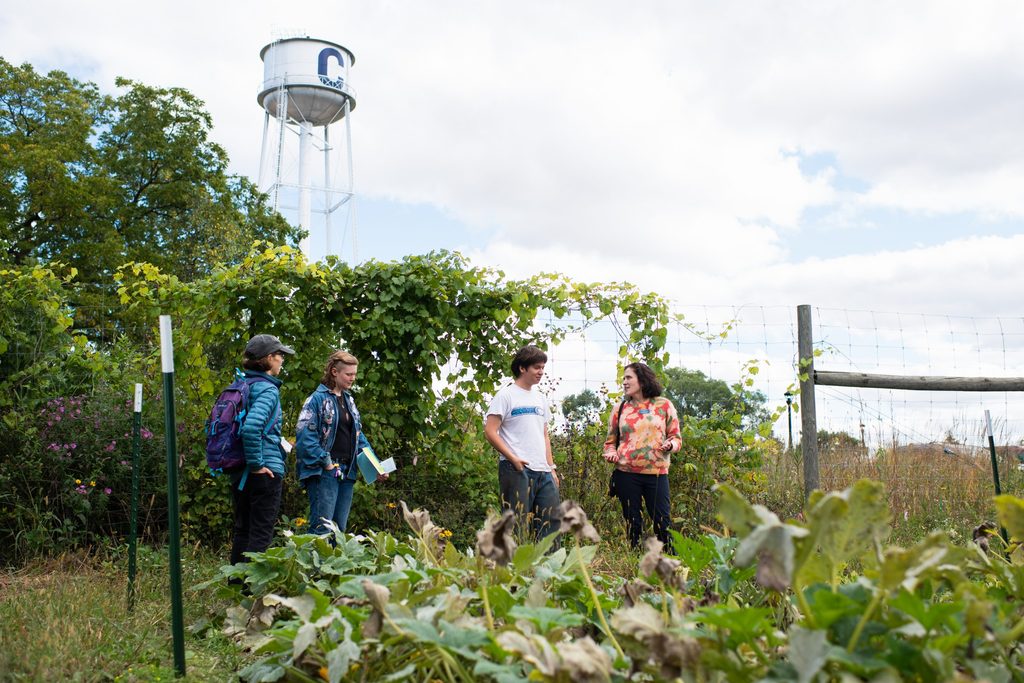
This achievement is a reflection of the longstanding work of faculty, staff, and students to advance sustainability and environmental justice through education, community engagement, and operations. Particular areas of work that stood out in Carleton’s review include the Cowling Arboretum as a laboratory for research and classroom learning, support for student climate leadership through the Sustainable Futures Framework, and the College’s strong history of decarbonization both on-campus and through local collaboration.
The Carnegie Elective Classification for Sustainability is hosted by the University of Colorado Boulder, working alongside the Carnegie Foundation for the Advancement of Teaching and the American Council on Education. All institutions who receive the classification will retain it for six years, through 2033.
“The first group of inaugural institutions help bring this new classification to life,” said Timothy F.C. Knowles, president of the Carnegie Foundation for the Advancement of Teaching. “We’re proud to recognize their leadership and the many ways they are advancing sustainability across their campuses and communities.”
The Sustainability Elective Classification is one of a distinguished suite of Carnegie Elective Classifications, including Community Engagement and Leadership for Public Purpose. This initiative highlights higher education’s transformative role in addressing societal challenges and creating sustainable futures.
For more information about Carleton’s involvement, visit the Carnegie Elective Classifications for Sustainability website.
About Carleton College
Consistently ranked among the nation’s top liberal arts institutions, Carleton is a private college of about 2,000 students located in Northfield, Minnesota, just 45 minutes south of the Twin Cities of Minneapolis and St. Paul. Nationally recognized as the nation’s top college for undergraduate teaching, Carleton is known for its academic rigor, intellectual curiosity, and sense of humor. Carleton offers 33 majors and 39 minors in the arts, humanities, natural sciences, mathematics, and social sciences. Learn more about Carleton on the College website.
About the Carnegie Foundation for the Advancement of Teaching
The mission of the Carnegie Foundation is to catalyze transformational change in education so that every student has the opportunity to live a healthy, dignified, and fulfilling life. Enacted by an act of Congress in 1906, the Foundation has a rich history of driving transformational change in the education sector, including the establishment of TIAA-CREF and the creation of the Education Testing Service, the GRE, Pell Grants, and the Carnegie Classifications for Higher Education.
About the American Council on Education (ACE)
ACE unites and leads higher education institutions toward a shared vision for the future. With more than 1,600 member institutions, ACE drives solutions for today’s challenges, advances public policy, and shapes the higher education sector to serve a diverse student population. Learn more at acenet.edu or follow ACE on X (formerly Twitter) @ACEducation.