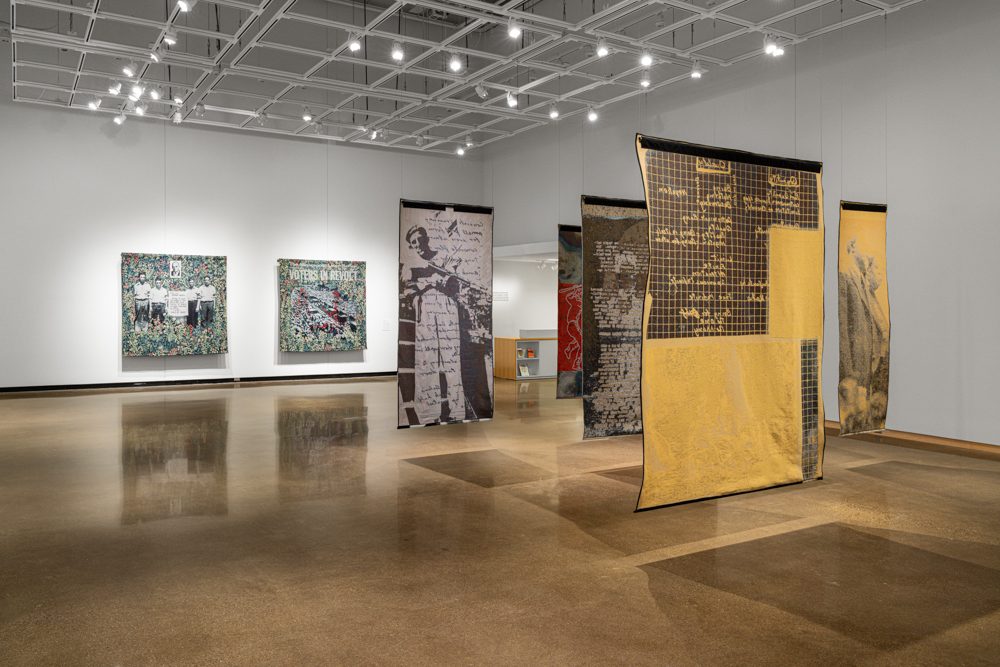
Artist, writer, and educator Brooks Turner questions narratives which are fixed in the archives of libraries, museums, and textbooks. His research engages histories of fascism in his home state of Minnesota, often exploring the racial, political, and economic turbulence of these events and their relevance today.
Pedagogy and Propaganda centers on a series of strikes in 1934 which took place in the Minneapolis Warehouse District, then a major distribution center of the Upper Midwest. These fierce clashes pitted General Drivers Local 574 of the International Brotherhood of Teamsters against the Minneapolis Police Department and the Citizen’s Alliance, then a dominant employer’s organization which was staunchly anti-union. As we approach the 90th anniversary of the strikes, Turner’s new series of large-scale textiles illustrate tactics of anti-fascist resistance through the historical lens of union organizing and labor history. Strikes, picketing, and protests are on the rise today; a 2023 study from Cornell University found that strikes were up by 52 percent in 2022 as workers increasingly speak out about workplace dissatisfaction.
An adjacent gallery brings together a 2020–21 series of silken draperies which blend archival, primary-source content from newspapers with Turner’s original drawings. These works track the rise of fascist organizations and ideologies in the 1930s, in particular, the pro-Nazi organization the Silver Legion of America (or Silvershirts). Documents Turner unearthed in the Minnesota Historical Society archives record sympathetic relationships between this hate group, prominent businessmen, and government officials of the time, as well as the journalists, Jewish activists, and union organizers who opposed them.
Essays
Accompanying the exhibition are two essays. You can download the essays as a printable PDF or read them below.
Farmer-Labor Forever
Farmer-Labor Forever
by Brandon Shorsh
History doesn’t just exist in books, buildings, and trinkets. History, as Bill and Ted learned on their Excellent Adventure, is not just “a bunch of old [white] dead dudes.” In the United States, this can be easy to forget, especially for those who have not found themselves pushed out to the margins through acts of genocide, enslavement, and colonization. Our schools, and private textbook publishers in particular, have pushed sterile narratives of history for decades — ones that imply history is a fixed order of operations. Film and television tend to gravitate toward singular characters, reinforcing the idea that history is made up of special people doing big things. That moment when living memory transforms to written record, when the last people who experience and witness events pass on — that is when many people begin to view something as historical. In short, history is delivered in the US as a neatly wrapped package of ‘things that happened,’ rather than a living creature that is constantly in motion.
The truth is, we make our own history. People make it every day. However, in our isolating environment of late-stage capitalism it can be difficult to see how seemingly small actions in our neighborhoods can make lasting and impactful history. Unless we are lucky enough to stumble across very niche books or articles, often in archives or college libraries, it can be even more difficult to see how everyday people make up the world around us. In our fast-moving world, while we work soul-sucking jobs and try our best to find time for friends and family, we can miss how the past influences our present in our places of work.
In 2014, I was working at a coffee shop as a barista having just dropped out of law school. One week before Christmas, our store and 14 others were closed with twenty-four hours’ notice. My coworkers all lost their jobs. They lost the health insurance for their families. Curious and angry, I looked up who owned the company. It was a private investment portfolio run by a family of German billionaires whose father and grandfather, while running the same legal entity nearly a century ago, financed the Nazi party and received huge contracts from the Third Reich. I began to learn that day that very few financiers of fascism abroad and at home were ever punished or separated from their ill-gotten gains.
Just over a year later, I moved to Minnesota. I was a bright-eyed youth excited about Bernie Sanders, and I began to knock on doors in my neighborhood in South Minneapolis. At the time, I was singularly focused on ‘get out the caucus,’ hardly knowing what a caucus was, let alone the significance of the system. On caucus night in 2016, my life was forever changed. While I had read about how people make history happen, I finally saw it. I saw 3000+ people wrapped around a school in 20 degree weather to caucus, discussing the issues and people on the ballot for their party in their region. This was more people than had voted in the same precinct’s most recent city election. Thousands of neighbors were talking to each other, sharing their hopes, their dreams, their passions, and realizing that there were people just a few doors down from them who cared about the same issues. I felt like I was witnessing magic. I had to know what made this possible.
What I quickly learned was that the caucus system in Minnesota’s Democratic-Farmer-Labor (DFL) Party owes its special structure to the Farmer-Laborites, not to Democrats. I began to dig deeper — what was the Minnesota Farmer-Labor Part
Farmer-Labor Forever
Minnesota’s Farmer-Labor Party was the most successful third party in the United States in the 20th century, and since the original abolitionist Republican Party of the 1850s that ultimately made the near- century-old Whigs irrelevant in the span of a decade. The Farmer-Labor Party came at the tail end of 30 years worth of attempted third parties during the Gilded Age, a period of excessive materialism beginning roughly in 1877 and extending into the early part of the 20th century. Working people saw the Republicans becoming a party of industrial capitalists who had gained significant power during the Civil War and ultimately betrayed the goals of Reconstruction in favor of big business. Likewise, the Democratic Party was one of segregation and intense urban machine politics in the North. Attempts at new options outside the forced binary on the ballot occurred repeatedly in the period between the 1870s and the 1910s. These movements, while largely unsuccessful nationally, had regional successes in transforming state constitutions, winning victories like direct election of US Senators, women’s voting rights, and the creation of ballot referendum systems so people could vote on issues directly.
The Farmer-Labor Party started as an offshoot of the Non-Partisan League, whose greatest successes were next door in the Dakotas. Through the Farmer-Labor party, conservative German farmers on the plains, Finnish communists in the Iron Range, and industrial workers in the cities banded together and dominated state politics for a quarter-century. From 1919 to 1944 the Farmer-Laborites were not only running candidates in elections in Minnesota, but actively supported unionization drives, built support networks for farm families facing foreclosures, and functioned as a home for anti-fascist popular front politics in the 1930s. During their entire 25-year history they were always the #1 or #2 vote-getters, includingintheirfirststatewideelection.In other words, they made the Democrats the third party. From 1936 to 1942 they were so successful that the Democratic Party nearly lost its majority status. The entire system of local party units and caucuses that today’s DFL operates paved over a robust neighborhood activist network the Farmer- Labor party built during that quarter century.
Labor Battles
The Farmer-Labor party not only competed at the ballot box, they were a reflection of a larger and more militant labor movement crescendoing across the country in the midst of the Great Depression. Unions like Teamsters 547 (also known as Teamsters 544) went from being a small union of self- organized drivers to becoming one of the largest unions in the state. Teamsters 547’s leadership served as crucial nodes in the 1934 Teamsters Strike, which was arguably a general strike of workers across numerous industries throughout the summer of 1934. On what is known as Bloody Friday, the Minneapolis police opened fire on the picket lines, killing two and injuring 67. Farmer- Labor Governor Floyd Olson deployed the National Guard, not to put down the strike, but to pull back the out-of-control Minneapolis police. Later investigations found that most of those injured were shot in the back.
The strike was a turning point in Minnesota’s labor movements as well as national ones, with the federal government finally passing the National Labor Relations Act. Prior to the strike, the Roosevelt Administration had tried to sidestep labor unions in an effort to maintain the tenuous Democratic coalition that included wealthy industrialists and agricultural magnates in the South.
Following the 1934 strike, the embarrassed and enraged industrialists of Minnesota began to look at how to break labor power. They formed a ‘union of businessmen’ called the Citizens Alliance; they created Minneapolis’ Aquatennial celebration to compete with the large memorial events that workers held to remember the fallen and memorialize their victory, and, as we are reminded in Brooks Turner’s work, these “Titans of Industry” began to work closely with budding street fascist groups like the Silver Legion of America (or Silvershirts) and many of these powerful figures continued to be political power brokers for decades after World War II.
Anti-fascism: Yesterday, Today, and Tomorrow
The leaders of Teamsters 547, largely Trotskyites, saw the growing threat of fascism, as did other communists, socialists, Democrats, and Republicans (remember the parties were different back then). In a style of politics known as the Popular Front, these wildly different groups banded together to resist fascism at every corner. They worked as an electoral coalition to block fascist victories at the ballot box, built networks of Worker’s Defence Committees to run the fascists off the streets, and did this with a diversity of tactics. And it worked. Turner’s tapestry A Convergence (2022) documents my favorite story, in which the Silver Legion of America see their own leader, William Dudley Pelley, turn tail and run at the sight of hundreds of militant labor unionists blocking entry to his cult’s rally.
Seldom are these local battles covered in our news, on television, or in school books. National stories don’t fare much better, as many people only learned about the Silver Legion of America through Rachel Maddow’s recent podcast Ultra. While these histories are not at the forefront of popular imagination, they still impact us today. The cities that had the biggest Silver Legion branches in the 1930s have also been home to some of the biggest strikes and other large-scale resistance movements to street fascism, including cities like Los Angeles, Portland, and Seattle. In the 1980s, all of these cities, including Minneapolis, were home to another wave of anti-fascist resistance in their punk scenes as Nazis tried to worm their way into countercultural spaces. And now again, starting in 2014 and continuing today, such cities have some of the most successful and continuous anti-fascist mobilizations.
Further, today’s public spaces are not only physical, they are digital as well. In the years following the 2017 Unite the Right rally in Charlottesville, online anti-fascist networks did the legwork of finding and identifying the rally’s participants and organizers. These anti-fascists—digital successors to the 1930s Workers Defence Committees—did the real work of breaking the online fascist organizing spaces; law enforcement and courts came in years later.
While popular media may not cover these stories, communities remember. Even when we do not know the whole narrative, like the origin of Minnesota’s caucuses, these struggles leave echoes in our communities. Like messages in bottles, we pick up these templates for resistance from the past to carry them into our present, and when we are done, we pass them onto the anti-fascists of the future.
What you will see in Brooks Turner’s exhibition is just one set of stories. I invite you to explore your own hometown histories, to help pick up those messages of resistance and hope from the past and pass them along.
Works Consulted:
- Allen, Joe. “It Can’t Happen Here?”, International Socialist Review, Sept. 2012, isreview.org/issue/85/it-cant-happen-here/.
- Dobbs, Farrell. Teamster Politics. Published for the Anchor Foundation by Monad Press: Distributed by Pathfinder Press, 1975.
- Haynes, John Earl. Dubious Alliance: The Making of Minnesota’s DFL Party. University of Minnesota Press, 1984.
- Millikan, William. A Union against Unions: The Minneapolis Citizens Alliance and Its Fight against Organized Labor, 1903–1947. Minnesota Historical Society Press, 2001.
Brandon Schorsch joined Jewish Community Action, based in Minnesota, in January 2020 after several years working in progressive issue advocacy and electoral politics in the Twin Cities. Having seen multiple childhood friends become radicalized online in the early 2010s, Brandon had been personally researching hate/extremism for many years before working on JCA’s Combating Antisemitism and White Nationalism campaign. Over the last three years, he has developed/co-developed numerous trainings examining contemporary antisemitism’s origins, mechanisms, motivations, and intersections with other forms of marginalization and oppression. Through JCA’s programming, he has trained several thousand people and brought crucial analysis to dozens of community organizations, government offices, and religious congregations.
Brandon is a proud union member of OPEIU Local 12, a University of Richmond law school dropout. He was awarded his Masters in Public Policy, specializing in Elections Administration, from the University of Minnesota’s Humphrey School of Public Policy in 2022.
Historical Fabric
Historical Fabric: Didactics and Drive in Brooks Turner’s Tapestries
by William Hernández Luege
“I am not a prisoner of history. I should not seek there the meaning of my destiny.”
— Frantz Fanon, Black Skin, White Masks
We all seem to believe Karl Marx in his essay “The Eighteenth Brumaire of Louis Bonaparte” when he writes that history repeats itself, first as tragedy, second as farce. He was writing in response to Napoleon III taking the title of “Emperor of the French.” A dangerously far cry from his uncle, the Napoleon, Marx could not help but note the “grotesque mediocrity” of this new authoritarian regime, and in the essay sought to explain the underlying conditions that allowed for this absurdity. It appears history was to repeat yet again, when over a century later, the art historian Hal Foster would follow up on Marx’s observation with a question: “What comes after farce?” Foster was writing in response to a contemporary grotesque mediocrity, one which ushered the “post-truth” era. Foster, in turn, examines our contemporary debacle through the lens of history, albeit an aesthetic and art historical one. Serpentining through a wide array of art from the last century, he explores how artists equip this now flexible relationship with the truth as a means to combat our own historical farce.1 This frustration against mediocrity, the feeling that world events are not as serious as their implication, misunderstands our relationship to the past.
Brooks Turner’s art is also about history, specifically Minnesota history. His vantage point, however, is not the same as that of the typical historian, ping-ponging through material events to unlock the secret of the present. Instead, his tapestries have the aim of teaching. They are aesthetic objects, yes, but equally so they are pedagogical ones. In Turner’s work, I see a question being posed that most artists and art historians seldom ask: What is history for? Many artists and art historians understandably see history as a force, a wave that sweeps us along until it moves on without us. I would argue that Turner’s work enacts a different, more Nietzschean approach, that utilizes history as an aesthetic tool for contemporary life.2 The primary way in which Turner presents this perspective is through a formal approach that expresses the complicated relationships we have with facticity, history, and dramaturgy. To begin, one can consider the choice to present his research as a tapestry. Within the western canon, tapestry has long held a strong connection with what we might now call “historical events”— battles, coronations, and other moments in ruling class life. It also served the opposite function, centering mythical and religious narration, and offering moral and spiritual guidance through allegory. When looking at works like A Convergence (2022), the choice of medium places the working class narrative of the Union Defense Guard of Teamster Local 574 at equal importance to the Norman Conquest of England, depicted in the monumentally scaled Bayeaux Tapestry (c. 1075). Brooks Turner work is not only in conversation with the legacy of tapestry as a medium, but with the very idea of what is commendable within history.
The story of A Convergence is told through the central image. Across a Minnesotan river basin, dotted with lakes and bisected with a railroad, loom rivaling events and figures. Massive square images cast shadows over the landscape. Fascism, in the form of William Dudley Pelley, leader of the far right, Christian nationalist group the Silver Legion of America, enters the picture plane in the far right corner. The train moves the eye further down toward the conflict he sows and the resistance he faced. A close look reveals the train leaving Dudley behind, an aspirational gesture toward one day not needing to remember him at all. Framing this story, literally, is another story. This frame tells the tale of union leaders as well as the origins of the Union Defense Guard, members of which met with Leon Trotsky in the home of Frida Kahlo and Diego Rivera. The work does not aim to articulate the precise sequence of events so much as give a visual impression of the interconnectedness of Minnesota to the wider world of this time. This balance between abstracted narrative and facticity of image is pushed to its limit in The Battle of Deputies Run, 1934 (2023). Focused more specifically on a singular event from the 1934 Teamster Strike, Turner depicts a police officer aiming a gun at a group of strikers, while the other panel of the diptych shows the conflict en media res. Across both panels, potential and actual violence are collapsed into a single image of the event, set amidst a foreboding, forested background. While the underlying conflict and the sources of the images are indeed factual, the setting forsakes historical accuracy in favor of the viewer’s aesthetic response by heightening the visual drama. This nebulous yet forceful approach to truth is reminiscent of Nietzsche’s task for the cultural historian: “that we know how to forget at the right time just as well as we remember at the right time.”3 For Nietzsche, engagement with history was healthiest when it was utilized for action in the present moment. In Turner’s work, art and history both are made to be inspirations for the present, often at the expense of the minutia of the past.
History turns explicitly mythical in two of Turner’s works, which pull directly from the Unicorn Tapestries. Made in the late 15th century, the Unicorn Tapestries, as the name suggests, depict the hunting and capture of a unicorn by a noble court. In Pledge to a Martyr and Voters in Revolt (both 2023) the subjects of historical events replace the unicorn in the composition, turning them into narrative. As for the original, the meaning is itself the subject of debate among art historians. The leading narrative, circulated on the Metropolitan Museum of Art’s website, is that the tapestries were likely made to commemorate a marriage. The plants surrounding the tamed unicorn are known to be symbols of fertility and marriage in Medieval iconography.4 In Turner’s images, these flowers are complicated by the context of the central figures, serving both as funerary flowers for the death of Henry Ness, a picketer killed by police, while still keeping the generative connotations once held centuries ago. In Voters in Revolt, Turner collapses history further by overlaying the outlines of an altercation between strikers and police, superimposing the potential violence as equal with the peaceful demonstration in honor of Ness’ life. Again, both the aesthetic and historical principles on which Turner draws are made subservient to “a higher force:” namely, the visual and narrative impact. By turning these events mythical, he simultaneously makes them contemporary. The tapestries function less as documents for pure information, than as memories with which recall our own need for solidarity and protest.
At the root of all politicization of history lies memory, and its physical embodiment, the archive. In A Pedagogical Task (2023), Turner presents a five tapestry cycle, which contains not only archival material but a visual language of memory. Where before we might say that Turner strategically “forgets” certain historical details to spur a greater action in the viewer, here we find the task of strategic “remembering.”5 These tapestries depict elements from the Joseph Hansen Papers, the Trotsky Papers and Pathfinder Press at the Hoover Institute, all of which document the relationship between Leon Trotsky and Local 574 as well other photos and texts which directly address the rising tides of fascism at the time. Visually, the tapestries present these materials in a manner reminiscent of cinema. One contains the distorted image of VHS footage as its background, while the others layer text and image as if used in documentary filmmaking, employing negatives and decayed archival photographs. The effect of these choices reminds us of the perceived distance between the present and these documents. The layering and selective quality of the text, which seem to incorporate the artist’s own notes amongst the papers, strategically bring about the act of “remembering.” Revealing like a hand of poker, these five tapestries lay out for the components of Trotsky’s archive worth consideration, and it is our present circumstance of rising fascism which grants it didactic value.6 As viewers, we are enticed to peruse these memories and find what might be useful. So too with art. One can easily find this dynamic in other examples of Turner’s work, along with an intentional equipment of history and aesthetics for the sake of inspiration. By way of conclusion, however, it may be more beneficial to briefly consider the strange place that such didacticism holds in art history.
For critics, there has long been a subversive, yet hard-to-pin-down quality to didactic art. In more Romantic times, Edgar Allan Poe went so far as to call it a heresy.7 Others have since come to its defense: the Mexican Muralists declared that art was solely to aestheticize the revolutionary actions of workers and indigenous peoples. Even Artforum published a defense in 1967, articulating that didactic art began with Cubism and continued on through Andy Warhol.8 Alternatively, didactic art was also a right-wing tool. The total revolution through art that Richard Wagner anticipated was quickly folded into Nazi aims within a century.9 The truth is that art exists in all cultures and times regardless of acts of resistance or oppression. When looking at the tapestries Turner has created, one is tempted to see ghosts of the past. In our present culture, we are taught to feel doomed to cycles of repetition from the alien force that is history. But this is not the case. Fascist and leftist organizing may have served as the warp and weft of Minnesota and even world history, but these very same threads are our real and present choice today. Rather than trying to find a definitive story, a single, universal lesson, art and history both need to be driven toward action. Didactic art, at its best, gives us permission to make bold decisions not for the sake of the past, or the sake of the future, but to do what is right today. Its aim must always be toward Life, and orienting ourselves toward our real needs.
End Notes:
- Hal Foster, What Comes After Farce: Art and Criticism at a Time of Debacle (Verso Books, 2020).
- Friedrich Nietzsche, On the Use and Abuse of History for Life, trans. Ian Johnston (Richer Resources Publications, 2010).
- Nietzsche, 4.
- “The Story of the Unicorn,” The Metropolitan Museum of Art, accessed August 6, 2023.
- Jacques Derrida and Eric Prenowitz, “Archive Fever: A Freudian Impression,” Diacritics 25, no. 2 (1995): 11, https://doi.org/10.2307/465144. Since the 1990s archives are seen not only as a physical embodiment of institutional memory, but also democratizing archives through greater accessibility constitutes a democratic act. Scholars like Mark Wigley have argued that selectively sharing components toward a specific vantage point is equally as political.
- Omer Aziz, “Opinion: Why Do so Many Young White Men in America Find Fascism ‘Cool’?,” Los Angeles Times, April 2, 2023, https://www. latimes.com/opinion/story/2023-04-02/trump-qanon-andrew-tate-fascism-mussolini-nazis-white-men.
- Sven Spieker and Tom Holert, “The Heresy of Didactic Art,” ARTMargins 11, no. 1–2 (June 1, 2022): 7, https://doi.org/10.1162/artm_e_00312.
- Barbara Rose, “The Value of Didactic Art,” Artforum, April 1967, https://www.artforum.com/print/196704/the-value-of-didactic-art-36733.
- Gerald Raunig, Art and Revolution: Transversal Activism in the Long Twentieth Century, Semiotext(e) Active Agents Series (Los Angeles : Cambridge, Mass: Semiotext[e] ; Distributed by The MIT Press, 2007) 17.
William Hernández Luege is a Curatorial Associate, Painting and Sculpture, at the San Francisco Museum of Modern Art and was formerly the Curatorial Fellow for Visual Arts at the Walker Art Center in Minneapolis, MN. He holds a BA in Art History/Art Management from the University of San Francisco, as well as an MA in the History of Art from Williams College. His research interests are in Modern and Contemporary Latin American Art and the relationship between ideology, political theory, and aesthetics.

Supplemental Display
In the Library
A supplemental display, titled Pedagogy and Propaganda: An Appendix, is on view in Carleton’s Gould Library. It includes artworks by Brooks Turner and a collaboration between artists Keith Christensen and Hock E Aye Vi Edgar Heap of Birds highlighting the role of Native leaders in the Minneapolis Truckers Strike of 1934.
The display also showcases materials from the Carleton College Archives and Special Collections, and ephemera related to Minnesota strike history on loan from the archives of the East Side Freedom Library.
Installation Images
These photos of the exhibition were created by Minneapolis-based artist, photographer, and teacher Eric Mueller ’87.
-
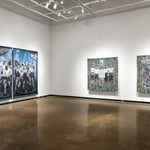 Brooks Turner. Pedagogy and Propaganda, 2023. Installation: Perlman Teaching Museum at Carleton College. Photo: Eric Mueller.
-
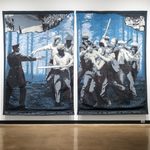 Brooks Turner. The Battle of Deputies Run, 1934, 2023. Installation: Perlman Teaching Museum at Carleton College, Pedagogy and Propaganda, 2023. Photo: Eric Mueller
-
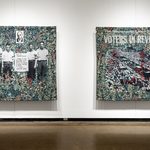 Brooks Turner. Pedagogy and Propaganda, 2023. Installation: Perlman Teaching Museum at Carleton College. Photo: Eric Mueller.
-
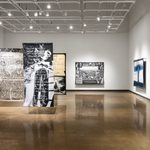 Brooks Turner. Pedagogy and Propaganda, 2023. Installation: Perlman Teaching Museum at Carleton College. Photo: Eric Mueller.
-
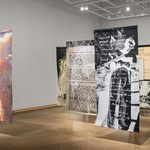 Brooks Turner. Pedagogy and Propaganda, 2023. Installation: Perlman Teaching Museum at Carleton College. Photo: Eric Mueller.
-
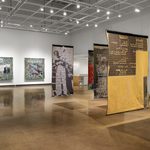 Brooks Turner. Pedagogy and Propaganda, 2023. Installation: Perlman Teaching Museum at Carleton College. Photo: Eric Mueller.
-
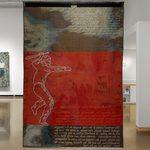 Brooks Turner. A Pedagogical Task, 2023. Installation: Perlman Teaching Museum at Carleton College, Pedagogy and Propaganda, 2023. Photo: Eric Mueller
-
 Brooks Turner. Airborne Toxic Event, 2023. Installation: Perlman Teaching Museum at Carleton College, Pedagogy and Propaganda, 2023. Photo: Eric Mueller
-
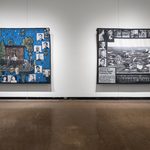 Brooks Turner. Pedagogy and Propaganda, 2023. Installation: Perlman Teaching Museum at Carleton College. Photo: Eric Mueller.
-
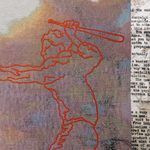 Brooks Turner. A Pedagogical Task, 2023 (detail). Installation detail: Perlman Teaching Museum at Carleton College, Pedagogy and Propaganda, 2023. Photo: Eric Mueller
-
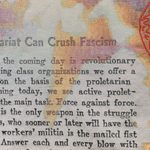 Brooks Turner. A Pedagogical Task, 2023 (detail). Perlman Teaching M useum at Carleton College, Pedagogy and Propaganda, 2023. Photo: Eric Mueller
-
 Brooks Turner. A Pedagogical Task, 2023 (detail). Installation: Perlman Teaching Museum at Carleton College, Pedagogy and Propaganda, 2023. Photo: Eric Mueller
-
 Brooks Turner. Pedagogy and Propaganda, 2023. Installation: Perlman Teaching Museum at Carleton College. Photo: Eric Mueller.
-
 Brooks Turner. Pedagogy and Propaganda, 2023. Installation: Perlman Teaching Museum at Carleton College. Photo: Eric Mueller.
-
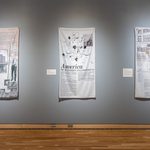 Brooks Turner. Pedagogy and Propaganda, 2023. Installation: Perlman Teaching Museum at Carleton College. Photo: Eric Mueller.
-
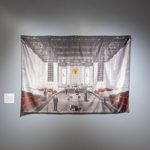 Elk’s Lodge, 2020. Installation: Perlman Teaching Museum at Carleton College, Pedagogy and Propaganda, 2023. Photo: Eric Mueller