Everyone who uses the internet leaves behind traces, often without realizing it. From old high school magazine articles to LinkedIn profiles, online data is persistent unless actively managed. This realization was the first driving force behind a project my teammate, Zaeda Peter ’26, and I undertook for Paula Lackie—and, more broadly, for DataSquad alumni. The second driving force was the need to assess the DataSquad model itself and determine whether members found their experiences valuable after graduation.
Updating the DataSquad Website
The DataSquad website hosts a rich alumni directory, where past members can share short bios about their majors, interests, and reasons for joining while at Carleton. Unfortunately, much of this information has gone unchanged since their time as a student. Knowing the importance of keeping information current, we wanted to give alumni the chance to update or remove their entries—or even add a fresh, more relevant bio.
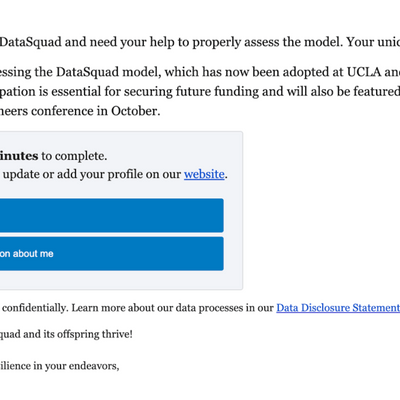
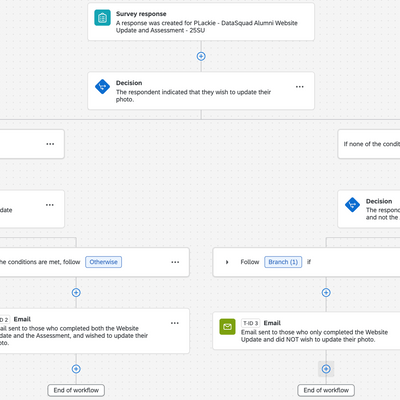
To give alumni a way to update their information, we used the experience management platform Qualtrics®. We built a short form where alumni could update or remove their bios, add a preferred email, and choose how they’d like to stay connected with the DataSquad. Along the way, we ran into data challenges—for example, some alumni appeared in our records but not on the website, and others had no bio or photo. To fix these issues without burdening alumni, we introduced targeted data fields such as “On Website” and “Photo on Site,” enabling a tailored experience for alumni with existing bios and/or photos on the website. For example, alumni with an existing bio were asked if they wanted to update it, while those without a bio were invited to add one.
Assessing the DataSquad Model
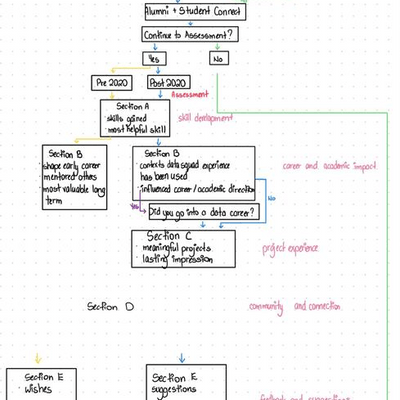
While the website update portion of the form taught Zaeda and me the ins and outs of Qualtrics®, our secondary task was designing an assessment for alumni to reflect on their DataSquad experience. Despite a long history, the DataSquad model has never been formally assessed. With this assessment, we sought to learn what alumni found effective and ineffective about the DataSquad, what improvements could be made, and how the experience shaped their post-graduation trajectory.
At first, Zaeda and I considered creating separate paths for pre-COVID and post-COVID graduates, since the pandemic had drastically changed the job market. But upon re-evaluating our approach, we shifted away from this focus, cutting nearly 60 question throughout the process, and distilling the question bank to target the most valuable insights from alumni.
Overall, merging the website update with the DataSquad assessment made the process much simpler for alumni. Personally, this project taught me the value of collaboration and working with others’ preferences in mind. Without the teamwork between Paula, Zaeda, and me, the final product would likely have been messier. Fresh perspectives from other DataSquad members helped refine ideas and push the project in a better direction. Along the way, I strengthened my skills in data cleaning and compiling by creating the DataSquad Staff and Alumni list and became proficient with Qualtrics®, even picking up some HTML and JavaScript. Most importantly, I gained experience working in a semi-professional setting, using project management tools like Asana to stay organized and keep the team aligned. I also came to appreciate the importance of documentation and metadata—ensuring future teams could understand, build on, and sustain the work we created. This rich combination of new teamwork and technical skills will serve me well as a future alum!
I encourage you to take a look at some images related to this project below.