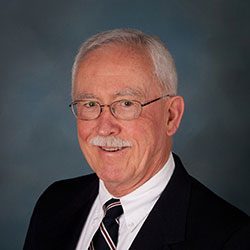
Robert Bonner, Marjorie Crabb Garbisch Professor of History and the Liberal Arts, Emeritus, passed away April 16th, 2025. Raised in Powell, Wyoming, Bonner began teaching at Carleton in 1967, and retired in 2001. From 1992 to 1995 he served as Carleton’s Dean of Students, and from 1997 to 2001, he served as the Director of the American Studies Program. For more information about his life and career, we invite you to read a summary of his Carleton career on the History Department website, as well as his full obituary.
Bob’s memorial service took place on Thursday, April 24, 2025 at the First United Church of Christ in Northfield, MN. A recording of the service is available.
Comments
Bob was a great example of a Renaissance individual. As a student he was the toughest professor I encountered! It also became apparent that he excelled most activities he became involved in. Besides his scholarship, he was an avid sportsman, playing, tennis, golf and a great rotblatt third base. His Tennis players nicknamed him "Hardball" but beneath that tough exterior, he truly was an advocate for all students. He pushed us to excel! I was fortunate to get to know him after my undergraduate days.
Bob was one of the professors with whom I worked most closely during my time as a student. The classes I took with him played a big part in my choosing history as my major. His passion for history and his wide-ranging intellectual curiosity were infectious; as a professor he really pushed me to develop my abilities to think and argue rigorously, while also being genuinely kind and caring. I am grateful for the impact he had on my life and for the special connection he shared with the class of '89.
I'm saddened that the world has lost this kind and brilliant person.
Even though I only met Bob a few times, I knew enough of him to know that he was an amazing person. He was a friend and mentor to many of my friends. Then, in the fall of 1985, he gave an incredible convocation, talking with astonishing vulnerability about the struggles and rewards of parenting his son, Tim. My older brother suffered a devastating head injury during my senior year of high school, and hearing Bob talk so thoughtfully about both the pain and joy brought into his life by parenting Tim moved me to tears and shifted something in my thinking about my brother. Somehow, I got the transcript of that convo and sent it to my mom. While helping her move last year, I found it and kept it. I just re-read it. It's still amazing. I have so much respect for him giving that talk to his colleagues and students. I also got the sense that if he had been told in 1985 that he would write 3 books and live to the ripe age of 86, he might not have believed it! I'm sorry to hear of his passing but know that he made a powerful impact on many people.
I also remember Professor Bonner's extraordinary convocation on the struggles and joys of raising Tim. My aunt had Down syndrome and I still recall how much his comments moved me. If there is any opportunity to re-post his convocation, I would love to experience it again. Thank you Susie for your comment.
I was also at that convocation. It was memorable and eye-opening. I was very young and it had an outsized impact on me. The next year, Professor Bonner's course on the American West set me on a path towards a senior thesis on John Wayne and then graduate work in American Studies. He made a difference in my life as a person and as a scholar.
I am so sorry to hear of Bob Bonner's passing. Prof. Bonner co-taught the course (The American Western) that shaped my career as a historian -- several years ago when I interviewed for a job at the University of Wyoming I referenced Prof. Bonner and his course as deep influences on how I think about history and pedagogy. I was also very strongly affected by his beautiful eulogy for his daughter Jennifer, who I knew at Carleton and who passed away far too young.
I remember Prof. Bonner well, as he was one of the principals involved in my oral exam in "comps" and taught at least one class I was enrolled in. As one of the earlier posts notes, he was tough. The fact that I was able to defend my work against his arduous inquiries actually was the moment I understood just how much I had learnt from him, Kirk Jeffrey, Clifford Clark, Deithelm Prove and several other members of the Carleton Faculty. I wish I had known then of his interest in American History, or that I had attended Carleton a decade later, as I remember just how smart Prof. Bonner was and how much his later courses would have interested me.
The fact that I remember this brilliant man so well over 40 years later, and with a nonacademic career in law may say more about him than my poor power to do so.
I took several great courses from Bob and he was my advisor and guide senior year for an independent study initiative. Back then his specialty was British history, in particular, Victorian England. He was a tough but gracious and encouraging mentor, open and generous and with a dry sense of humor. He helped shape me to be a curious and informed questioner and clear communicator. I was very glad to be able to speak with him at my 40th reunion and to be able to tell him how much I loved being a history major and how much his guidance meant to me.
I took his History of the American West class while at Carleton and his passion and inspiration in that class carried with me for years. When a Carleton friend and I were biking across the country in 1996, we took a significant detour up to Powell, Wyoming, just so we could send Professor Bonner a postcard from there. We wanted him to know that we still carried his passions with us. He will be missed.
Professor Bonner was the first person to show me how to read for context and how to not overthink exams. I was a first gen student from a not-so-great high school who struggled with the pace and the depth of my first year winter term course with him. His patience, kindness, and honesty helped me reset and find my footing. I felt like an impostor before he took me aside and gave me feedback that helped me to see how I was as good as anyone else, but I needed more practice. He was an exceptional teacher and I credit him for my love of historical non-fiction.
Dr. Bonner was one of the readers on my comps, and the only professor I knew who had grown up in my home state of Wyoming. We shared that, and a passion for the history of the American West. He had high standards and he expanded my thinking and assumptions, often in uncomfortable ways! Some of his lessons didn't sink in until years later. I remember him working out in the basement of the stadium, staying strong into his sixties. I'm only now learning more about what he and his wife Barbara accomplished as citizens, volunteers, and caregivers to their children, by reading his daughter Jenny's book. Add to that his expansive career (and "retirement") in multiple fields of history and administration, and I am thoroughly impressed. My condolences to his family and friends, and appreciation to his caregivers on the hospice team.
Wow, my first professor at Carleton. This took me a moment here. Professor Bonner was brilliant, and tough. He wanted to draw the best out of each of his students. He pushed us to excel, and he taught us with a depth and dimension that I had not previously experienced. For me, he was the gateway to the Carleton education, and we were all much better for having him as our professor. My condolences to the Bonner Friends and Family.
I pretty much owe my Carleton diploma to Bob. He was Dean of Students when I, fresh into Disciplinary Probation for throwing a nude pool party in Cowling -- it was a nude pool party, so technically everyone was wearing appropriate attire, at least for the function -- when I spearheaded an attempt to move The Bug from The Libe to Sayles the night of March 31. We were the April Fools, though, as a security guard walked up just as we lifted the Bug and took five steps towards the door.
Bob told me pretty clearly that, according to all regulations and policies, he was supposed to suspend me from Carleton. With my admission that I was about to take two terms off, shifting to the 5 year plan, he sentenced me, along with most of my compatriots, to 10 hours of dusting books in the Libe. Which is how the book Vagabonding in Europe and North Africa came to be in my hands, sparking a hitchhiking trek just a few months later.
So, yes, like so many others, Bob pulled the best out of me -- in my case, however, by not throwing the book at me. Thanks, Bob. Deepest respect.
In 1992, I was privileged to take Professor Bonner's "History of the American West" class which I have often referenced and shared the imparted knowledge in many conservations with family, friends and acquaintances over time, ever amplifying the course's scope and reach. It was absolutely one of the most impactful and memorable courses in my academic career. I learned SO much because Professor Bonner was one of those master teachers who can truly connect minds to explore and expand ideas. I am so grateful to have intersected with Prof. Bonner in this Physical life's timeline. I offer love and hugs of comfort to all of Professor Bonner's friends and family.
I remember meeting Bob very briefly as an accepted student, out near the Arb tennis courts, about the prospect of playing collegiate tennis at Carleton. It was brief, he was a bit direct and matter of fact, and while I don't remember the exact words, I do remember coming away that this was a solid coach I could play for, who also was pretty blunt that you were coming to Carleton for the top rate education. That sold me.
I never got to play for Bob, because he stepped down as head tennis coach that year, but he lived on for me as HARDBALL - his nickname and the stories my upperclass tennis teammates would share made him mythic and larger than life. Later I took his history class "Europe during the French and Industrial Revolutions" which has stuck with me ever since. He opened that class asking "throughout this course we will discuss change.. the question to ask yourself throughout this semester and beyond is whether change is progress." It is how I remember Bob and a useful question I have returned to often, ever since. In memory of Bob. -- Michael '93
It breaks my heart to lose Bob, but his long health struggles are now finally over. He was not only one of my favorite professors (and I was an English major!) but was also a friend for 50+ years. His and Vern Bailey's London Seminar in the fall of 1972 was a life-changing event for me, and I will always be grateful to Bob for giving me that experience. Another Carleton giant is gone. My deepest condolences to Barb and all of Bob's extended family.
I was a History major. I knew Prof. Bonner that way. Jennifer was a floormate in Watson during the '86-'87 year. I don't know much about "Hardball" - although Prof. Bonner was serious. I'll remember always how Jennifer's eyes and whole face lit up at any mention of her father, always accompanied by fond words. That remains among the best testaments I've experienced from one person about another.
Through four years at Carleton, Dr Bob Bonner personified the kind of professor I had hoped to find there. He showed depth in his own field, a well rounded appreciation of other disciplines and accessibility for personal mentoring. He taught me to avoid writing with the passive tense and “to be” verbs and to reject anything resembling the Whig theory of history. I learned new vocabulary words like “sartorial” and the value of writing second drafts. For one term in my senior year, I drove Tim to school in Minneapolis and a few minutes at a time, I
learned much about parenting and family life from the Bonners.
After graduation, I heard a sermon by a Carleton parent who quoted Bob Bonner describing his parental role as a sacrament. I recall Dr Bonner often coming into class, sitting on a table and delivering an hour lecture without a note. I’m grateful for the opportunity to study with him and the continuing impact of his life.
Bob Bonner was not the distinguished Professor Bonner for the guys on the Carleton tennis team in the 1980s. To us, he was our beloved Hardball.
I think Hardball was coined by Tom Ferris, and it was a perfect fit. Bob was a bit of a taskmaster, and he had us doing much more running and tennis drills than his laissez faire predecessor. He also had high standards and high hopes for his teams—hopes that were borne out by some top 10 rankings for the team at the national level. These results were really the Hardball Effect.
But the truth is that Bob was just a hardball on the outside. On the inside, he cared very deeply about his players. He also had a wicked sense of humor. I remember a particularly “deep” discussion we had about the relative flatulence-producing effects of different brands of cheap midwestern beers.
Bob also was an incredible role model, probably without knowing it at the time. For me personally, seeing that it was possible to be—at the same time—a formidable scholar, a fine athlete (which Bob was), and utterly unpretentious human being was powerful stuff.
Fortunately for me, Bob and I stayed in touch through the years. I was able to spend a lot of time with him and his wife Barbara during my two recent stints as a visiting professor at Carleton, and it was pure joy to spend a lot of time with him again.
Over the last three years, as a progressive neurological disease made his life increasingly difficult, Bob was again a role model, this time modeling courage and acceptance in the face of serious illness.
My deep condolences go out to Barbara and his siblings. Rest in peace, Hardball.
I have many great memories of Bob, starting 30-some years ago when he and Barbara were gracious enough to arrange a rental for my three-person family (our first-born being one or two then) to take a summer vacation at their Minnesota lake cabin. In later years Bob and I found that we were well matched on the tennis court, and so played frequently for a time. We also had numerous great conversations - most formally and most memorably when he gave generously of his time to allow me to interview him for approximately seven hours of (mostly Carleton) oral history, recorded at various sessions stretching from 2002 to 2006. We covered a lot of ground in that, some of it joyous and some of it emotionally painful. For persons who would enjoy hearing his voice again, Bob's long oral history interview was not, per his stipulation, to be made available online until his death, but we'll shortly be putting the recording up on the Carleton Archives website at https://archive.carleton.edu/Detail/collections/71700.
I have so many powerful memories of Bob, but underlying them all is the sense that I can't imagine a better academic mentor and life coach at a time in the 80s and early 90s when I needed his no nonsense personality. Bob was brilliant, tough, and at the same time, incredibly generous. He enjoyed working through tough ideas in partnership with students, rather than lecturing at them. This often meant enormous reading assignments--like all of John Stuart Mills' "On Liberty" in one week for an intellectual history course--but we had the sense that civilization itself was at stake in co-reading the book with him (and of course there was, as we see in our current political moment!). We kept a journal for the class, and then he recorded comments--and I won't soon forget the excitement and dread of getting the cassette tape back to hear his penetrating, no nonsense comments. Looking back, it astonishes me that he could keep up that level of commitment amid so much personal loss.
I was making similar recordings for students this morning about their projects and had to smile as I recalled the Bonner legacy in my own teaching. Rest in peace, dear friend.
Robert Bonner was a man of many facets: a legendary teacher, a compassionate administrator (as Carleton’s Dean of Students), a learned scholar, an enthusiastic tennis player, and most important of all, a real gentleman—a junzi (君子, a noble man), in Chinese.
In the 1980s, Carleton’s History Department was staffed by an exceptional group of professors that included Bob, Bill Woehrlin, Diet Prowe, Carl Weiner, Eleanor Zelliot, Phil Niles, Cliff Clark, and Kirk Jeffrey. They represented the best of the college’s liberal arts education. I was lucky enough to be in the company of these senior members.
Bob was a masterful teacher. Students were drawn to his classes on Victorian England and the American West, where they learned about the value of understanding the past and also how to set their minds alight. He was a mentor and friend to many simply by being who he was.
Bob and Barbara welcomed Wai-han and me to the Carleton community with such warmth and care. Every Thanksgiving from the 1980s to the early 1990s, the Bonners had our family over to their beautiful home on East Second Street. The turkey was delicious, the apple pies were even better, but the company was the highlight. The Bonners shared this very special American tradition of peace and goodwill with us. Their house became our home away from home.
On the day of his passing, I called Barbara to offer our condolences. “Please leave a message!” – Bob’s voice was distinct and robust in the recorded message of the answering machine. He felt so close yet so far away. It has been difficult writing this and trying to distill his brilliance into mere words. We feel his loss heavily and grieve for our dear friend. Yes, Bob, I wanted to tell you that you are dearly missed!
I feel very lucky to have been able to take classes from Bob Bonner. I still have nightmares about my struggles in his historiography course, but the problems were all mine, not his. But my favorite memory is of an meeting more than 35 years after I graduated. I had been invited back to Carleton to speak and on a whim I decided to pop into Bob's office. I am not sure I had seen him in the intervening years. He may have been at the conference honoring Carl Weiner a decade earlier, but I don't remember. What I didn't know is that he had been away from Carleton for an extended period. The day I chose to drop in was his first day back as well as his first day in a new office in Goodsell. I wandered in, Bob looked up, and he said "Hello, Peter." He must have taught hundreds and hundreds of students by then and I suspect that he would have been able to do the same with any one of us. I knew then and there why I went to Carleton and why I have never regretted it. Students mattered deeply to Bob, and in return we treasured him.
I first came to know Bob when he coached the tennis team for one year -- the spring of 1975, I believe. And again the next year, when I took an interdisciplinary seminar with him and Davis Taylor. He had great sense of fun and really seemed to enjoy spending time with the players. I'll forever remember our "moons over the Mississippi" moment when, driving back from an out-of-town meet, we crossed the Mississippi and I and some of the other players displayed our bare derrieres for the benefit of passing motorists.
I should have added that I believe Bob encouraged us in the endeavor, and he coined the "moons" phrase.
I cannot think of a teacher I butted heads with more than Bob.
We argued about everything. All the time. In every interaction. I knew Vern Bailey would always love anything I came up with and then challenge me to do better than what I'd proposed. And I also knew that Bob would frown and shake his head at the same ideas, and challenge me to convince him. All these years later, I understand how much both men believed in me, how much they saw in me, and how much they wanted me to succeed.
Bob had standards. He knew you could achieve it, he believed in your ability to do so, but you'd have to earn the smirk of approval.
He retired when I graduated, and as life would have it, we often found ourselves together on flights from Albuquerque to Chicago. He'd be fresh off a research trip, and I'd be headed home to visit my family, or leaving a visit with my in-laws, depending on the year. He always saw me first, he always made sure to shake my hand, and he always made sure to ask what I was up to.
I teach high school history in Chicago now. I've spent the last week and a half thinking about what to say about a man who gave me so much.
I am in the middle of reading a student essay using Frederick Jackson Turner to understand FDR's choices in creating the New Deal. Bob would have loved it. And in reading it, I saw Bob's hand, continuing to shape minds who will never meet him, never know him, but who will owe a tremendous debt to him.
A debt that is slightly smaller than my own.
Bob was my professor, comps advisor, mentor and friend during my junior and senior years in ‘97-‘99. This was while Bob was directing and building out the American Studies major, and I was trying to make sense of the world and my place within it. He was an incredibly kind and supportive advisor - his office in the Observatory always had an open door. Barbara, I loved helping you in your beautiful backyard garden - you kindly gave me the chance to work with my hands when my brain needed a break. I enjoyed drinking tea with you and Bob and soaking in the homey feel of your kitchen. I hadn’t seen Bob for years, but he is a fixture in my memories of Carleton and Northfield and I will miss him in the world.
I had the honor to interact with Bob Bonner in a number of ways during my time at Carleton from the fall of 1993 to the spring of 1997. He radiated warmth, conviction, humility, patience, erudition, and a feigned irritability that tried and failed to conceal the other qualities in this list. When I was the news director for KRLX, I entered into a contract for some sort of news wire service from UPI. Turned out it was going to be an expensive mistake. As Dean of Students, Bob helped me wiggle out of it and eased my anxiety that I had really gone and screwed something up. Though I had never been in Bob's classes, he invited me to serve as a writing assistant for his intro seminar on the American West. I met with him and then sought to emulate his gentle directness in working with his students, a quality I still aspire to attain in my career as a high school teacher.
My favorite memory, though, is by far the time when another senior history major and I --- Scott Moranda, also from Texas --- invited Bob to my off-off campus residence to watch the film Lonestar with us. He accepted, and then sat there on our grungy college couch (yikes!), enjoyed the movie, and then chatted with us afterwards. Looking back, I am pleasantly astounded that this almost-60-year-old man found the time to indulge our interest in this movie --- and similarly astounded that he was the kind of almost-60-year-old whose attention two jaded 22-year-olds actively sought. May we all be so compelling at that age.
It's a real inspiration to read people's other comments here. Thank you for sharing.