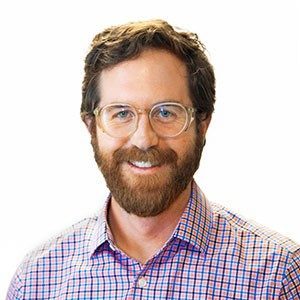
Sam Lemonick graduated from Carleton in 2008 as a Chemistry and English double major. After spending several years freelancing as a science writer for journals like Forbes, Climbing Magazine, and Science News, Sam became a science reporter at Chemical & Engineering News in 2018.
He still works at C&EN, writing articles about a variety of topics related to green, space, theoretical, and computational chemistry. In November 2019, Lemonick visited Carleton to give a talk entitled “Space for Everyone: Rocket Chemistry and Science Writing.” I recently reached out to him for an email interview to discover more of the English-oriented aspects of his career and his time at Carleton.
At Carleton, you were a Chemistry and English double major. What made you want to major in both of these very different fields?
It was kind of an accident, to be totally honest. When I came to Carleton I was actually feeling kind of burned out on English. Too many five-paragraph essays in high school. I was already thinking about being a science major, and I started taking intro classes my first term. But my first-year seminar was a children’s literature course with Peter Balaam. That basically got me hooked on English again.
When it was time to declare a major, I really could not make up my mind between chemistry and English. I thought I could beat the system by declaring both majors and then picking one later on. Obviously, I never made up my mind.
What I do now—science journalism—pretty clearly mixes skills from both majors. But even before I found this career I did see some similarities between chemistry and English. The aspects of each major that I liked best were the creative ones: writing in English and molecular synthesis in chemistry. As opposed to, say, literary criticism or analytical chemistry.
Some of the skills are the same. Molecules have syntax rules like sentences do. Different parts play different roles, they interact with other parts in different ways, and you can sometimes subvert the accepted way of doing things to create something more elegant. I don’t get to play with atoms and molecules anymore, but I still get to play with words.
What were your comps topics for both majors?
My topic for chemistry was “Organometallics in Organic Synthesis.” I had to go look that up. We worked with John Hartwig, who’s at UC Berkeley now. His research is about using metal catalysts–chemicals that enable chemical reactions–to do chemistry that was otherwise difficult or expensive or unpleasant. I have to say I actually remember very little about it. My main contribution in our comps talk was a slide about the interrobang (‽), which probably tells you something about my fitness as a chemist.
For English, I did what I think is now called the Colloquium Comps. Maybe it always was called that. We read King Lear, The Road, White Teeth, and a lot of poems, if I’m remembering correctly. I remember one poem about a mother’s exasperation with her child, and I felt really strongly there was an undertone of love and affection. I got a lot of flak from my group for being too soft-hearted. We also played a fair amount of Minesweeper on 4th Libe computers.
Your Chemistry department bio notes that you spent some time right after college “messing about in boats,” teaching, and applying for grad school. Tell us more about what that time was like for you.
My first year at Carleton was hard for me, and I considered taking a year off after. Instead I did a semester program my sophomore winter, SEA Semester, learning to sail and do oceanographic research on a ship in the Caribbean. I liked that experience enough that I spent the first year or so after graduation working for that company and on other boats. It was a really magical time; also sometimes a really nauseated time. In another life maybe I would have kept on sailing, but I felt isolated from friends and family. It’s a hard lifestyle.
I worked on applications to chemistry PhD programs in the months after graduation. My plan then was to go from a boat to grad school. But having that time off and some distance from the classroom helped me realize I didn’t want to go to grad school. It wasn’t until I had submitted my applications and had a minute to think about what I’d just done that I came to that realization, but I’m glad I did. There are plenty of grad students who realize they didn’t want to go to grad school when they’re already halfway through a six-year PhD. So I got off easy.
I was suddenly pretty adrift when I decided I wasn’t going to grad school and that I wasn’t going to stay on boats. Teaching was the first alternative I tried. I had moved to DC to be closer to my girlfriend (now wife), and I subbed in private and charter schools. That was interesting and sometimes fun, especially when I was in kindergarten classrooms. But I missed chemistry and I missed writing, so I started looking for something else. Science writing is what I landed on. I did just a little bit at first, kind of filling the gaps between subbing. But it gradually took up more and more of my time until I was essentially doing it full-time.
What kind of articles are you most excited to write for Chemical & Engineering News? What are you interested in writing next?
I really love writing profiles. I think humans are fascinating, and it can be very interesting to explore and interpret the humanity that goes along with major scientific breakthroughs or long, decorated research careers. Part of the reason I like being a journalist is it’s a license to ask people talk about themselves. Scientists are usually excited to find a willing listener.
It’s a little perverse, but I also like writing obituaries. We don’t do a lot of obits, but I think it’s really a privilege to hear people reflect. And it’s bittersweet when you do one like I did this summer for a chemist named Richard Van Duyne, because it was clear he was a really special person, and I didn’t get to know him.
In your Chemistry bio, you also write that you never know what’s in store for you next. That being said, what do you imagine yourself doing in the next few years?
I think I’ll be at Chemical & Engineering News for the next few years at least. Chemistry is the area of science I like best, and there aren’t that many places in journalism where you can write only about chemistry, so it’s a good fit. I did spend a long time as a freelancer before I joined the magazine a couple years ago, and there are aspects of freelancing I do miss. But C&EN is trying to evolve right now in lots of different ways to keep up with the changing media landscape, and so far that’s provided all the flexibility and room to grow that I’ve wanted.
What advice would you give to students who are uncertain how to turn their interests into a career, as you have done?
I’m not sure I can responsibly suggest following my path. I ended up in a good place, but it took a little while. On the other hand, it’s been mostly fun. I do recommend being patient and kind with yourself if you’re muddling your way through those post-college years, although I recognize that debt and other external pressures can make that difficult.
I will say that, in my experience, Carleton alumni are among the most helpful and generous people I’ve met in my life. I cold-called several when I was trying to figure out what I wanted to do, and they were universally kind and open. The directory can be a good place to start for someone trying to figure out what they might want to do.
And just for fun—what was your favorite class you took at Carleton?
Stephen Mohring’s table-making class. I didn’t have much time to take classes outside of my majors, and that’s one thing I wish had been different. Experimenting in new fields and developing new skills can be harder to do after college. I actually didn’t finish my table, but it was my senior spring and it was so nice to work with my hands and with a group of people I didn’t often have classes with.
Read Sam’s Carleton Chemistry department official/unofficial bio and check out some of his C&EN articles.