The Colloquium Comps option for the Senior Integrative Exercise offers students the chance to integrate the skills and knowledge they have acquired as English majors by reading, discussing in small groups, and writing about a list of works organized around a theme, topic, or literary question. The list, provided by the department, draws upon works from the range of the major. The intellectual pleasure and rigor of this comps option balances breadth, close reading, and critical analysis through group and individual work.
The colloquium process begins in the fall with a group proposal arguing for minor modifications to the list (the proposal process is described in more detail below). Students may begin reading and planning over winter break, and then, following a syllabus that each colloquium group devises, will conduct regular, self-directed seminar meetings throughout winter term.
To inform their discussions, students will do supplemental research on the list’s primary texts and critical questions. In the last few weeks of winter term, students individually will compose either one or two comparative essays on topics of their own choosing, with a total count of approximately 5,000 words. Students who choose to write a single essay should discuss at least three texts from the list. All students should demonstrate attention to the breadth of the list; e.g., in terms of eras, genres, traditions, and/or critical claims, and make appropriate use of their research. After writing first drafts, students will revise their work through a structured process of peer review.
Finally, in the spring, the colloquium work will culminate in a group presentation given at the departmental symposium.
2026-27 Colloquium Comps
- Coordinators: Peter Balaam & Johana Godfrey
Things
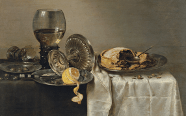
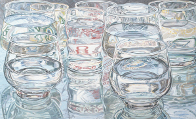
This colloquium list invites you to stop and look at the “things” that furnish literary texts–the stuff, the junk, the objects, the artifacts. Material objects render setting legible, mirror character, and determine texts’ relation to material culture. Some of these texts, like The Spoils of Poynton and “The Overcoat,” take material things as a primary and explicit obsession; others are more circumspect. While Marx regarded the commodity as a significant source of modern alienation, recent theorists have found it difficult to deny the enchantments, the animation, and even the agency of the thing. Through the prism of things literary writers fashion intricate symbols, anchor their texts in realism, introduce distant worlds and contexts, signal class or taste or moralities of human character, and ultimately complicate our assumed knowledge of subject-object relations. What does it mean for a character or writer to possess, gain, lose, collect, curate, keep, or renounce the thing? And what happens when inanimate objects start to take on a life and narrative force of their own?
Long Narrative
Daniel Defoe, Robinson Crusoe
Henry James, The Spoils of Poynton
Oscar Wilde, The Picture of Dorian Gray
Nella Larsen, Quicksand
Vivek Shanbhag, Ghachar Ghochar
Sayaka Murata, Convenience Store Woman
Short Narrative and Non-Fiction Pieces
Ovid, TBA from Metamorphoses
Anon, “Adventures of a Quire of Paper”
William Morris, “The Beauty of Life”
Nikolai Gogol, “The Overcoat”
Kelly Link, “Stone Animals”
Lyric
Anon, “Dream of the Rood”
George Herbert, “A Wreath” “The Pulley”
John Donne, “The Funeral,” “A Valediction: Forbidding Mourning”
John Keats, “Ode on a Grecian Urn,” “This Living Hand”
Walt Whitman, “Crossing Brooklyn Ferry”
Wallace Stevens, “Anecdote of the Jar,” “The Snow Man”
Elizabeth Bishop, “The Monument,” “Poem,” “Large Bad Picture,” “Crusoe in England”
Derek Walcott, “The Bounty,” “Crusoe’s Island”
Gwendolyn Brooks, “The Bean Eaters,” “Boy Breaking Glass”
Carolyn Forché, “The Colonel,” “Museum of Stones”
Natalie Diaz, “Facts of Art,” “Dome Riddle”
Drama, Film, Performance
Ben Jonson, The Alchemist
Maysles brothers, Grey Gardens
Lynn Nottage, Intimate Apparel (playing at the Guthrie in winter)
Critical and Theoretical Starting Points
Elaine Freedgood, “Reading Things” (introduction) from Ideas in Things
Karl Marx, “The Fetishism of Commodities and the Secret Thereof”
Bill Brown, “Thing Theory”
A. In the Fall of senior year students submit a written group proposal consisting of:
- A list of two or three texts the group wishes to add to the departmental Colloquium list. The group may also propose a subtraction.
- A rationale for the proposed additions or deletions. The explanation should address:
- How these texts contribute to a conversation about the topic;
- How the list changes as a result of your choices;
- How the questions that the topic poses can be worked through with your additional texts;
- The proposal should be at least two pages long.
Examples of successful proposals are in Dropbox.
B. The final Colloquium Comps will consist of:
- Approximately 5,000 words of essay writing due at the end of winter term of senior year
- A public presentation by the group at the English Comps symposium in the spring term on what was learned in the process of constructing a syllabus, discussing the works on the list, and writing the essay(s).
C. What does an ideal Colloquium Comps Essay look like?
- Successfully addresses a literary, critical and/or theoretical question or problem
- Articulates a cogent and insightful thesis in answer to this question or problem
- Develops this thesis into a coherent and illuminating argument
- Argument is based upon well-chosen evidence
- Shows the pertinence of such evidence by sophisticated analysis, close reading, and/or careful exposition
- Shows mastery of a broad range of relevant literary, critical, methodological and/or theoretical concepts and texts
- Paper clearly exhibits an extremely effective organizing structure
- Is precisely and/or eloquently written
- Is almost entirely free from mechanical error
Examples of successful Colloquium Essays are in Dropbox.
Key Dates & Deadlines, 2026-27
Junior Year
Spring Term:
- Thursday, May 6, Common Time: Mandatory Comps meeting
- Advising week: Conversation with advisers about Comps options
- Colloquium list sent to majors and posted on department website
Senior Year
Fall Term:
- Weeks 1-5: Colloquium students will meet together and discuss ideas for potential additions or deletions to the list. The group(s) will draft a proposal (see guidelines above).
- Noon on Thursday, October 22: Group proposal due – The proposal must be uploaded to Moodle according to the instructions posted there. Revisions of the proposal may be required.
- Tuesday, October 27, Common Time: Research visit with reference librarian Adam Lewis
- Tuesday, November 3, Common Time: Meeting with czars to discuss planning for winter term (including schedule, syllabus, and best practices).
Winter Term:
- 1st week: Colloquium starts to meet. The term’s schedule should be set.
- 2nd week: Meeting with czars to discuss expectations for the essays and the development of literary arguments that draw on the breadth and depth of the list.
- 6th week: Preliminary work on possible essays should be underway.
- 7th week: First drafts distributed for peer review.
- 8th week: Peer reviews returned and discussed.
- 9th week: Second round of peer review for penultimate drafts.
- Last day of classes (Wednesday, March 10): Final essays due by 5 p.m. Check the comps submission guidelines for further instructions.
Spring Term:
- Students receive evaluations of their essays. Revisions to essays, if required, due at noon, Monday, April 26 (beginning of 5th week).
- Saturday, May 8: Group presentation at the English Comps Symposium.