Chemistry at Carleton
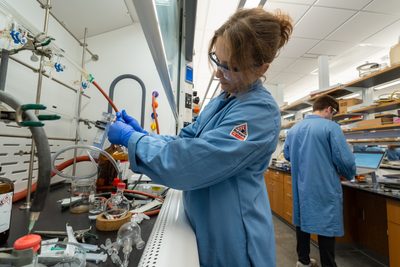
Carleton chemistry students learn how to do science through an apprenticeship model that is used throughout our curriculum. This includes opportunities to work on multi-week inquiry-based projects in lower-division laboratories, more sophisticated projects in advanced courses and laboratories, and research projects with faculty.
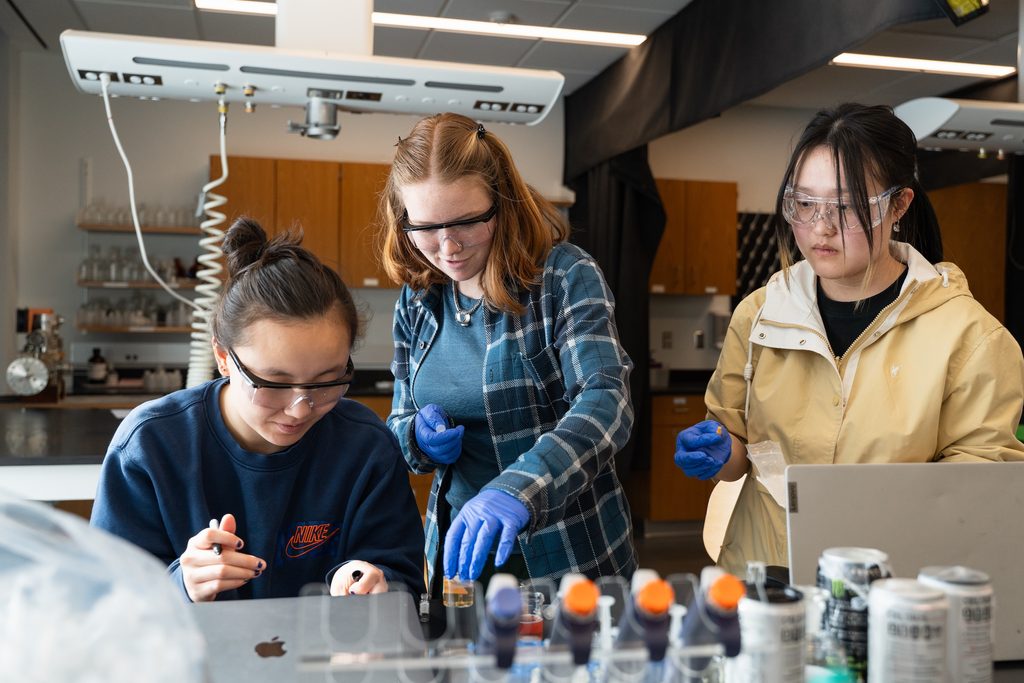
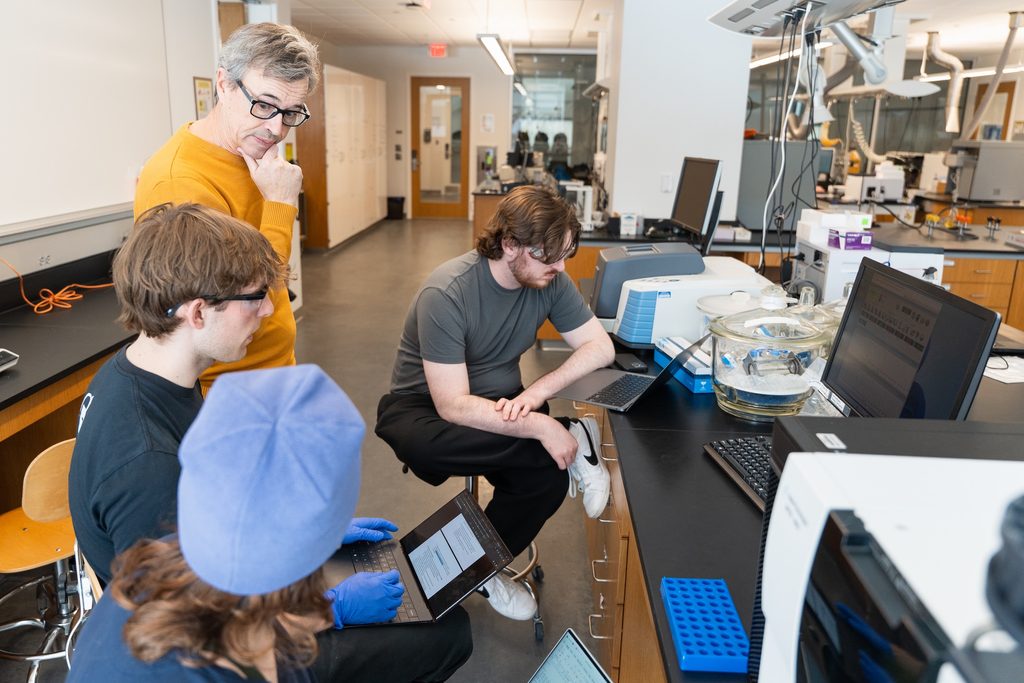
Many activities, from lab projects to the senior integrative exercise, involve students working creatively in teams on complex tasks. Through our work together, we aim to establish an environment that encourages free and informal exchange of ideas both among students and between students and faculty.
The Chemistry Department graduates an average of 30 students per year, out of a total campus enrollment about 2000 students. On average, one-third of all chemistry majors go on to PhD programs in chemistry or related fields. Another one-third of our majors pursue post-graduate study in health professions. The remaining students enter the job market and other professional programs-with a combination of chemistry and the liberal arts, they have pursued careers in education, architecture, engineering, business, law, and the ministry.
Info For First-Year Students
Learn more about studying chemistry at a higher level, including our FAQs.
Can I major in chemistry?
Yes, a major is offered. Learn more about the Chemistry major. Carleton also offers a Biochemistry minor. Students interested in chemical engineering careers can also take advantage of Carleton’s Combined Plan in Engineering.
Topics explored
Chemistry provides the connection between molecular concepts and the complex systems found in nature. Chemistry courses stress the understanding of chemical principles, as well as the experimental basis of the science. See a complete list of Chemistry Courses offered.
Learning outcomes
As part of the accreditation of the college, each major is required to assess a set of student learning outcomes (SLOs). One SLO is assessed annually by the Chemistry Department using an embedded assessment model. For embedded assessment, the effectiveness of the Chemistry curriculum is determined using selected course assignments in 300-level courses that intersect with the theme of an SLO. Therefore, Chemistry majors are not asked to undergo extra testing or complete additional assignments as part of our assessment strategy, but rather we use assignments that are already part of our curriculum. The Chemistry Department’s SLOs are constantly evolving as we move through the assessment process. As of fall 2024, the Chemistry Department’s SLOs are as follows:
Upon completing a chemistry major at Carleton College, students will be able to…
- demonstrate the ability to analyze, apply, and evaluate the unifying ideas in chemistry.
- apply atomic and molecular theory to explain macroscopic phenomena.
- analyze chemical phenomena and laboratory data using sound mathematical, statistical, and quantitative reasoning.
- display proficiency with the skills needed to function in the chemistry laboratory, including experimental design, appropriate use of chemicals, apparatus, and instrumentation, data collection and interpretation, reporting results, and working as an effective teammate.
- apply safety standards in the chemistry laboratory to help reduce potential hazards associated with experimentation, chemical management, and chemical disposal.
- locate, critically read, and analyze (in oral or written form) literature in chemistry and allied fields, including chemistry in popular literature and current events.
How to get started
When choosing your first chemistry course, you should first decide if you want to eventually study chemistry at a more advanced level. Chemistry 113: Concepts of Chemistry is available to students who are interested in completing their Carleton Lab Science graduation requirement but do not plan for further study in chemistry.
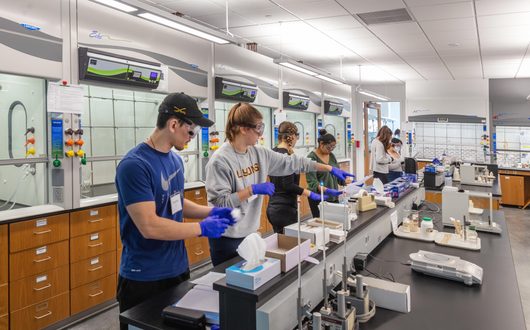
Work in our state-of-the-art labs
Chemistry is located in Carleton’s integrated math and science center, conveniently located in the center of campus. Anderson Hall is home to state-of-the-art labs, an atrium where students of all majors love to study, several study rooms, and a café.
News
All NewsEvents
Chemistry Events-
Periodic Table
November 19, 202612:00pm — 1:00pm
-
Chemistry Department Seminar: Research Recruiting Part 2: On-campus
January 8, 20273:30pm — 4:30pm -
Chemistry Department Seminar: Molly MacInnes, Grinnell College
January 29, 20273:30pm — 4:30pm -
Chemistry Department Seminar: Karen Wooley, Texas A&M
February 12, 20273:30pm — 4:30pm