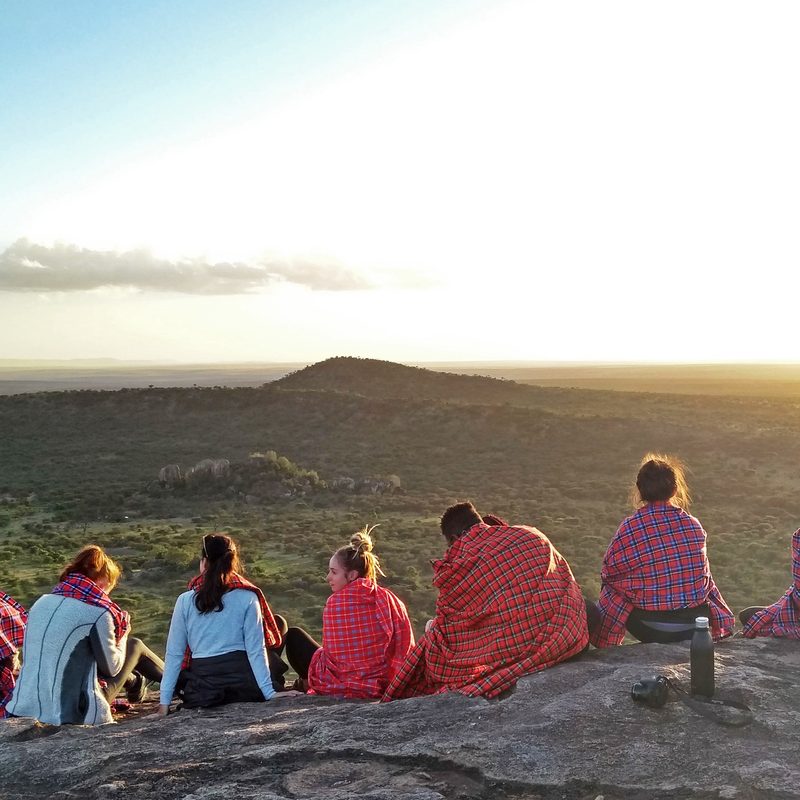
Carleton’s Sociology and Anthropology department explores how different parts of society affect each other. We study how society and environment interact, and we examine how coexisting nations influence each other. Our coursework includes research inside and outside the classroom and our faculty lead several off-campus programs throughout the year.

About Sociology and Anthropology
Sociologists and anthropologists separate themselves from other social scientists through their concern with the totality of human social life. We investigate social phenomena: family, law, art, religion, language, politics, health, social movements, gender relations and just about anything that affects groups of people.
The department strongly recommends that SOAN 110: Introduction to Anthropology or SOAN 111: Introduction to Sociology be taken prior to enrolling in courses numbered 200 or above.
Requirements for the Sociology/Anthropology Major
Major Requirements – 72 Total Credits
Introductory Course – Required 6 credits
Statistics Course – Required 6 credits
- STAT 120: Introduction to Statistics
OR STAT 250: Introduction to Statistical Inference
OR a score of 4 or 5 on the AP Math Statistics exam
Methods Course – Required 6 credits
- SOAN 240: Methods of Social Research
Theory Courses – Required 12 credits
Additional Courses – Required 30 credits
A maximum of 12 credits can be applied toward the major from relevant courses in Non-Carleton off-campus programs.
The following courses may also be applied toward the major:
- AFST 120: Blackness and Whiteness Outside the United States
- AFST 210: Blackness and Whiteness Outside the United States
- AFST 220: Color, Class, and Status in Black America (not offered 2026-27)
- AFST 230: Black Europe (not offered 2026-27)
- AFST 289: Global Blackness and Social Movements
- AFST 330: Black Europe (not offered 2026-27)
- AFST 345: Afro-descendant Identies in Latin America Program: Afro-Latin America in Comparative Perspective (not offered 2026-27)
- ARCN 101: The Human Story: Archaeology and the Anthropocene
- ARCN 112: Archaeology of Native North America
- ARCN 166: Archaeology in the Land of the Midnight Sun
- ARCN 213: Objects in Motion The Archaeology of Ancient Trade
- ARCN 246: Archaeological Methods and Lab
- ARCN 262: Computational Studies of Social and Environmental Systems
- ARCN 395: Archaeology: Science, Ethics, Nationalism and Cultural Property
- ENTS 250: The Socioecological Life of Corn in Oaxaca, Mexico Program: Food, Forests & Resilience (not offered 2026-27)
- GWSS 150: Politics of Reproductive Justice (not offered 2026-27)
- GWSS 200: Gender, Sexuality & the Pursuit of Knowledge
- GWSS 240: Gender, Globalization and War (not offered 2026-27)
- GWSS 250: Politics of Reproductive Justice (not offered 2026-27)
- LTAM 113: Archaeology of Ancient Latin America (not offered 2026-27)
- LTAM 220: Eating the Americas: 5,000 Years of Food (not offered 2026-27)
Advanced Writing Course – Required 6 credits
- SOAN 396: Advanced Sociological and Anthropological Writing
Senior Integrative Exercise – Required 6 credits
- SOAN 400: Integrative Exercise
Additional Departmental Notes
In keeping with our philosophy of comparative studies and commitment to understanding human societies other than the one we live in, majors are strongly urged to develop an in-depth study of a culture other than their own. This may be done through regular courses, independent study, or an off-campus program. Early in their junior year, students should discuss ways of integrating such an in-depth study into their work with their advisers.
Sociology/Anthropology Courses
-
SOAN 110 Introduction to Anthropology
Anthropology is the study of all human beings in all their diversity, an exploration of what it means to be human throughout the globe. This course helps us to see ourselves, and others, from a new perspective. By examining specific analytic concepts—such as culture—and research methods—such as participant observation—we learn how anthropologists seek to understand, document, and explain the stunning variety of human cultures and ways of organizing society. This course encourages you to consider how looking behind cultural assumptions helps anthropologists solve real world dilemmas.
-
SOAN 111 Introduction to Sociology
Sociology is an intellectual discipline, spanning the gap between the sciences and humanities while often (though not always) involving itself in public policy debates, social reform, and political activism. Sociologists study a startling variety of topics using qualitative and quantitative methods. Still, amidst all this diversity, sociology is centered on a set of core historical theorists (Marx/Weber/Durkheim) and research topics (race/class/gender inequality). We will explore these theoretical and empirical foundations by reading and discussing influential texts and select topics in the study of social inequality while relating them to our own experiences and understanding of the social world.
- Fall 2026, Winter 2027, Spring 2027
- 6
- SI, Social Inquiry
- Liz Raleigh 🏫 👤
-
SOAN 114 Modern Families: An Introduction to the Sociology of the Family
What makes a family? How has the conception of kinship and the ‘normal’ family changed over the generations? In this introductory class, we examine these questions, drawing on a variety of course materials ranging from classic works in sociology to contemporary blogs on family life. The class focuses on diversity in family life, paying particular attention to the intersection between the family, race and ethnicity, and social class. We’ll examine these issues at the micro and macro level, incorporating texts that focus on individuals’ stories as well as demographics of the family.
-
SOAN 118 Introduction to Medical Anthropology
Medical anthropology examines how humans think about, talk about, and embody health, illness, and treatment across social contexts and time periods. In this class, our inquiry will not be limited to the individual patient, provider, or pill, but will encompass broader social, ethical, and political matters. Guided by scholars from the Global North and South, we will compare and contrast these matters as they manifest "at home" and "away" (however you define these), including in the U.S. In doing so, we will take medical anthropology as a framework for intellectual inquiry and for practical action in the world.
- Fall 2026
- 6
- IS, International Studies SI, Social Inquiry
- Elizabeth Durham 🏫 👤
-
SOAN 125 Southeast Asian Migration and Diasporic Communities
2025 is the 50th anniversary of the end of the Vietnam War. Many Southeast Asian (SEAn) refugees resettled in the U.S. in the aftermath. First, we begin in Southeast Asia (SEA) to understand the social, political, and historical circumstances that have led to SEA migration. Then we will examine how SEAn have adapted to life in the U.S. and how those communities—many are here in Minnesota—are thriving today. We’ll work on a project in collaboration with SEAn organizations to commemorate the 50th anniversary and also travel to SEAn communities in the Twin Cities, dates TBD.
Not offered in 2026-27
-
SOAN 140 Animals and Society
Other-than-human animals are an overwhelming presence in our collective and individual lives. In this course, we will explore questions regarding the intersection of the lives of human and non-human animals from a sociological perspective. Such questions include: Why do we love some animals to the point of considering them family members, but vilify and even eat others? Are “pets” monsters of dependence created by human oppression, or do pets and people co-exist interdependently? Is human treatment of non-human animals related in significant ways to such enduring social problems as racism, sexism, and violence against vulnerable groups?
- Fall 2026
- 6
- SI, Social Inquiry
- Emily Bowman 🏫 👤
-
SOAN 203 Anthropology of Good Intentions
Is the environmental movement making progress? Do responsible products actually help local populations? Is international AID alleviating poverty and fostering development? Today there are thousands of programs with sustainable development goals yet their effectiveness is often contested at the local level. This course explores the impacts of sustainable development, conservation, and AID programs to look beyond the good intentions of those that implement them. In doing so we hope to uncover common pitfalls behind good intentions and the need for sound social analysis that recognizes, examines, and evaluates the role of cultural complexity found in populations targeted by these programs.
Recommended Preparation: The department strongly recommends that Sociology/Anthropology 110 or 111 be taken prior to enrolling in courses numbered 200 or above.
- Fall 2026
- 6
- IS, International Studies SI, Social Inquiry
- Constanza Ocampo-Raeder 🏫 👤
-
SOAN 209 Language, Culture, and Power
This course introduces linguistic anthropology, the study of language in social contexts. People use language to navigate the world and to make judgments about others. Has anyone ever correctly guessed your background after you used a specific word (pop vs. soda)? Have you ever been teased due to your accent? By surveying cross-cultural research from around the world, we ask: How do linguistic practices contribute to the construction of social identity and social difference? How might perceptions of language create and reinforce social divisions and inequality? Students will also consider ways they may advocate for linguistic social justice.
Not offered in 2026-27
-
SOAN 214 Neighborhoods and Cities: Inequalities and Identities
Inequalities and identities are well understood yet too often disconnected from the context of space and place. In this class, we discuss the ways that neighborhoods and cities are sites of inequality as well as identity. Neighborhoods are linked to the amount of wealth we hold; the schools we attend; the goods, services, and resources we have access to; and who our neighbors are. Neighborhoods are also spaces where identities and community are created, claimed, and contested. They can also be sites of conflict as they change through gentrification or other processes that often reflect inequalities of power, resources, and status. In this course, special attention will be paid to how race, gender and sexuality, and immigration shape inequalities and identity in neighborhoods and cities. This course will also include an academic civic engagement component, collaborating with local communities in Minnesota.
Recommended Preparation: The department strongly recommends that Sociology/Anthropology 110 or 111 be taken prior to enrolling in courses numbered 200 or above.
-
SOAN 223 More Than a Game: Sport and Society
Our love of sport is often matched by the belief that it is not worthy of deeper thought, inquiry, or critique. This course challenges that assumption by examining sport as one of the most powerful social institutions in the world. From global mega-events like the Olympics and the FIFA World Cup to college athletics and everyday recreation, sports shape identities, economies, and political struggles. Using sociological perspectives on race, gender, nationalism, capitalism, colonialism, and globalization, we explore how sport reflects and reshapes social inequalities and sociocultural meanings—and why something often dismissed as “just a game” matters so much in social life.
Recommended Preparation: The department strongly recommends that SOAN 110 or 111 be taken prior to enrolling in courses numbered 200 or above.
- Spring 2027
- 6
- IDS, Intercultural Domestic Studies SI, Social Inquiry
- Emily Bowman 🏫 👤
-
SOAN 225 Social Movements
How is it that in specific historical moments ordinary people come together and undertake collective struggles for justice in social movements such as Black Lives Matter, Me Too, Standing Rock, immigrant, and LGBTQ rights? How have these movements theorized oppression, and what has been their vision for liberation? What collective change strategies have they proposed and what obstacles have they faced? We will explore specific case studies and use major sociological perspectives theorizing the emergence of movements, repertoires of protest, collective identity formation, frame alignment, and resource mobilization. We will foreground the intersectionality of gender, sexuality, race, and class in these movements.
- Spring 2027
- 6
- IDS, Intercultural Domestic Studies SI, Social Inquiry
- Meera Sehgal 🏫 👤
-
SOAN 228 Public Sociology of Religion
This course focuses on special topics in the public sociology of religion. We will look at the intersection of race, religion, and politics in the U.S.; the intersection of science and religion in Indigenous-led environmental and land back movements; secular and Islamic feminism in Egypt and Indonesia; and democracy, secularism, and religious tolerance in Indonesia, Egypt, and globally. As we do so, we will examine core theoretical perspectives and empirical developments in the contemporary study and sociology of religion.
Recommended Preparation: Completion of SOAN 110 or SOAN 111 with a grade of C- or better.
Not offered in 2026-27
-
SOAN 233 Anthropology of Food
Food is the way to a person’s heart but perhaps even more interesting, the window into a society’s soul. Simply speaking understating a society’s foodways is the best way to comprehend the complexity between people, culture and nature. This course explores how anthropologists use food to understand different aspects of human behavior, from food procurement and consumption practices to the politics of nutrition and diets. In doing so we hope to elucidate how food is more than mere sustenance and that often the act of eating is a manifestation of power, resistance, identity, and community.
- Fall 2026
- 6
- IS, International Studies SI, Social Inquiry
- Constanza Ocampo-Raeder 🏫 👤
-
SOAN 240 Methods of Social Research
When sociologists and anthropologists conduct their research, how do they know which method to choose? What assumptions guide their decision? What challenges might they encounter? What are their ethical obligations? In this course, we'll explore a diverse range of methods, from in-depth interviews to large-scale surveys and participant observation fieldwork. Students will also learn how to craft feasible research questions, select the right method, collect and analyze data, and communicate research methods effectively. This course is an essential foundation for SOAN majors, equipping students with the skills and knowledge necessary to succeed in their comps experience.
- Spring 2027
- 6
- QRE, Quantitative Reasoning SI, Social Inquiry WR2, Writing Rich 2
-
First-year students are ineligible to enroll. Student must have completed the following course(s): One 200- or 300-level SOAN course AND SOAN 110 or SOAN 111 with a grade of C- or better, AND STAT 120 or STAT 250 with a grade of C- or better, or received a score of 4 or better on the Statistics AP exam.
- Annette Nierobisz 🏫 👤
-
SOAN 252 Growing Up in an Aging Society
Both the U.S. and global populations are trending toward a world with far fewer young people than ever before. So, what does it mean to grow up in a rapidly aging society? This course explores age, aging, and its various intersections with demographic characteristics including gender, sexuality, race, and social class. We situate age and aging within the context of macro-structural, institutional, and micro-everyday realms. Some topics we will examine include: media depictions and stereotypes; interpersonal relationships and caregiving; the workplace and retirement; and both the perceptions and inevitable realities of an aging population.
-
SOAN 256 Africa: Representation and Conflict
Pairing classics in Africanist anthropology with contemporary re-studies, we explore changes in African societies and in the questions anthropologists have posed about them. We address issues of representation and self-presentation in written ethnographies as well as in African portrait photography. We then turn from the visual to the invisible realm of African witchcraft. Initiation rituals, war, and migration place selfhood and belonging back in this-world contexts. In-depth case studies include, among others: the Cameroon Grassfields, the Bemba of Zambia, and the Nuer of South Sudan.
Recommended Preparation: The department strongly recommends that Sociology/Anthropology 110 or 111 be taken prior to enrolling in courses numbered 200 or above.
Not offered in 2026-27
-
SOAN 257 Culture and Politics in India
India is a region of immense diversity where more than one billion people live. We will explore social structures in India–through a focus on key areas of everyday life such as family, religion, economy, systems of stratification and social movements. Close attention will be given to religious nationalism, globalization and militarism as dominant trends affecting contemporary India. We will consider: How has India been represented in the Western imagination and why do such representations matter? What are the forces of modernity and tradition in India? What are the similarities and differences in systems of stratification in India and the United States?
Not offered in 2026-27
-
SOAN 262 Anthropology of Health and Illness
An ethnographic approach to beliefs and practices regarding health and illness in numerous societies worldwide. This course examines patients, practitioners, and the social networks and contexts through which therapies are managed to better understand medical systems as well as the significance of the anthropological study of misfortune. Specific topics include the symbolism of models of illness, the ritual management of misfortune and of life crisis events, the political economy of health, therapy management, medical pluralism, and cross-cultural medical ethics.
Recommended Preparation: The department strongly recommends that Sociology/Anthropology 110 or 111 be taken prior to enrolling in courses numbered 200 or above.
Not offered in 2026-27
-
SOAN 272 Sociology of Race and Ethnicity
This course examines race and ethnicity with an emphasis on U.S. society. The course is organized around four themes: 1) the racial order and racial hierarchy; 2) racialized social institutions (education, workplace, families, media); 3) racial and ethnic identities and identification; and 4) theories of racism and race relations. Across these areas of inquiry, we compare past and present-day patterns. We also consider how other social categories such as gender, class, and religion intersect with and co-construct race. Additional emphasis will be placed on the meaning of the increase in both immigration and multiracial identification in the U.S.
Recommended Preparation: The department strongly recommends that Sociology/Anthropology 110 or 111 be taken prior to enrolling in courses numbered 200 or above.
- Fall 2026
- 6
- IDS, Intercultural Domestic Studies QRE, Quantitative Reasoning SI, Social Inquiry
- Daniel Williams 🏫 👤
-
SOAN 278 Urban Ethnography and the American Experience
American sociology has a rich tradition of focusing the ethnographic eye on the American experience. We will take advantage of this tradition to encounter urban America through the ethnographic lens, expanding our social vision and investigating the nature of race, place, meaning, interaction, and inequality in the U.S. While doing so, we will also explore the unique benefits, challenges, and underlying assumptions of ethnographic research as a distinctive mode of acquiring and communicating social knowledge. As such, this course offers both an immersion in the American experience and an inquiry into the craft of ethnographic writing and research.
Recommended Preparation: The department strongly recommends that Sociology/Anthropology 110 or 111 be taken prior to enrolling in courses numbered 200 or above.
Not offered in 2026-27
-
SOAN 283 Immigration, Citizenship, and Belonging in the U.S.
Immigration has been a defining feature of the United States that is tied to legal and cultural forms of citizenship, and more broadly, to questions of belonging. This course explores these three concepts through multiple aspects of immigration, including the migration experience, immigration policy, community, education, culture and others, for both immigrants and the children of immigrants. Special attention is given to how differences among immigrants–such as race, gender, class, national origin, and others–matter in all of these areas. These questions and issues are explored through academic readings, popular and public discourse, immigrant voices, and civic engagement in local communities.
Not offered in 2026-27
-
SOAN 287 Afro-descendant Identities in Latin America Program: Afro-Descendant Identities and Society
This course will examine Afro-descendant identities through local and site-based topics, including political and social history of race and blackness; urban spaces and neighborhoods; Afro-descendant communities in the economy and education system; community organizing and social movements; representation and commemoration; music, dance, and cultural expression. Topics will be based on expertise of host country lecturers and community specialists.
Not offered in 2026-27
- 6
- CX, Cultural/Literature IS, International Studies SI, Social Inquiry
-
Acceptance in the Carleton OCS Afro-descendant Identies in Latin America program.
-
SOAN 306 Food Sovereignty: On Socio-Ecological Futures
Food sovereignty is widely regarded as a leading environmental framework rooted in sustainability and justice. It envisions a transformative food system that addresses cultural, social, and ecological needs simultaneously. However, achieving this vision requires building and sustaining new institutions and systems of knowledge. This course examines the origins of the food sovereignty movement in the Global South and its world-wide implementations. Students will explore socio-ecological frameworks and methodologies, rooted in environmental anthropology, to understand and evaluate food sovereignty initiatives, while critically analyzing policies that position food sovereignty as a pathway toward more just and sustainable futures.
Recommended Preparation: Introductory courses in SOAN and ENTS.
- Winter 2027
- 6
- IS, International Studies SI, Social Inquiry
- Constanza Ocampo-Raeder 🏫 👤
-
SOAN 312 How Rude: (Im)politeness and (Dis)respect in Language
Expressions of politeness and impoliteness differ between societies. From smiling at strangers to addressing a woman as “ma’am,” what is polite in one setting can be strange or antagonistic in another. This course focuses on cross-linguistic expressions of (im)politeness and (dis)respect, but also touches upon non-verbal behavior and communication. Older cross-cultural literature has focused on the positive valuations of politeness, deference, and respect in language. By balancing past scholarship with recent works on linguistic impoliteness and disrespect, we’ll explore language’s role in social relations, from creating harmony to sowing conflict.
Recommended Preparation: Prior Sociology/Anthropology course or instructor permission is recommended.
Not offered in 2026-27
-
SOAN 313 Conscious Nature: Towards and Anthropology of Non-Human Beings
The core of anthropological thought has been organized around the assumption that the production of complex cultural systems is reserved to the domain of the human experience. While scholars have contested this assumption for years, there is an emerging body of scholarship that proposes expanding our understandings of culture, and the ability to produce meaning in the world, to include non-human beings (e.g. plants, wildlife, micro-organisms, mountains). This course explores ethnographic works in this field and contextualizes insights within contemporary conversations pertaining to our relationship with nature, public health, and social justice movements that emerge within decolonized frameworks.
Recommended Preparation: SOAN 110 or SOAN 111.
SOAN 313 is cross listed with ENTS 313.
Not offered in 2026-27
-
SOAN 315 Madness: Social Difference, (In)Justice & Change
Have you ever "lost your mind"? In this class, we will consider three questions about the social life of madness. First, are the "mad" just different? Second, is madness a justified response to an unjust society? Third, how and why do therapeutic interventions distinguish "madness" from "mental illness" (and "illness" from "health")? Guided by scholars from the Global North and South, we will learn about madness "at home" and "away" (however you define these), including in the U.S. We will study madness in its own right and as a lens into broader relations between the psy- and social sciences.
Recommended Preparation: Completion of SOAN 110, SOAN 111, or SOAN 118.
- Spring 2027
- 6
- IS, International Studies SI, Social Inquiry WR2, Writing Rich 2
- Elizabeth Durham 🏫 👤
-
SOAN 320 The Anthropology of the End of the World
We live on a planet marked by ruin, devastation, and destruction—conditions associated with the concept of the Anthropocene, a geological era that recognizes the inescapable consequences of human activity on the planet. This course examines these consequences through the lens of environmental anthropology to explore various socio-cultural strategies implemented by societies around the world. Themes explored include notions of unpredictability, precarity, resilience, and survivance as avenues for understanding the impacts of profound environmental change, as well as new opportunities for place-making, community, and sustainable futures.
Recommended Preparation: Introductory courses in SOAN or ENTS.
Not offered in 2026-27
-
SOAN 322 Buddhist Studies in India and Thailand Program: Contemporary Buddhist Culture
This course introduces students to the complexity and plurality of Buddhist traditions that have flourished in diverse societies and cultures in the modern era. This course enables students to sympathetically understand and critically investigate various Buddhist traditions and their historically and culturally specific configurations of philosophical beliefs, cultural values, everyday practices, social institutions, and personal experiences. Focusing on Buddhist traditions of South and Southeast Asia, Japan, and Tibet, we explore topics including syncretism and popular religion, monasticism, gender, economic development, social movements, political violence, and religious revival. Students expand their research skills in anthropology through field assignments in Bodh Gaya.
- Fall 2026
- IS, International Studies No Exploration
-
Acceptance in the Carleton OCS Buddhist Studies in India and Thailand program.
- Local Instructor
-
SOAN 323 Mother Earth: Women, Development and the Environment
Why are so many sustainable development projects anchored around women’s cooperatives? Why is poverty depicted as having a woman’s face? Is the solution to the environmental crisis in the hands of women the nurturers? From overly romantic notions of stewardship to the feminization of poverty, this course aims to evaluate women’s relationships with local environments and development initiatives. The course uses anthropological frameworks to evaluate case studies from around the world.
Recommended Preparation: SOAN 110 or SOAN 111
SOAN 323 is cross listed with ENTS 323.
Not offered in 2026-27
-
SOAN 325 Sociology of Adoption and Assisted Reproduction
Where do babies come from? Whereas once the answer was relatively straight forward, the growth of assisted reproductive technologies (ART) and adoption has changed the field of potential answers. Nowadays babies can come from birthmothers, egg donors, and surrogates. In this course we will examine the meaning and making of families across these different types of formations and contextualize the popularity of ART relative to the decrease in adoption. We will take a sociological approach to analyzing these issues, paying particular attention to questions surrounding women’s rights, baby “markets,” and the racialization of children placed for adoption in the U.S.
- Spring 2027
- 6
- IDS, Intercultural Domestic Studies SI, Social Inquiry
-
Student has completed any of the following course(s): One SOAN course excluding Independent Studies with a grade of C- or better.
- Liz Raleigh 🏫 👤
-
SOAN 326 Ecology and Anthropology in Tanzania Program: Cultural Anthropology of East Africa
The course introduces students to East Africa–its geography, people groups, and their cultures. The focus will be on the peoples of Tanzania and their linguistic groupings. We shall look at what scholars and the citizens themselves say about their origins, social, economic, ecological, and modern conditions. The course explores the history, social structure, politics, livelihood and ecology, gender issues, and the changes taking place among the Maasai, Arusha, Meru, Chagga, and Hadzabe cultural groups. Homestays, guest speakers, and excursions in northern Tanzania offer students and instructors enviable interactions with these groups and insights into their culture and socio-ecology. Students are required to have taken one Anthropology, Biology or Environmental Studies course or have instructor permission.
- Fall 2026
- IS, International Studies No Exploration
-
Acceptance in the Carleton OCS Ecology and Anthropology in Tanzania program.
- Anna Estes 🏫 👤
-
SOAN 327 Greece at a Crossroads: History, Landscape, and Material Culture Program: The Culture of Modern Greece: The Ethnography of a Society in Transition
This course focuses on the culture(s) of Modern Greece from the 1960s onward, drawing on authors from across the social sciences to identify key realms that make life in Greece distinct. Theories and methods of anthropology will be discussed with special attention to how ethnographies in Greece have changed over the past decades. Students will try on different lenses as they conduct ethnographic research and examine the world through theories of space, ritual, performance, gender, and symbol. This structure will allow students an understanding of contemporary Greek society and a developing awareness of their own cultural conditionings and ethnocentrisms.
Not offered in 2026-27
- 6
- IS, International Studies SI, Social Inquiry
-
Acceptance in the Carleton OCS Greece at a Crossroads: History, Landscape, and Material Culture program.
-
SOAN 330 Sociological Thought and Theory
Many thinkers have contributed to the development of sociology as an intellectual discipline and mode of social inquiry; however, few have had the influence of Emile Durkheim, Karl Marx, and Max Weber. This course focuses on influential texts and ideas generated by these and other theorists from sociology’s “classical era,” how these texts and ideas are put to use by contemporary sociologists, and on more recent theoretical developments and critical perspectives that have influenced the field.
Recommended Preparation: The department strongly recommends that Sociology/Anthropology 110 or 111 be taken prior to enrolling in courses numbered 200 or above.
- Fall 2026
- 6
- SI, Social Inquiry WR2, Writing Rich 2
- Emily Bowman 🏫 👤
-
SOAN 331 Anthropological Thought and Theory
Our ways of perceiving and acting in the world emerge simultaneously from learned and shared orientations of long duration, and from specific contexts and contingencies of the moment. This applies to the production of anthropological ideas and of anthropology as an academic discipline. This course examines anthropological theory by placing the observers and the observed in the same comparative historical framework, subject to the ethnographic process and to historical conditions in and out of academe. We seek to understand genealogies of ideas, building on and/or reacting to previous anthropological approaches. We highlight the diversity of voices who thought up these ideas, and have influenced anthropological thought through time. We attend to the intellectual and political context in which anthropologists conducted research, wrote, and published their works, as well as which voices did/did not reach academic audiences. The course thus traces the development of the core issues, central debates, internecine battles, and diversity of anthropological thought and of anthropologists that have animated anthropology since it first emerged as a distinct field of inquiry to present-day efforts at intellectual decolonization.
- Winter 2027
- 6
- IS, International Studies SI, Social Inquiry WR2, Writing Rich 2
-
Student must have completed any of the following course(s): SOAN 110 or SOAN 111 AND one 200 or 300 level SOAN course with a grade of C- or better.
- Constanza Ocampo-Raeder 🏫 👤
-
SOAN 343 Advanced Ethnographic Workshop
This advanced methods course is designed to have students think about the complexities of ethnographic fieldwork by showcasing a powerful and rigorous mode of inquiry that informs societal questions in unique ways. The main goals are to explore classic ethnographies with an eye towards methods and experience ethnographic research in its entirety: from exploratory observations, into the process of defining cultural hypotheses, to the coding of various kinds of qualitative and quantitative ethnographic evidence. Ethnographic methods explored include: participant observation, semi-structured interviewing techniques, cultural mapping, pile sorting activities, photo-essays, and network analysis.
Recommended Preparation: The department strongly recommends that Sociology/Anthropology 110 or 111 be taken prior to enrolling in courses numbered 200 or above.
Not offered in 2026-27
-
SOAN 395 Ethnography of Reproduction
Using ethnographies, this seminar explores the meanings of reproductive beliefs and practices in comparative perspective, particularly the relation between human and social reproduction. It focuses on (but is not limited to) ethnographic examples from the United States/Canada and from sub-Saharan Africa (societies with relatively low fertility and high utilization of technology and societies with mostly high fertility and low utilization of technology). Topics examined include pregnancy and birth as rites of passage and sites of racialization; abortion; biological vs. social motherhood; maternal morality; stratified reproduction in reproductive technologies and care work; love and sexual economies.
Recommended Preparation: Sociology/Anthropology 110 or SOAN 111 or GWSS 110, and an additional SOAN course, or instructor permission.
Not offered in 2026-27
-
SOAN 396 Advanced Sociological and Anthropological Writing
This course explores different genres of writing and different audiences for writing in the social sciences, focusing particular attention on scholarly articles published in professional journals in sociology and anthropology. To that end, students both analyze sociological and anthropological articles regarding commonalities and differences in academic writing in our two sister disciplines. Students work on their own academic writing process (with the help of peer-review and instructor feedback). The writing itself is broken down into component elements on which students practice and revise their work.
Recommended Preparation: Completion of Sociology/Anthropology 240 or submission of a topic statement in the preceding spring term and submission of a comps thesis proposal on the first day of fall term or instructor permission
- Fall 2026
- S/CR/NC
- 6
- SI, Social Inquiry WR2, Writing Rich 2
-
Student is a Sociology and Anthropology (SOAN) major AND has Senior Priority.
- Liz Raleigh 🏫 👤
-
SOAN 400 Integrative Exercise
Senior sociology/anthropology majors fulfill the integrative exercise by writing a senior thesis on a topic approved by the department. Students must enroll in six credits to write the thesis, spread as the student likes over Fall, Winter, and Spring terms. The process begins with the submission of a topic statement in the preceding spring term and concludes with a public presentation in spring of the senior year. Please consult the Sociology and Anthropology website for a full description.