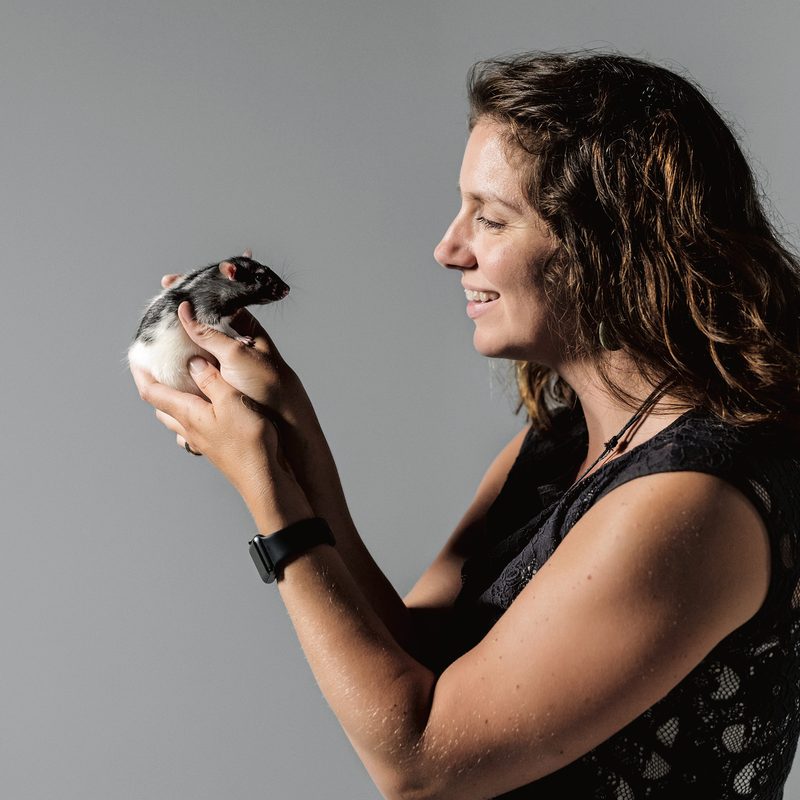
Psychology at Carleton provides a systematic and scientific approach to the study of behavior and experience, examining processes of physiological functioning, human and animal learning and cognition, cognitive and social development, personality and identity, social influences, and psychopathology, as well as complex and contemporary real-world topics (e.g., relationships, prejudice, and drugs).

About Psychology
In Psychology courses at Carleton, students learn about and practice the methods that researchers use to study human and animal behavior and experience. Courses emphasize general principles underlying behavior at different levels of observation (cellular, neural systems, cognition, individual behavior, interpersonal and group interactions). Coursework also emphasizes the development of analytic and expressive skills that are the basis of investigation, evaluation, and communication in the field.
Psychology 110 is the basic introductory course in the department and is a prerequisite for all other courses in psychology. If a student received an AP score of 4 or 5, or a higher level IB score of 6 or 7, that student may waive the six-credit PSYC 110: Principles of Psychology requirement.
Mid-level courses in the department cover three general areas:
- Biological and behavioral processes
- Cognitive studies
- Social, developmental, personality, and clinical psychology
Approximately half of the mid-level courses also offer laboratory experiences.
Psychology comps involves a topical seminar and conducting a literature review to answer a novel question. Many majors participate in faculty research labs and our lab courses allow students to work with a variety of human and animal subjects.
Majors are advised to plan their schedules carefully in light of the prerequisites listed for upper-level courses in each area and the schedule of course offerings. A major in psychology prepares students for graduate study toward an advanced research degree in psychology and for a variety of professional programs and careers in psychological and social service areas. It also serves those intending to pursue careers in law, medicine, education, and business.
Requirements for the Psychology Major
Major Requirements – 63 Total Credits
Introductory Course – Required 6 credits
- PSYC 110: Principles of Psychology
This requirement may be waived if the student received an AP score of 4 or 5 or a higher level IB score of 6 or 7.
Measurement & Methods Course and Lab – Required 8 credits
Ideally to be taken during the first year or sophomore year.
Group Core Courses – Required 24 credits
Courses cannot count in two groups.
Biological and Behavioral Processes Group – (6 credits)
- NEUR 218: Hormones, Brain, and Behavior
- PSYC 210: Psychology of Learning and Behavior
- PSYC 216: Behavioral Neuroscience
- PSYC 218: Hormones, Brain, and Behavior
- PSYC 220: Sensation and Perception
- PSYC 263: Sleep and Dreaming
- PSYC 267: Clinical Neuroscience (not offered 2026-27)
Cognitive Studies Group – (6 credits)
- CGSC 232: Cognitive Processes
- MUSC 227: Perception and Cognition of Music
- PSYC 220: Sensation and Perception
- PSYC 232: Cognitive Processes
- PSYC 234: Psychology of Language
- PSYC 238: Memory Processes (not offered 2026-27)
Social Behavior, Development and Personality Group – (6 credits)
- NEUR 260: Health Psychology
- PSYC 244: Positive Psychology
- PSYC 246: Human Sexuality (not offered 2026-27)
- PSYC 248: Cross-Cultural Psychology
- PSYC 250: Developmental Psychology
- PSYC 251: Lifespan Development (not offered 2026-27)
- PSYC 252: Personality (not offered 2026-27)
- PSYC 254: Psychopathology
- PSYC 256: Social Behavior and Interpersonal Processes (not offered 2026-27)
- PSYC 258: Social Cognition
- PSYC 260: Health Psychology
- PSYC 264: Relationship Science
Other Group Course – (6 credits)
Any course from the above courses listed in the groups.
Laboratory Courses – Required 4 credits
Two laboratory courses in addition to PSYC 201: Measurement and Data Analysis Lab.
- CGSC 233: Laboratory in Cognitive Processes
- MUSC 228: Perception and Cognition of Music Lab
- NEUR 219: Laboratory Research Methods in Hormones, Brain, and Behavior
- NEUR 261: Health Psychology Lab
- PSYC 217: Laboratory Research Methods in Behavioral Neuroscience
- PSYC 219: Laboratory Research Methods in Hormones, Brain, and Behavior
- PSYC 233: Laboratory in Cognitive Processes
- PSYC 235: Psychology of Language Laboratory
- PSYC 253: Research Methods in Personality (not offered 2026-27)
- PSYC 257: Laboratory Research Methods in Social Behavior and Interpersonal Processes (not offered 2026-27)
- PSYC 259: Laboratory Research Methods in Social Cognition (not offered 2026-27)
- PSYC 261: Health Psychology Lab
- PSYC 265: Relationship Science Lab
Upper-level Courses – Required 12 credits
- NEUR 370: Behavioral Neuroimmunology
- PSYC 318: Psychopharmacology
- PSYC 354: Counseling Psychology
- PSYC 358: Cross-Cultural Psychology Seminar in Prague Program: Psychopathology
- PSYC 361: Brains, Minds, and Machines
- PSYC 370: Behavioral Neuroimmunology
- PSYC 375: Language and Deception (not offered 2026-27)
- PSYC 382: Topics in Social and Personality: Endings (not offered 2026-27)
- PSYC 384: Psychology of Prejudice
- PSYC 386: Intervention Science: Using Psychology to Advance Social Good
- PSYC 389: LGBTQ+ Psychology (not offered 2026-27)
Only one of which may be PSYC 318: Psychopharmacology, PSYC 354: Counseling Psychology or PSYC 358: Cross-Cultural Psychology Seminar in Prague Program: Psychopathology.
Only 6 credits of PSYC 394: Directed Research in Psychology can count towards this requirement. The 6 credits must be with the same faculty member.
Senior Capstone Seminar – Required 6 credits
- PSYC 399: Capstone Seminar
Senior Integrative Exercise – Required 3 credits
- PSYC 400: Integrative Exercise
Additional Departmental Notes
Particular courses in biology, education, linguistics, mathematics and computer science, economics, philosophy, and sociology may also be recommended, depending on an individual’s interests and plans.
Majors will take the capstone seminar during the fall term of their senior year and their integrative exercise during the winter term of their senior year.
Psychology Courses
-
PSYC 100.01 Gazing into the Black Mirror
The Netflix series Black Mirror explores in captivating and often chilling fashion how human psychology and behavior can be (and have been) shaped by new technologies. Each episode raises psychological, ethical, and existential questions about the nature and limitations of humanity and our relationship with technology. In this course, we’ll take a journey through the black mirror and seek to answer many of these questions, pairing selected episodes of the series with readings that explore the issues in them. The course will include discussions of social psychology, cognition, transhumanism, social media, and human nature. Students will leave the course with a more nuanced understanding of human psychology and our relationship with technology. Note: This series is dark, disturbing, and intense. It covers challenging topics, including (but not limited to) psychological abuse, physical abuse, sexual harassment, violence, etc.
- Fall 2026
- 6
- AI/WR1, Argument & Inquiry/WR1
-
Student is a member of the First Year First Term class level cohort and is enrolled in the FOCUS Colloquium. Students are only allowed to register for one A&I course at a time. If a student wants to change this A&I course they must contact the Registrar's Office.
- Mitchell Campbell 🏫 👤
-
PSYC 110 Principles of Psychology
This course surveys major topics in psychology. We consider the approaches different psychologists take to describe and explain behavior. We will consider a broad range of topics, including how animals learn and remember contexts and behaviors, how personality develops and influences functioning, how the nervous system is structured and how it supports mental events, how knowledge of the nervous system may inform an understanding of conditions such as schizophrenia, how people acquire, remember and process information, how psychopathology is diagnosed, explained, and treated, how infants and children develop, and how people behave in groups and think about their social environment.
-
PSYC 200 Measurement and Data Analysis in Psychology
The course considers the role of measurement and data analysis focused on behavioral sciences. Various forms of measurement and standards for the evaluation of measures are explored. Students learn how to summarize, organize, and evaluate data using a variety of techniques that are applicable to research in psychology and other disciplines. Among the analyses discussed and applied are tests of means, various forms of analysis of variance, correlation and regression, planned and post-hoc comparisons, as well as various non-parametric tests. Research design is also explored.
- Winter 2027, Spring 2027
- 6
- FSR, Formal or Statistical Reasoning QRE, Quantitative Reasoning
-
Student has completed any of the following course(s): PSYC 110 with a grade of C- or better or received a score of 4 or better on the Psychology AP exam or received a score of 6 or better on the Psychology IB exam OR CGSC/PSYC 232 and CGSC/PSYC 233 with a grade of C- or better.
- PSYC 201: Measurement and Data Analysis Lab
- Mija Van Der Wege 🏫 👤 · Mitchell Campbell 🏫 👤
-
PSYC 201 Measurement and Data Analysis Lab
This lab course accompanies the lecture course, Psychology 200, and must be taken during the same term. The lab will provide an opportunity to explore lecture topics more deeply, and in particular emphasize data collection and computational skills.
- Winter 2027, Spring 2027
- 2
- No Exploration
- PSYC 200: Measurement and Data Analysis in Psychology
- Jett Priewe 🏫 👤 · Mitchell Campbell 🏫 👤
-
PSYC 210 Psychology of Learning and Behavior
A summary of theoretical approaches, historical influences and contemporary research in the area of human and animal learning. The course provides a background in classical, operant, and contemporary conditioning models, and these are applied to issues such as behavioral therapy, drug addiction, decision-making, education, and choice.
- Fall 2026
- 6
- QRE, Quantitative Reasoning SI, Social Inquiry WR2, Writing Rich 2
-
Student has completed any of the following course(s): PSYC 110 or NEUR 127 with a grade of C- or better or received a score of 4 or better on the Psychology AP exam or received a score of 6 or better on the Psychology IB exam.
- Jett Priewe 🏫 👤
-
PSYC 216 Behavioral Neuroscience
An introduction to the physiological bases of complex behaviors in mammals, with an emphasis on neural and hormonal mechanisms. Psychology 216 does not require concurrent registration in Psychology 217, however, a grade of C- or better must be earned in both Psychology 216 and 217 to satisfy the LS requirement.
Expected Preparation: Psychology 110 or instructor permission.
- Spring 2027
- 6
- LS, Science with Lab
- Joel Tripp 🏫 👤
-
PSYC 217 Laboratory Research Methods in Behavioral Neuroscience
The course provides instruction and experience in methods of behavioral neuroscience, the study of the inter-relation of the brain (and hormonal systems) and behavior. The focus of this laboratory will be on standard methods of inducing behavioral changes via neural and hormonal manipulations in mammals. Psychology 217 does NOT require concurrent registration in Psychology 216. A grade of C- or better must be earned in both Psychology 216 and 217 to satisfy the LS requirement.
Expected Preparation: Psychology 110 or instructor permission.
- Spring 2027
- 2
- LS, Science with Lab
- Joel Tripp 🏫 👤
-
PSYC 218 Hormones, Brain, and Behavior
In this course, students will learn about how hormones act in the brain and the body to affect behaviors. This course draws heavily on biological psychology and students learn about techniques in neuroendocrinology to better understand cellular function, neural circuits, and the display of behaviors. Team-based learning and case studies are used to explore the endocrine system, sexual differentiation, the stress response, thirst and digestion, and reproductive behaviors. The experimental evidence upon which our understanding of hormones, brain, and behavior is constructed is emphasized.
Enrollment in Psychology 219 is recommended. A grade of C- or better must be earned in both Psychology 218 and 219 to satisfy the LS requirement.
Recommended Preparation: PSYC 110 or NEUR 127 or BIOL 125.
PSYC 218 is cross listed with NEUR 218.
- Winter 2027
- 6
- QRE, Quantitative Reasoning No Exploration
- Sarah Meerts 🏫 👤
-
PSYC 219 Laboratory Research Methods in Hormones, Brain, and Behavior
The laboratory in Hormones, Brain and Behavior will consider the role of hormones in shaping the brain, the effect of experience on hormone levels, and neuroendocrine factors in the display of hormones. Students will learn common techniques in behavioral neuroendocrinology and will collect and analyze data. Psychology 219 requires current or prior registration in Psychology 218. A grade of C- or better must be earned in both Psychology 218 and 219 to satisfy the LS requirement.
PSYC 219 is cross listed with NEUR 219.
- Winter 2027
- 2
- LS, Science with Lab QRE, Quantitative Reasoning
-
Student has completed or is in the process of completing any of the following course(s): PSYC 218 with grade of C- or better.
- Sarah Meerts 🏫 👤
-
PSYC 220 Sensation and Perception
We will address the question of how humans acquire information from the world to support action, learning, belief, choice, and the host of additional mental states that comprise the subject matter of psychology. In other words “How do we get the outside inside?” We will initially consider peripheral anatomical structures (e.g., the eye) and proceed through intermediate levels of sensory coding and transmission to cover the brain regions associated with each of the major senses. Readings will include primary sources and a text. In addition to exams and papers, students will conduct an investigation into an area of personal interest. A grade of C- or better must be earned in both Psychology 220 and 221 to satisfy the LS requirement.
- Spring 2027
- 6
- LS, Science with Lab
-
Student has completed any of the following course(s): PSYC 110 with a grade of C- or better or received a score of 4 or better on the Psychology AP exam or received a score of 6 or better on the Psychology IB exam.
- Julia Strand 🏫 👤
-
PSYC 232 Cognitive Processes
An introduction to the study of mental activity. Topics include attention, pattern recognition and perception, memory, concept formation, categorization, and cognitive development. Some attention to gender and individual differences in cognition, as well as cultural settings for cognitive activities. A grade of C- or better must be earned in both Psychology/Cognitive Science 232 and 233 to satisfy the LS requirement.
CGSC 232 is cross listed with PSYC 232.
- Winter 2027
- 6
- LS, Science with Lab WR2, Writing Rich 2 QRE, Quantitative Reasoning
-
Student has completed any of the following course(s): PSYC 110 or CGSC 100 or CGSC 130 with grade of C- or better or received a score of 4 or better on the Psychology AP exam or received a score of 6 or better on the Psychology IB exam.
- CGSC 233: Laboratory in Cognitive Processes, PSYC 233: Laboratory in Cognitive Processes
- Kathleen Galotti 🏫 👤
-
PSYC 233 Laboratory in Cognitive Processes
Students will participate in the replication and planning of empirical studies, collecting and analyzing data relevant to major cognitive phenomena. A grade of C- or better must be earned in both CGSC/PSYC 232 and 233 to satisfy the LS requirement.
CGSC 233 is cross listed with PSYC 233.
- Winter 2027
- 2
- LS, Science with Lab
- CGSC 232: Cognitive Processes, PSYC 232: Cognitive Processes
- Kathleen Galotti 🏫 👤
-
PSYC 234 Psychology of Language
This course will cover a range of aspects of language use. We will spend time discussing language production and comprehension, discourse processing, the relationship between language and thought, and language acquisition. Additionally, we will touch on issues of memory, perception, concepts, mental representation, and neuroscience. Throughout the course, we will emphasize both the individual and social aspects of language as well as the dynamic and fluid nature of language use. Concurrent registration in PSYC 235 is optional, but strongly recommended. A grade of C- or better must be earned in both Psychology 234 and 235 to satisfy the LS requirement.
- Fall 2026
- 6
- CX, Cultural/Literature LS, Science with Lab
-
Student has completed any of the following course(s): PSYC 110 with a grade of C- or better or received a score of 4 or better on the Psychology AP exam or received a score of 6 or better on the Psychology IB exam.
- Mija Van Der Wege 🏫 👤
-
PSYC 235 Psychology of Language Laboratory
This laboratory experience will expose students to a variety of methodologies employed by researchers interested in studying language. Throughout the term, students will both participate in experiments and conduct experiments. We will spend time discussing and performing typical analyses. Finally, students will be expected to become proficient in writing their experimental work in APA format and in presenting their research ideas in an oral format. A grade of C- or better must be earned in both Psychology 234 and 235 to satisfy the LS requirement.
- Fall 2026
- 2
- LS, Science with Lab QRE, Quantitative Reasoning
- PSYC 234: Psychology of Language
- Mija Van Der Wege 🏫 👤
-
PSYC 238 Memory Processes
Memory is involved in nearly every human activity: We use our memory not only when we reminisce about the past, but when we study for our exams, talk to our friends, and tie our shoes. This course explores the psychological science of human memory. We will examine different types of memory, how we encode new memories and retrieve old ones, how to ensure a memory is never forgotten, and how to implant a false memory in someone else. In doing so we will look at both old and new research, and discuss how memory research can be applied to some real world environments, such as courtrooms and classrooms. By the end of the course you will be familiar with the major issues in the field of memory research and be able to evaluate the quality of the studies used as evidence in these debates.
Not offered in 2026-27
- 6
- SI, Social Inquiry
-
Student has completed any of the following course(s): PSYC 110 with a grade of C- or better or received a score of 4 or better on the Psychology AP exam or received a score of 6 or better on the Psychology IB exam.
-
PSYC 244 Positive Psychology
This course evaluates the effort to use the tools of psychological science to understand the sources and nature of positive human strengths, characteristics, resources, and aspirations, and to apply any knowledge gained to help individuals and institutions function more effectively.
- Fall 2026
- 6
- SI, Social Inquiry
-
Student has completed any of the following course(s): PSYC 110 with a grade of C- or better or received a score of 4 or better on the Psychology AP exam or received a score of 6 or better on the Psychology IB exam.
- Neil Lutsky 🏫 👤
-
PSYC 246 Human Sexuality
Humans are a sexual animal. Not only do we engage in sexual behavior for procreation, but also at times for pleasure, intimacy, affiliation, and profit. Furthermore, we maintain sexual and gender identities that affect our behaviors and help us organize our social worlds. These identities develop over time, through our childhood and adolescence and into adulthood. We also place boundaries on sexuality and gender through norms, laws, and social conventions. Sexuality is at once commonplace and private, ubiquitous yet taboo. In this course, we will explore the many dimensions and paradoxes of human sexuality and its connection to our psychology. We will also consider these topics in the context of real-world phenomena and cross-cultural examples.
Not offered in 2026-27
- 6
- SI, Social Inquiry
-
Student has completed any of the following course(s): PSYC 110 with a grade of C- or better or received a score of 4 or better on the Psychology AP exam or received a score of 6 or better on the Psychology IB exam.
-
PSYC 248 Cross-Cultural Psychology
Do psychological principles apply universally or are they culture specific? How does the exploration of psychological phenomena across cultures inform our understanding of human behavior? This course examines major theoretical and empirical work in the field of Cross-Cultural Psychology. A major component will be on applied products, such as a web site containing 1) a critical analysis of a particular cross-cultural psychological phenomenon, and 2) an evidence-based proposal for improving cross-cultural interaction.
- Spring 2027
- 6
- IS, International Studies SI, Social Inquiry
-
Student has completed any of the following course(s): PSYC 110 with a grade of C- or better or received a score of 4 or better on the Psychology AP exam or received a score of 6 or better on the Psychology IB exam.
- Sharon Akimoto 🏫 👤
-
PSYC 250 Developmental Psychology
An introduction to the concept of development, examining both theoretical models and empirical evidence. Prenatal through late childhood is covered with some discussion of adolescence when time permits. Topics include the development of personality and identity, social behavior and knowledge, and cognition. In addition, attention is paid to current applications of theory to such topics as: day care, the role of the media, and parenting.
- Fall 2026
- 6
- SI, Social Inquiry WR2, Writing Rich 2
-
Student has completed any of the following course(s): PSYC 110 with a grade of C- or better or received a score of 4 or better on the Psychology AP exam or received a score of 6 or better on the Psychology IB exam.
- Kathleen Galotti 🏫 👤
-
PSYC 251 Lifespan Development
This course explores the concepts, theories, and research on human development as it occurs over the lifespan and across contexts. We will learn about physical, cognitive, and psychosocial developmental milestones and challenges unique to each stage of human development. This exploration “from womb to tomb” includes infancy, early and middle childhood, adolescence, emerging adulthood, adulthood, and old age. Through readings, class discussions, and group and individual activities, students will have the opportunity to apply the concepts we are learning to the world around us.
Not offered in 2026-27
- 6
- SI, Social Inquiry
-
Student has completed any of the following course(s): PSYC 110 with a grade of C- or better or received a score of 4 or better on the Psychology AP exam or received a score of 6 or better on the Psychology IB exam.
-
PSYC 252 Personality
An examination of analytic models that attempt to characterize and explain aspects of behavior, thought, and emotion that are central to our conceptions of ourselves as distinctly human beings and as individuals. Original theoretical statements and relevant empirical literature will be consulted. A grade of C- or better must be earned in both Psychology 252 and 253 to satisfy the LS requirement.
Not offered in 2026-27
- 6
- LS, Science with Lab
-
Student has completed any of the following course(s): PSYC 110 with a grade of C- or better or received a score of 4 or better on the Psychology AP exam or received a score of 6 or better on the Psychology IB exam.
-
PSYC 253 Research Methods in Personality
A laboratory to undertake research on topics in personality. A grade of C- or better must be earned in both Psychology 252 and 253 to satisfy the LS requirement.
Not offered in 2026-27
- 2
- LS, Science with Lab QRE, Quantitative Reasoning
- PSYC 252: Personality
-
PSYC 254 Psychopathology
This course will focus on causal factors and clinical presentations of mental disorders, such as mood disorders, anxiety disorders, eating disorders, dissociative disorders, and psychotic disorders, among others. We will use an integrative approach that incorporates psychological, biological, interpersonal, and sociocultural perspectives. Methods of assessment and treatment will also at times be discussed.
- Spring 2027
- 6
- SI, Social Inquiry
-
Student has completed any of the following course(s): PSYC 110 with a grade of C- or better or received a score of 4 or better on the Psychology AP exam or received a score of 6 or better on the Psychology IB exam.
- Ken Abrams 🏫 👤
-
PSYC 256 Social Behavior and Interpersonal Processes
The social psychological analysis of human social behavior, interpersonal processes, and group influences. Concurrent registration in PSYC 257 is optional, but strongly encouraged. A grade of C- or better must be earned in both Psychology 256 and 257 to satisfy the LS requirement.
Not offered in 2026-27
- 6
- LS, Science with Lab
-
Student has completed any of the following course(s): PSYC 110 with a grade of C- or better or received a score of 4 or better on the Psychology AP exam or received a score of 6 or better on the Psychology IB exam.
-
PSYC 257 Laboratory Research Methods in Social Behavior and Interpersonal Processes
Students will participate in the planning and replication of empirical studies of the social psychology of social behavior. Requires concurrent registration in Psychology 256. A grade of C- or better must be earned in both Psychology 256 and 257 to satisfy the LS requirement.
Not offered in 2026-27
- 2
- LS, Science with Lab QRE, Quantitative Reasoning
- PSYC 256: Social Behavior and Interpersonal Processes
-
PSYC 258 Social Cognition
This course will focus on a social psychological analysis of social cognition, perception and judgment. It includes the examination of attitudes, stereotyping, attribution and the self. Concurrent registration in Psychology 259 is strongly suggested. A grade of C- or better must be earned in both Psychology 258 and 259 to satisfy the LS requirement.
- Spring 2027
- 6
- LS, Science with Lab
-
Student has completed any of the following course(s): PSYC 110 with a grade of C- or better or received a score of 4 or better on the Psychology AP exam or received a score of 6 or better on the Psychology IB exam.
- Emma McGorray 🏫 👤
-
PSYC 259 Laboratory Research Methods in Social Cognition
Students will participate in the design and replication of social psychological studies related to social cognition. Requires concurrent registration in Psychology 258. A grade of C- or better must be earned in both Psychology 258 and 259 to satisfy the LS requirement.
Not offered in 2026-27
- 2
- LS, Science with Lab QRE, Quantitative Reasoning
- PSYC 258: Social Cognition
-
PSYC 260 Health Psychology
This course will examine how psychological principles can be employed to promote and maintain health, prevent and treat illness, and encourage adherence to disease treatment regimens. Within a biopsychosocial framework, we will analyze behavioral patterns and public policies that influence risk for cardiovascular disease, cancer, chronic pain, substance abuse, and sexually transmitted diseases, among other conditions. Additionally, students in groups will critically examine the effects of local policies on health outcomes and propose policy changes supported by theory and research. A grade of C- or better must be earned in both Psychology 260 and 261 to satisfy the LS requirement.
PSYC 260 is cross listed with NEUR 260.
- Fall 2026
- 6
- LS, Science with Lab QRE, Quantitative Reasoning
-
Student has completed any of the following course(s): PSYC 110 with a grade of C- or better or received a score of 4 or better on the Psychology AP exam or received a score of 6 or better on the Psychology IB exam.
- Gisel Flores-Montoya 🏫 👤
-
PSYC 261 Health Psychology Lab
This course provides students with direct experience applying principles of health psychology. Students will engage in a term-long self-directed project aimed at increasing the frequency of a healthy behavior (such as exercising) or decreasing the frequency of an unhealthy behavior (such as smoking). Additionally, we will read and discuss case studies that relate to the current topic in the lecture portion of the course. A grade of C- or better must be earned in both Psychology 260 and 261 to satisfy the LS requirement.
PSYC 261 is cross listed with NEUR 261.
-
PSYC 263 Sleep and Dreaming
This course will examine recent experimental findings and current perspectives on sleep, dreaming, sleep disorders, and states of consciousness.
- Winter 2027
- 6
- SI, Social Inquiry
-
Student has completed any of the following course(s): PSYC 110 with a grade of C- or better or received a score of 4 or better on the Psychology AP exam or received a score of 6 or better on the Psychology IB exam.
- Lawrence Wichlinski 🏫 👤
-
PSYC 264 Relationship Science
What makes two people attracted to one another? Why do some relationships last for decades, and others for just weeks? In what ways do our relationships influence our understanding of who we are? In this course, we will address questions like these by exploring the field of relationship science, a research area that leverages the scientific method to study interpersonal attraction and relationships. The content covered in this course will focus primarily on insights drawn from psychological research on romantic relationships, with particular attention to questions of how people across diverse backgrounds and identities experience their relationships.
A grade of C- or better must be earned in both PSYC 264 and PSYC 265 to satisfy the LS requirement.
- Winter 2027
- 6
- LS, Science with Lab
-
Student has completed any of the following course(s): PSYC 110 with a grade of C- or better or received a score of 4 or better on the Psychology AP exam or received a score of 6 or better on the Psychology IB exam.
- Emma McGorray 🏫 👤
-
PSYC 265 Relationship Science Lab
Students will replicate existing studies and collect and report on their own empirical data in the field of relationship science.
A grade of C- or better must be earned in both PSYC 264 and PSYC 265 to satisfy the LS requirement.
- Winter 2027
- 2
- LS, Science with Lab QRE, Quantitative Reasoning
- PSYC 264: Relationship Science
- Emma McGorray 🏫 👤
-
PSYC 267 Clinical Neuroscience
This course will explore brain disorders with significant psychological manifestations, such as Alzheimer’s disease, anxiety, depression, schizophrenia, and substance abuse, among others. Students will also receive a foundation in brain anatomy, physiology, and chemistry so that they may better understand the biological correlates of these clinical conditions.
Not offered in 2026-27
- 6
- No Exploration
-
Student has completed any of the following course(s): PSYC 110 with a grade of C- or better or received a score of 4 or better on the Psychology AP exam or received a score of 6 or better on the Psychology IB exam.
-
PSYC 290.07 Cross-Cultural Psychology in Prague Program: Directed Reading
For this course, students will be provided with readings on cross-cultural psychology to be read prior to the term in Prague as well as with questions and problems to serve as study guides. Students will be tested on the material at the beginning of the term in Prague.
- Fall 2026
- S/CR/NC
- 2
- No Exploration
-
Acceptance in the Carleton OCS Cross-Cultural Psychology in Prague program AND student has completed the following course(s): PSYC 110 with a grade of C- or better.
- Ken Abrams 🏫 👤
-
PSYC 294 Directed Research in Psychology
Students work on a research project related to a faculty member's research interests, and directed by that faculty member. Student activities vary according to the field and stage of the project. The long-run goal of these projects normally includes dissemination to a scholarly community beyond Carleton. The faculty member will meet regularly with the student and actively direct the work of the student, who will submit an end-of-term product, typically a paper or presentation.
-
PSYC 318 Psychopharmacology
This course will cover the major categories of drugs that possess psychoactive properties, with an emphasis on their effects on the nervous system. In addition, drug use and abuse in a larger societal context will be examined.
-
PSYC 354 Counseling Psychology
This course provides an introduction to the field of counseling psychology, exploring its fundamental principles and practices. Students will gain a comprehensive understanding of various counseling theories and treatment modalities, including their historical development and practical application. Students will also explore research methodologies utilized in counseling psychology and critically analyze empirical studies to inform evidence-based practice. Additionally, the course addresses professional issues, ethical considerations, and multicultural factors that influence counseling psychology, fostering cultural competence and awareness of diverse populations.
- Winter 2027, Spring 2027
- 6
- SI, Social Inquiry
-
Student has completed any of the following course(s): One course from the Psychology Social Behavior, Development and Personality group of courses with a grade of C- or better.
- Emily Hazlett 🏫 👤
-
PSYC 358 Cross-Cultural Psychology Seminar in Prague Program: Psychopathology
In the West mental illness has traditionally been approached with a biomedical model that views it as independent of culture. By contrast the “relativist” position assumes that, to a large extent, human behaviors are culturally determined and that the etiology and manifestation of mental disorders are affected by society and culture. This course will address such issues as well as their implications for assessment and treatment through an examination of several Western and non-Western societies, with a special emphasis on Czech society. There will be several guest lectures by Czech psychology professors as well as excursions within Prague to psychiatric hospitals and clinics, where students will meet with Czech clinicians and patients.
- Fall 2026
- 6
- IS, International Studies SI, Social Inquiry
-
Acceptance in the Carleton OCS Cross-Cultural Psychology in Prague program AND student has completed the following course(s): PSYC 110 with a grade of C- or better.
- Ken Abrams 🏫 👤
-
PSYC 361 Brains, Minds, and Machines
Human minds and machine systems now share many tasks, but whether artificial intelligence truly models human cognition remains an open question. This course examines human thinking, learning, perception, reasoning, and language by placing classic and contemporary work in cognitive psychology and neuroscience alongside developments in AI. Readings and discussion focus on what artificial systems reveal about these aspects of cognition and on where the comparisons break down, with particular attention to the social and labor conditions under which AI systems are created and used.
- Spring 2027
- 6
- QRE, Quantitative Reasoning SI, Social Inquiry
-
Student has completed any of the following course(s): PSYC 210 or PSYC 216 or NEUR 218/PSYC 218 or PSYC 220 or CGSC 232/PSYC 232 or PSYC 234 or PSYC 238 or NEUR 127 with a grade C- or better.
- Jett Priewe 🏫 👤
-
PSYC 370 Behavioral Neuroimmunology
The immune system directly influences the central nervous system and behavior during both health and disease. The course will have an emphasis on animal behavior (e.g., memory and sociability assays) and techniques in neuroimmunology that range from genetic engineering (e.g., CRISPR and DREADD) to immune cell function, detection of surface receptors, and protein expression (e.g., flow cytometry, confocal microscopy, immune cell migration assays, ELISA, and western blot.) The topics that will be covered range from how cytokines influence behavior to effects of gut microbiota in brain function and behavior. This course will primarily use empirical research that will help you develop a deeper understanding of molecular techniques, cell biology, and develop strong analytical skills of biological findings in immunology and its connection with animal behavior.
PSCY 370 is cross listed with NEUR 370.
- Winter 2027
- 6
- No Exploration QRE, Quantitative Reasoning WR2, Writing Rich 2
-
Student has completed any of the following course(s): NEUR 127 or PSYC 216 with grade of C- or better.
- Gisel Flores-Montoya 🏫 👤
-
PSYC 375 Language and Deception
In this course we will examine deception and persuasion in language use. We will take up three main issues. The first is what it means to deceive and how people deceive others through language. What methods do they use, and how do these methods work? The second issue is why people deceive. What purposes do their deceptions serve in court, in advertising, in bureaucracies, in business transactions, and in everyday face-to-face conversation? The third issue is the ethics of deception. Is it legitimate to deceive others, and if so, when and why?
Not offered in 2026-27
- 6
- QRE, Quantitative Reasoning SI, Social Inquiry
-
Student has completed any of the following course(s): PSYC 232 or CGSC232/PSYC 232 or PSYC 234 or PSYC 238 or CGSC 236 with a grade of C- or better.
-
PSYC 382 Topics in Social and Personality: Endings
This seminar will examine the psychology of endings, including endings associated with psychotherapy, social interactions, personal relationships, social roles, literature and the arts, and life itself. We will address when and how endings occur, how we experience endings, and what makes an ending a good or poor one, among other issues.
Not offered in 2026-27
- 6
- SI, Social Inquiry
-
Student has completed any of the following course(s): PSYC 252 or PSYC 256 or PSYC 258 with grade of C- or better.
-
PSYC 384 Psychology of Prejudice
This seminar introduces students to major psychological theories and research on the development, perpetuation and reduction of prejudice. A social and historical approach to race, culture, ethnicity and race relations will provide a backdrop for examining psychological theory and research on prejudice formation and reduction. Major areas to be discussed are cognitive social learning, group conflict and contact hypothesis. Psychology 256 or 258 recommended preparation.
- Winter 2027
- 6
- IDS, Intercultural Domestic Studies SI, Social Inquiry
-
Student has completed any of the following course(s): PSYC 110 with a grade of C- or better or received a score of 4 or better on the Psychology AP exam or received a score of 6 or better on the Psychology IB exam.
- Sharon Akimoto 🏫 👤
-
PSYC 386 Intervention Science: Using Psychology to Advance Social Good
Many of the most pressing issues facing our world today, including prejudice/discrimination, climate change, health, conflict, and polarization/radicalization, ultimately stem from human behavior. As a science centrally focused on human behavior, psychology is well-poised to contribute meaningfully to developing solutions to these and other issues. In this class, we will review the rapidly expanding literature on intervention science, which involves employing psychological concepts and principles to change real-world outcomes. We will also study relevant behavioral science and motivational theories, as well as examining how findings from the lab can be translated to real-world applications. Students will also complete a final project that will involve conducting their own intervention experiment in the field. Students will leave the class equipped to use their knowledge of behavioral science to effect change in the real world to address the issues they care about.
- Fall 2026
- 6
- SI, Social Inquiry
-
Student has completed any of the following course(s): PSYC 110 with a grade of C- or better or received a score of 4 or better on the Psychology AP exam or received a score of 6 or better on the Psychology IB exam.
- Mitchell Campbell 🏫 👤
-
PSYC 389 LGBTQ+ Psychology
In this seminar, we will examine the psychology of LGBTQ+ people, focusing on topics such as LGBTQ+ identity development; predictors and consequences of anti-LGBTQ+ bias and discrimination; the health and well-being of LGBTQ+ people; and familial and relationship dynamics of LGBTQ+ populations. We will consider psychology's history of—and potential for—both contributing to and dismantling the inequities faced by LGBTQ+ populations.
Not offered in 2026-27
- 6
- IDS, Intercultural Domestic Studies SI, Social Inquiry
-
Student has completed any of the following course(s): PSYC 110 or GWSS 110 or GWSS 200 or GWSS 212 with a grade of C- or better or received a score of 4 or better on the Psychology AP exam or received a score of 6 or better on the Psychology IB exam.
-
PSYC 394 Directed Research in Psychology
Students work on a research project related to a faculty member's research interests, and directed by that faculty member. Student activities vary according to the field and stage of the project. The long-run goal of these projects normally includes dissemination to a scholarly community beyond Carleton. The faculty member will meet regularly with the student and actively direct the work of the student, who will submit an end-of-term product, typically a paper or presentation.
- Fall 2026, Winter 2027, Spring 2027
- 1 – 6
- No Exploration
- Gisel Flores-Montoya 🏫 👤 · Julia Strand 🏫 👤 · Emma McGorray 🏫 👤
-
PSYC 399 Capstone Seminar
Each of the three capstone seminars focus on a topic of interest to students in psychology. The goals of the course are to consider questions on a selected topic through reading primary research and discussion and review skills pertinent to scholarly investigation within the topic. Students are then mentored through a substantial paper related to the seminar topic.
-
PSYC 400 Integrative Exercise
Students independently revise and extend the fall term paper, integrating the feedback from their faculty advisor. Based on this work, students submit a final comps paper (approx. 20 pages) that makes original contributions to the field of psychology through critiquing existing psychology primary sources, applying empirically-supported psychological theories to new questions, generating potential applied guidelines, and/or proposing new theories or empirical studies based on published theories and empirical research.
- Winter 2027, Spring 2027
- S/NC
- 3
- No Exploration
-
Student has completed any of the following course(s): PSYC 399 with grade of C- or better.
- Neil Lutsky 🏫 👤 · Julia Strand 🏫 👤 · Lawrence Wichlinski 🏫 👤 · Emma McGorray 🏫 👤 · Ken Abrams 🏫 👤